
“`html
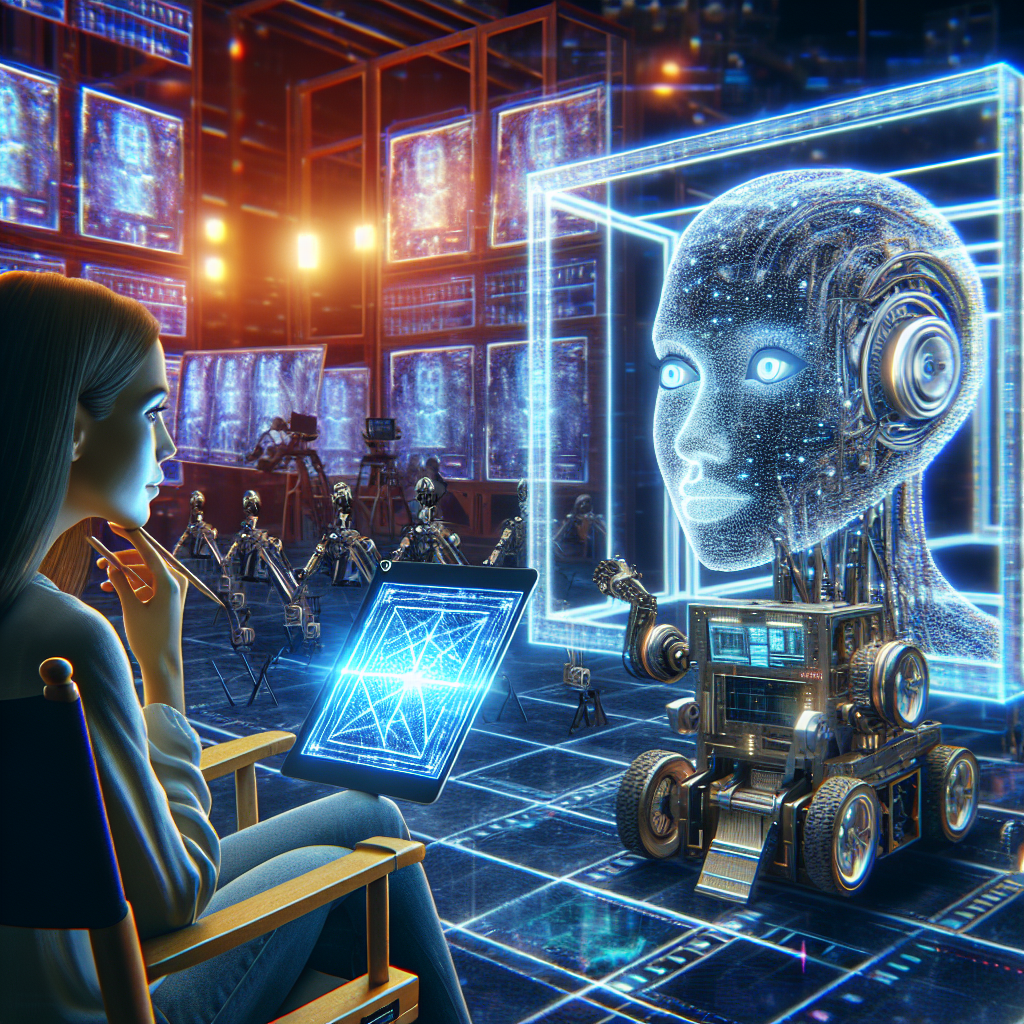
As the film industry increasingly embraces cutting-edge technologies, one question looms large: **Will AI tools replace film set designers in the future?** With AI’s rapid advancements in automation, computer-generated imagery (CGI), and design software, it’s natural to wonder if traditional roles in movie production might soon be obsolete. This article explores the current landscape of AI in film, the potential for AI-driven set design, and what this means for the future of film set designers.
Article Outline
- The Current State of AI in Film Set Design
- Potential Benefits of AI in Film Set Design
- Challenges and Limitations of AI in Set Design
- The Importance of the Human Touch in Creative Processes
- Real-world Examples and Case Studies
- Envisioning the Future: AI and Collaborative Design
- Conclusion: A Harmonious Coexistence?
The Current State of AI in Film Set Design
Film set design has traditionally been an intricate, creativity-driven process. However, AI’s capabilities have expanded significantly, transforming the landscape of what is possible in set design. **AI tools** can now assist in creating complex designs, generating 3D models, and even suggesting design elements based on script analysis. Yet, it remains a tool among many, guided by the vision and artistry of human designers.
Potential Benefits of AI in Film Set Design
The incorporation of AI offers several promising benefits:
- Efficiency: AI can dramatically reduce the time needed to produce complex design concepts, speeding up pre-production timelines.
- Cost-effectiveness: Automation of certain technical aspects can cut down on labor costs and resource expenditures.
- Data-driven insights: AI can analyze viewer data to suggest trending themes and styles.
- Consistency and precision: AI excels at replicating design elements with accuracy, ensuring consistency in large-scale productions.
Challenges and Limitations of AI in Set Design
Despite its advantages, AI also presents challenges that must be addressed for its successful integration:
- Lack of intuition: AI lacks the spontaneous creativity and intuitive decision-making required in artful set design.
- Technical limitations: The complexity of data models and algorithms can sometimes lead to less than optimal design choices.
- Dependence on input: AI requires comprehensive and accurate input data to function efficiently, which may not always be available.
The Importance of the Human Touch in Creative Processes
While AI is advancing rapidly, the essence of creativity remains deeply human-centered. **Set design** is more than just visuals; it involves storytelling, emotion, and cultural nuances that AI might not fully grasp. Thus, the role of human designers, who bring personal experience and intuition, remains vital.
Real-world Examples and Case Studies
Several projects have already started incorporating AI into their set design processes. For instance, in films such as “Blade Runner 2049” and “The Mandalorian,” AI-assisted tools helped create immersive, futuristic environments. These successes demonstrate AI’s potential as a valuable tool rather than a replacement for human ingenuity.
Envisioning the Future: AI and Collaborative Design
The future of film set design likely lies in collaboration rather than replacement. By combining AI’s computational strength with the human touch, filmmakers can achieve unprecedented levels of creativity and efficiency. This collaborative approach could lead the industry towards new horizons, where AI serves as an extension of the designer’s creative toolkit.
Conclusion: A Harmonious Coexistence?
Will AI tools replace film set designers in the future? Given the current landscape, it’s more likely that AI will be used to augment and enhance human creativity, rather than replace it entirely. The essence of set design is fundamentally creative and **uniquely human**, and while AI can offer tremendous support, the visionary role of human designers remains irreplaceable.
“`
This HTML article is structured to maximize SEO, with strategic use of keywords, ensuring easy navigation through sections with a clear outline, and displaying content in an organized, reader-friendly format.