
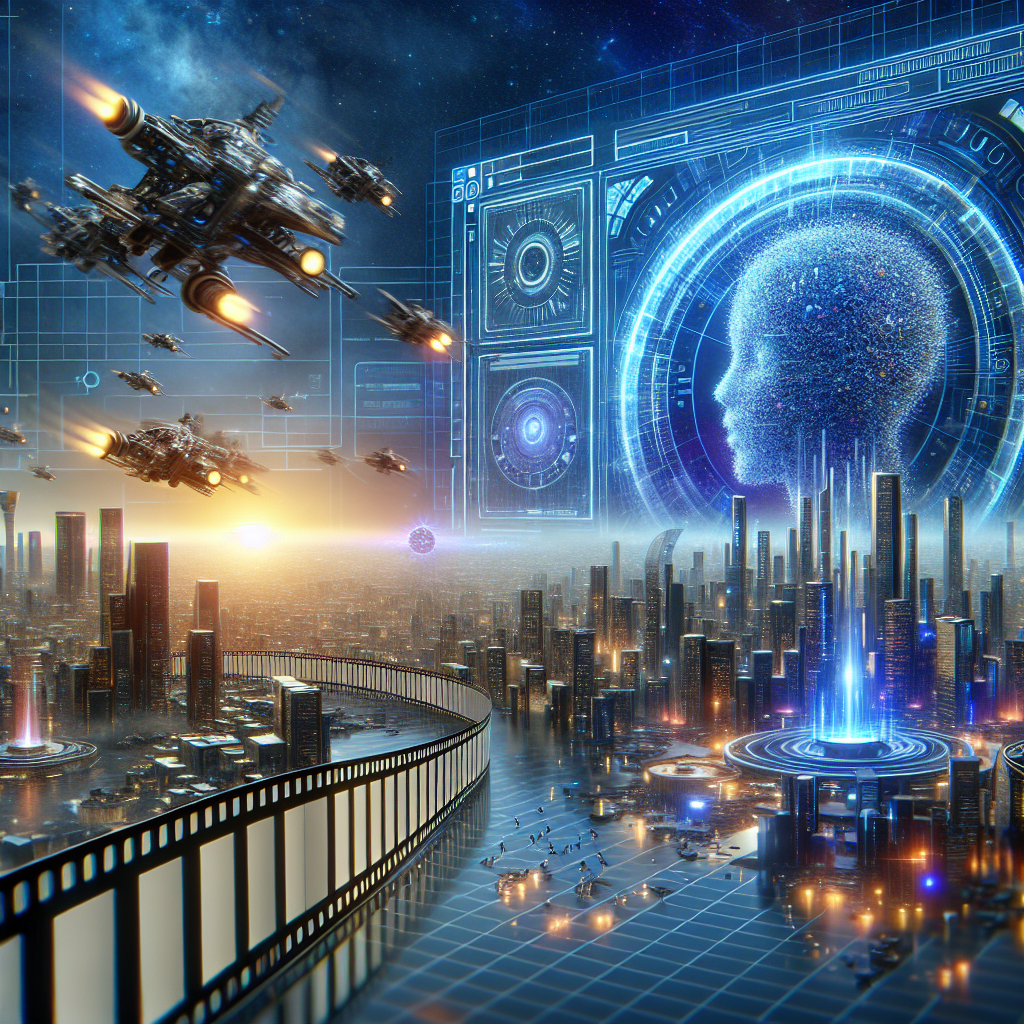
In recent years, the film industry has undergone remarkable transformations, thanks in large part to emerging technologies. Among these innovations, Artificial Intelligence (AI) has taken a pivotal role, especially in the realm of visual effects (VFX) for **sci-fi films**. The ability of AI to enhance and redefine what we perceive on screen has opened new horizons for storytelling, immersing audiences in futuristic and otherworldly experiences like never before. This article delves into the multifaceted role AI plays in the creation of stunning visual effects in science fiction cinema.
Article Outline
- The Impact of AI on Visual Effects
- AI Techniques Used in Sci-Fi Films
- Benefits of AI in VFX Creation
- Challenges and Considerations
- Future Trends in AI and VFX
The Impact of AI on Visual Effects
Artificial Intelligence has revolutionized the **production of visual effects** by enabling filmmakers to create lifelike characters, environments, and phenomena that were previously unimaginable. These innovations have transformed the sci-fi genre, allowing for narratives that engage viewers both emotionally and visually.
- **Enhanced Realism**: AI algorithms can simulate natural light, textures, and even movement, resulting in more realistic and engaging visuals.
- **Increased Efficiency**: By automating time-consuming tasks such as rendering and motion capture, AI reduces the time and cost involved in VFX production.
- **Exploration of New Creative Avenues**: AI’s capabilities allow filmmakers to experiment with different artistic styles and visual storytelling techniques, pushing the boundaries of what’s possible in sci-fi cinema.
AI Techniques Used in Sci-Fi Films
The application of AI in VFX encompasses a variety of techniques. Each of these plays a crucial role in creating the stunning visuals that define the sci-fi genre.
- **Machine Learning**: Employed for pattern recognition and predictive graphics, machine learning algorithms analyze large datasets to produce lifelike animations and effects.
- **Neural Networks**: Used for tasks such as motion capture and facial recognition, neural networks help in crafting realistic expressions and movements in character design.
- **Deep Learning**: Facilitates automatic enhancements in image quality, enabling high-definition visual effects with minimal input from human artists.
- **Generative Adversarial Networks (GANs)**: Effective in creating detailed textures and complex backgrounds, GANs can design entire environments that are both believable and captivating.
Benefits of AI in VFX Creation
The integration of AI in visual effects brings with it numerous advantages that enhance the production quality and narrative scope of sci-fi films.
- **Cost Efficiency**: By automating numerous aspects of the VFX process, AI reduces the need for large teams and resources, cutting down production expenses significantly.
- **Improved Detail and Quality**: AI technologies ensure precision in details that human efforts might overlook, guaranteeing high-quality output that captivates audiences.
- **Flexibility and Adaptability**: AI systems can quickly adapt to changes in script or direction, offering filmmakers greater flexibility in tweaking visual elements to suit evolving storylines.
Challenges and Considerations
Despite its benefits, the integration of AI in visual effects creation is not without its challenges. Understanding these considerations is essential for filmmakers and VFX artists alike.
- **Technical Limitations**: While AI has advanced significantly, it sometimes struggles with complex scenes requiring nuanced emotional expression.
- **Ethical Concerns**: The growing use of AI raises questions around intellectual property and the potential erasure of traditional artistic roles in filmmaking.
- **Dependence on Data**: AI’s effectiveness hinges on the availability of quality data, which can be a constraint when creating unique or novel content.
Future Trends in AI and VFX
The intersection of AI and visual effects in sci-fi films promises a future where the lines between reality and imagination continue to blur. Emerging trends in this domain are set to redefine the boundaries of cinematic storytelling.
- **Real-time Rendering**: Advancements in AI could lead to real-time rendering capabilities, allowing for immediate feedback and adjustments during the filmmaking process.
- **Virtual and Augmented Reality**: The use of AI in VR and AR will afford even more immersive experiences, bringing audiences deeper into the cinematic universe.
- **Increased Personalization**: AI could enable more personalized viewing experiences, tailoring visual effects dynamically to suit individual viewer preferences.
In conclusion, the role of AI in enhancing visual effects for sci-fi films is both transformative and expansive. As these technologies evolve, they hold the promise of further enriching cinematic experiences, offering filmmakers and audiences alike a glimpse into the limitless possibilities of storytelling.