
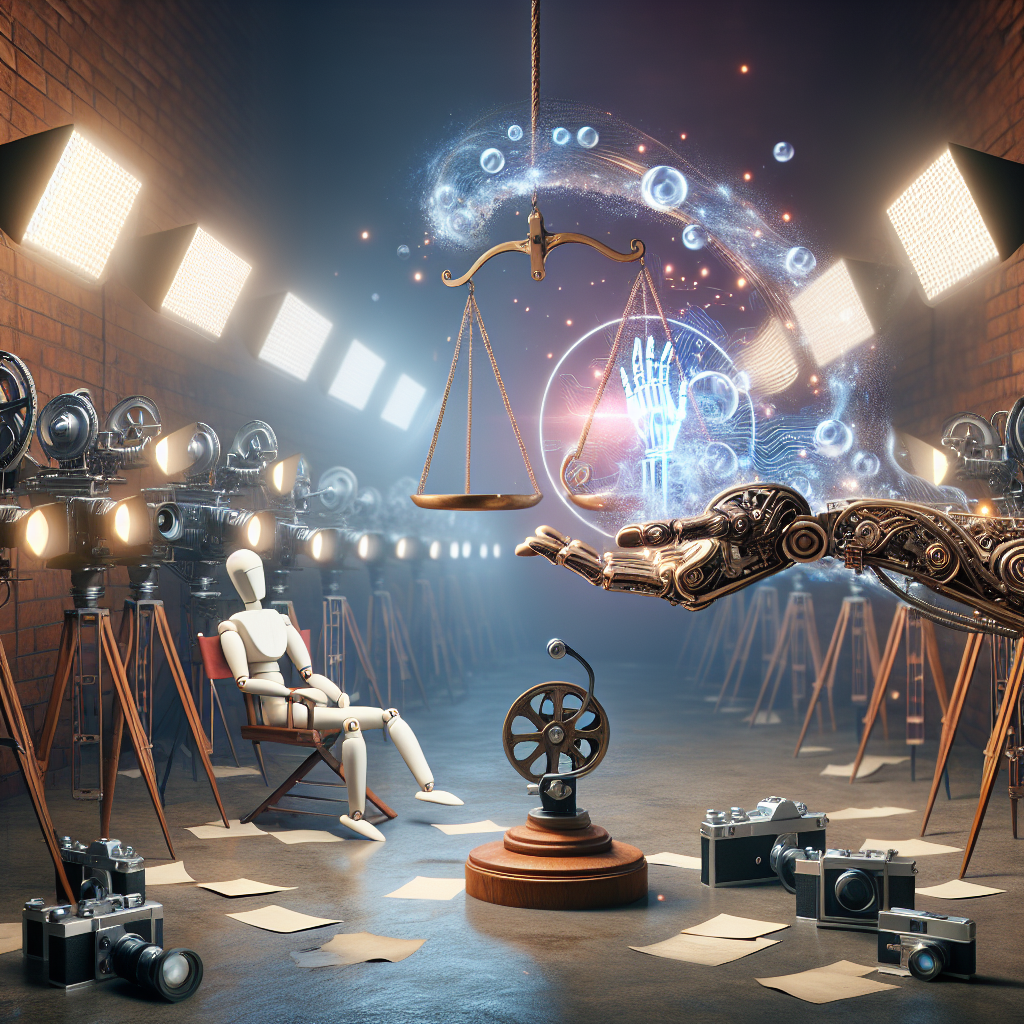
“`html
Artificial Intelligence (AI) is rapidly transforming the film industry, revolutionizing how movies are produced, distributed, and consumed. While AI offers numerous benefits, including enhanced creativity and efficiency, it also introduces significant legal and ethical challenges. This article delves into the complexities surrounding AI in the film industry, exploring its implications and how it affects filmmakers, audiences, and the industry as a whole.
- The Rise of AI in the Film Industry
- Legal Implications of AI in Filmmaking
- Ethical Concerns in AI-driven Filmmaking
- Balancing Innovation and Risks
- Future Outlook
The Rise of AI in the Film Industry
AI technologies are increasingly integrated into various stages of the filmmaking process. From scriptwriting to post-production, AI is reshaping the way movies are made. **Machine learning algorithms** analyze scripts to predict box office success, while AI-powered tools assist in editing, special effects, and even casting. These technologies promise to save time and reduce costs, allowing filmmakers to focus on creative aspects.
Moreover, AI applications extend to audience analysis, helping studios tailor content to specific demographic preferences. This data-driven approach enhances marketing strategies and distribution, ensuring films reach the right audience. However, the widespread use of AI raises questions about dependency on technology and the authenticity of films produced with its assistance.
Legal Implications of AI in Filmmaking
As AI becomes more prevalent in the industry, several legal concerns arise:
- Intellectual Property Rights: When AI systems contribute to creative processes, determining ownership of the resulting work becomes complex. Traditional copyright laws may not sufficiently address creations involving AI contributions, requiring new frameworks for **IP protection**.
- Privacy Issues: The use of AI in tracking and analyzing audience data raises significant privacy concerns. Filmmakers and studios must ensure compliance with data protection regulations such as **GDPR** and **CCPA** to avoid legal repercussions.
- Contractual Challenges: The integration of AI systems necessitates new contractual arrangements between stakeholders, including software developers, filmmakers, and distributors. These contracts must clearly define roles, responsibilities, and liabilities.
Ethical Concerns in AI-driven Filmmaking
Beyond legal challenges, AI’s influence on ethics in the film industry is a critical concern:
- Bias and Representation: AI algorithms can inadvertently perpetuate biases present in their training data, affecting casting, portrayal, and inclusivity in films.
- Creative Authenticity: As AI-generated content becomes more sophisticated, questions about the authenticity and originality of such works gain prominence. Audiences seek genuine storytelling, which may be compromised by AI-driven production.
- Job Displacement: The automation of tasks traditionally performed by humans could lead to job losses within the industry. While AI creates new opportunities, it simultaneously threatens existing roles, especially in technical and creative fields.
Balancing Innovation and Risks
The film industry must navigate the fine line between embracing innovation and managing risks. To do so, stakeholders can:
- **Develop ethical guidelines** and standards for AI use, ensuring fair practices while promoting creativity and inclusivity.
- **Foster collaboration** among filmmakers, technologists, and policy-makers to create a regulatory framework that addresses both legal and ethical implications.
- Promote **transparency** in AI-driven filmmaking by clearly communicating AI’s role in creative processes to audiences.
Future Outlook
AI’s evolution in the film industry presents a landscape of unprecedented opportunities and unprecedented challenges. As technology advances, it is crucial for the industry to remain vigilant and adaptable. By addressing the legal and ethical implications proactively, filmmakers can harness AI’s potential to innovate responsibly. Ultimately, maintaining **a balance between technology and human creativity** will define the future success of AI in filmmaking, ensuring that the magic of cinema endures in an increasingly digital world.
The conversation around AI in the film industry is only beginning. With continuous advancements, ongoing dialogue among all stakeholders is essential to navigate the evolving legal and ethical terrain. By doing so, the industry can continue to thrive, innovating responsibly and captivating audiences with stories that resonate on both emotional and intellectual levels.
“`