
“`html
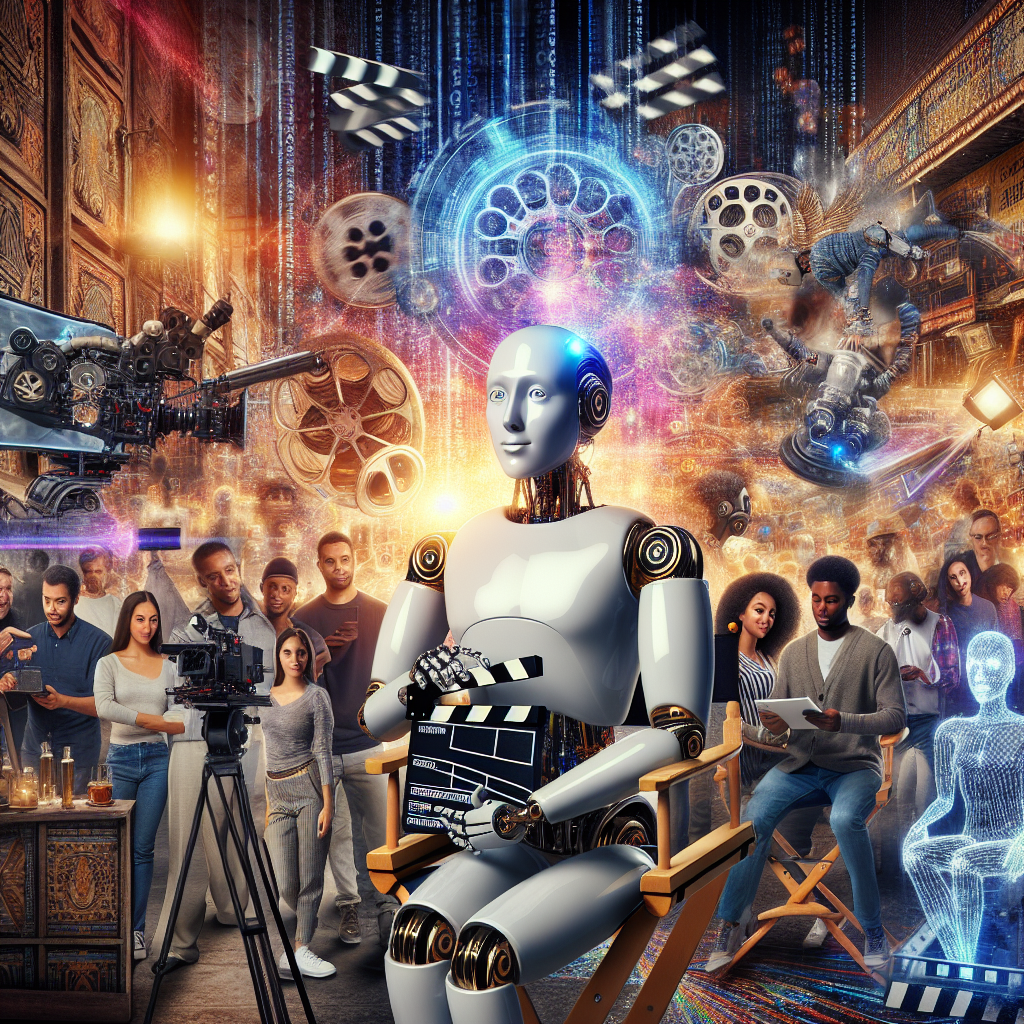
The world of film is undergoing a transformative evolution driven by rapid advances in technology, with Artificial Intelligence (AI) playing a pivotal role. As AI continues to shape numerous industries, its influence in film is both profound and intriguing. AI’s intersection with human creativity in filmmaking offers innovative methods of production, post-production, and even in film consumption. This intricate blend inspires critical discussions on the future of film as an art form and industry, prompting filmmakers, technologists, and audiences to rethink the entire cinematic experience.
The Influence of AI in Filmmaking
AI is reshaping how films are made, from conceptualization to final production. **Advanced algorithms** are assisting filmmakers in analyzing massive datasets to predict trends and tailor content more effectively. This tech-savvy approach lets studios mitigate financial risks and cater to audience preferences with greater accuracy. AI’s integration is particularly notable in areas such as:
- **Pre-production**: Streamlining casting and location scouting using data analytics.
- **Production**: Enhancing on-set decision-making through predictive analytics.
- **Post-production**: Automating editing processes for efficiency.
AI and Screenwriting
The script is the backbone of any film. AI is not just aiding writers but also turning into a collaborator that taps into vast datasets encompassing decades of storytelling. AI can suggest plot structures, character dialogues, and narrative styles that resonate with current audience moods. Key attributes of AI-enhanced screenwriting include:
- **Plot Prediction**: Analyzing successful screenplays to predict popular plot trajectories.
- **Dialogue Suggestions**: Fine-tuning conversation flows to suit character arcs.
- **Genre-Specific Advice**: Offering guidelines for maintaining genre integrity.
The Role of AI in Visual Effects and Editing
Visual effects and editing are integral to the overall storytelling process. AI technologies are transforming these domains by automating and enhancing traditional methods. With **machine learning algorithms**, editors can sort through extensive footage, identifying the best takes with precision. Visual effects, on the other hand, benefit from AI’s ability to simulate realistic environments and render them at high speed, lowering production costs and time. Consider these benefits:
- **Scene Recognition**: Automatic tagging of scenes for easier access.
- **Intelligent Rendering**: Accelerated development of complex visual effects shots.
- **Quality Assurance**: Ensuring post-production quality with predictive corrections.
AI’s Role in Creating Personalized Viewing Experiences
As AI becomes more sophisticated, the way audiences experience films is becoming more personalized. Streaming platforms use AI to analyze viewer habits and enhance recommendation systems, offering tailored content in various genres, formats, and lengths. This creates a unique cinematic journey for each viewer. Couple these personalized preferences with **adaptive streaming technologies**, and you have an immersive viewing experience that caters to personal tastes.
Ethical Considerations and Human Creativity
The rise of AI in the film industry presents ethical challenges, particularly concerning creative ownership and job displacement. Balancing human artistic expression with AI-generated content is crucial. **Transparency** in AI processes and clear delineations of human and AI contributions are essential for maintaining the integrity of the creative process.
The Future of AI in the Film Industry
The intersection of AI and human creativity in film is set to become more profound as technologies advance. **Content creation, distribution, and consumption** will continue to evolve, offering filmmakers new tools to push the boundaries of storytelling. The ultimate goal is for AI to complement, rather than replace, the artistic vision and emotional depth that human creativity brings to the art of filmmaking.
In conclusion, the interplay of AI and human creativity in film is not only enhancing productivity but also enriching the cinematic landscape. By following ethical practices and leveraging AI’s potential, the film industry can open new dimensions of storytelling that were not possible before, promising an exciting frontier for creators and audiences alike.
“`