
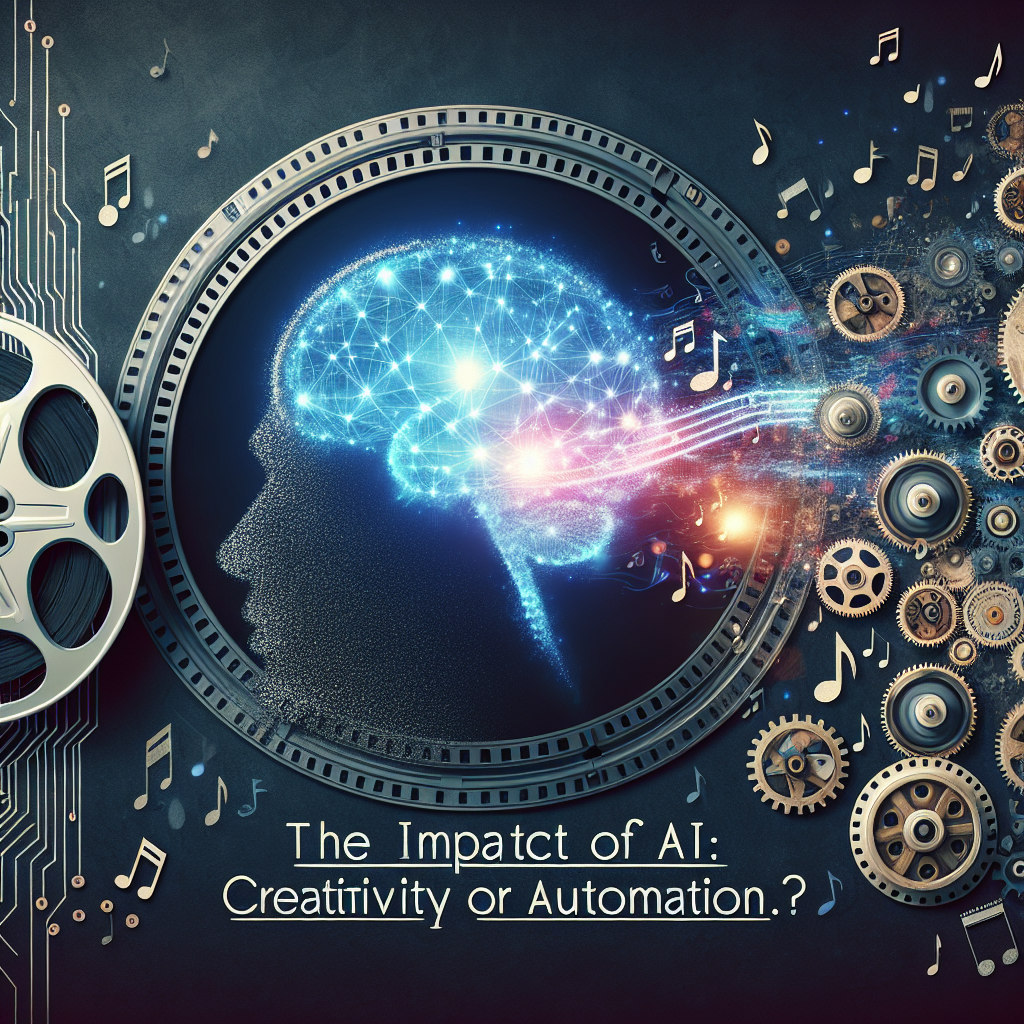
As the film industry stands at the cusp of a technological revolution, Artificial Intelligence (AI) is redefining the boundaries of what’s possible in movie production. One of the most intriguing developments is in the realm of movie soundtracks. Traditionally, composing a soundtrack has been a laborious task that demanded a mix of creativity, skill, and emotional intelligence from composers. However, with AI stepping into this domain, the landscape is shifting. This article delves into the dynamic impact that AI has on movie soundtracks, exploring whether it serves as a catalyst for creativity or merely a tool for automation.
Introduction
Artificial Intelligence is increasingly becoming integral in various sectors, and the film industry is no exception. With a keen focus on **AI in movie soundtracks**, this article investigates whether AI’s role is transformative or just another technological advancement aimed at simplification. We will explore whether AI’s involvement enriches the creative process or if it leans more toward sheer automation.
AI in Music Composition
AI technologies, particularly machine learning algorithms, have evolved to analyze music deeply, allowing them to compose music that **mimics human creativity**:
- **Machine Learning Algorithms**: Learn from existing soundtracks to create new compositions.
- **AI Tools like AIVA and Amper**: Assist in creating soundtracks by providing different moods and themes.
- **Collaboration with Human Composers**: Where AI provides the framework, human composers add their touch for a more personalized sound.
Advantages of AI-Generated Soundtracks
The benefits of integrating AI into soundtrack creation cannot be overlooked:
- **Speed and Efficiency**: AI can produce music quickly, reducing production time.
- **Cost-Effectiveness**: Lower costs by minimizing the need for large orchestras.
- **Innovation**: AI can merge various musical styles to create novel soundscapes.
Challenges and Controversies
Despite the advantages, using AI in soundtracks comes with its own set of hurdles:
- **Quality Concerns**: Can AI-generated music match the emotional depth human composers achieve?
- **Human Touch**: The lack of a personal, emotional touch in AI music.
- **Ethical Issues**: Concerns about AI possibly replacing human jobs in the industry.
Case Studies of AI in Soundtracks
Several films have already experimented with AI for movie soundtracks, providing us with valuable insights:
- **Film A**: Utilized an AI-generated soundtrack to create specific emotional responses.
- **Film B**: Used AI in tandem with human composers, achieving a hybrid form of soundtrack.
- **Industry Trends**: How other filmmakers are adopting or resisting AI in soundtrack creation.
The Future of AI in Movie Soundtracks
As AI continues to advance, its role in soundtrack creation is expected to grow. **Future prospects** include:
- **Enhanced Collaboration**: More seamless integration between AI and human composers.
- **AI as a Creative Tool**: Not just for automation but also for inspiring new musical ideas.
- **Customization and Personalization**: Tailored soundtracks that adapt based on audience preferences.
Conclusion
AI’s impact on movie soundtracks presents both exciting opportunities and considerable challenges. While it provides efficiencies and novel possibilities, it also raises concerns about creativity and the human element in art. As AI continues to evolve, its role in the artistic process will remain a topic of active discussion and exploration.