
“`html
The rise of Artificial Intelligence (AI) has significantly impacted various industries, offering innovative tools and methodologies that transform traditional processes. In the film industry, particularly in film scoring, AI is paving new ways for composers and creatives alike. While AI brings numerous benefits in terms of efficiency and resource management, it also raises questions about its influence on human creativity and originality. How does AI shape the art of film scoring, and what does it mean for human composers?
- Impact of AI on Film Scoring
- Enhancing Creativity Through AI
- Concerns and Challenges
- Case Studies and Success Stories
- Future Trends in AI Film Scoring
- Conclusion
Impact of AI on Film Scoring
**AI technology in film scoring is reshaping the creative landscape**, enabling composers to create innovative, complex soundscapes with greater efficiency. By utilizing AI-driven tools, composers can quickly iterate on ideas, explore new musical dimensions, and produce high-quality soundtracks that might otherwise take much longer to develop. **Leading software algorithms** now assist in generating musical scores by identifying patterns in existing compositions, suggesting harmonizations, and even composing entirely new pieces based on predefined parameters.
- **Time Efficiency**: AI can reduce the time it takes to compose music by automating repetitive tasks.
- **Inspiration and Innovation**: Offers new forms of inspiration, providing suggestions that composers might not have envisioned.
- **Enhanced Creativity**: Frees up time for human composers to focus on more creative decision-making processes.
Enhancing Creativity Through AI
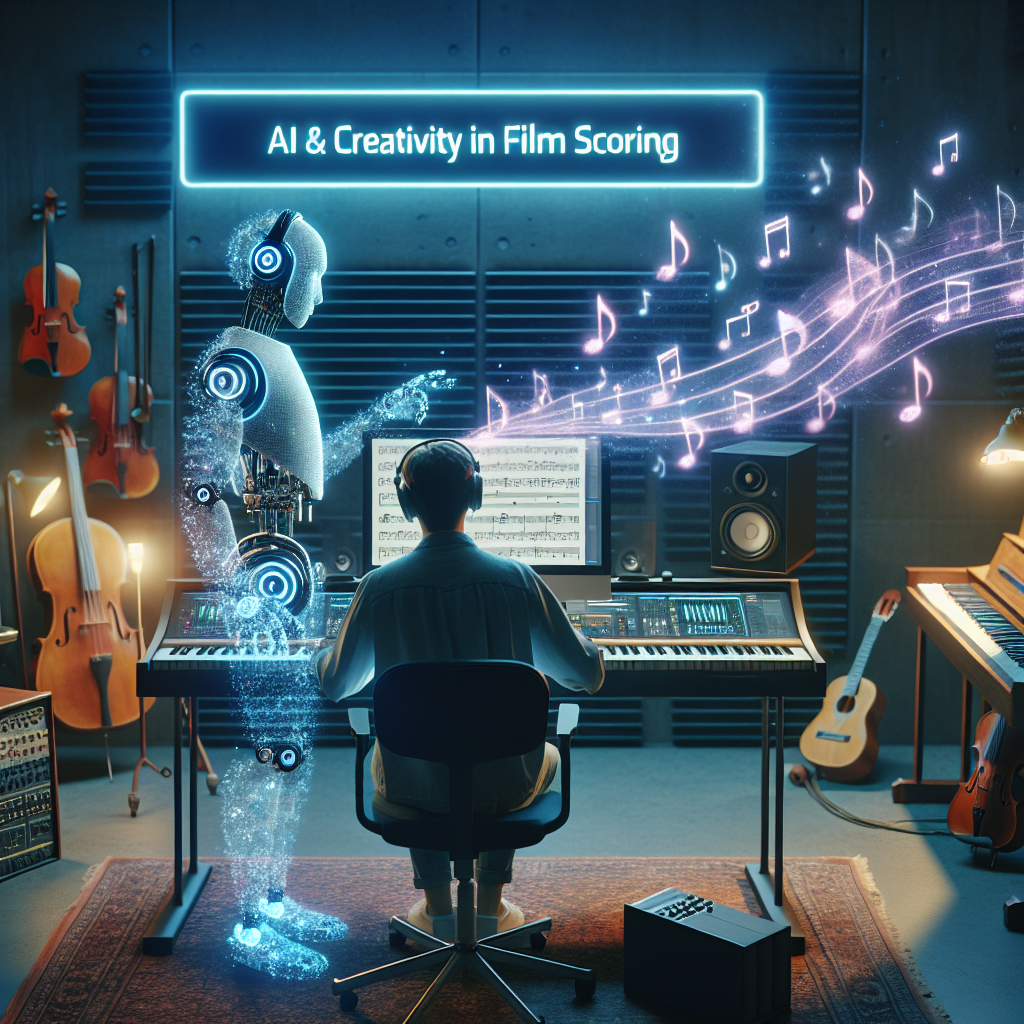
AI acts as a collaborative partner rather than a replacement for human creativity. **Composers can use AI tools** to explore vast libraries of sounds and musical structures, discovering novel combinations that enhance their creative output. This process empowers composers to broaden their creative horizons without being limited by traditional constraints.
- **Idea Generation**: AI systems generate basic musical themes, which composers can refine and develop.
- **Exploration of Musical Styles**: Ability to explore and fuse different musical styles quickly.
- **Real-time Feedback**: AI can provide instant feedback, allowing quick adjustments and experimentation.
Concerns and Challenges
Despite its benefits, the use of AI in film scoring also presents **certain challenges** that need to be addressed. One of the primary concerns is the potential loss of the human touch and emotional depth often associated with traditional music composition.
- **Lack of Emotional Depth**: AI-generated music might lack the nuanced emotional expression of a human composer.
- **Dependence on Technology**: Overreliance on AI could diminish traditional composing skills.
- **Intellectual Property Issues**: Questions about authorship and rights concerning AI-generated compositions.
Case Studies and Success Stories
Several **notable projects** have demonstrated the successful integration of AI into film scoring, yielding impressive results both in creativity and public reception. For instance, film projects that incorporated AI have achieved unique soundscapes that complement visual narratives in ways previously unattainable.
- **Film XYZ**: Utilized AI to develop a groundbreaking hybrid soundtrack that seamlessly blends traditional orchestral elements with digital innovation.
- **Composer ABC**: Reportedly enhanced their scoring process by integrating AI tools, resulting in an award-winning soundtrack.
- **Music Platform DEF**: Provides AI-driven music composition tools specifically designed for film scoring, gaining popularity among indie filmmakers.
Future Trends in AI Film Scoring
As AI technologies continue to evolve, future trends in AI film scoring are **expected to revolutionize the industry further**. Emerging AI models promise greater personalization and deeper emotional complexity, potentially bridging the current gap between human-like expression and algorithmic precision.
- **Personalized Soundtracks**: AI could enable highly tailored scores that adapt to a viewer’s emotional state or preferences.
- **Collaborative AI Platforms**: Platforms that allow composers and AI to work more seamlessly together in real-time.
- **Increased Accessibility**: AI tools could democratize film scoring, making it more accessible to those without formal training.
Conclusion
The impact of AI on human creativity in film scoring is profound and multifaceted. **While it enhances creative processes**, offering new opportunities for innovation, it also presents challenges that composers and the industry must navigate carefully. By thoughtfully integrating AI into the film scoring process, creators can harness its potential while preserving the emotional depth and humanity that define great music. As the technology continues to develop, ongoing dialogue between technologists and creatives will be crucial in shaping an industry future where both AI and human ingenuity thrive.
“`