
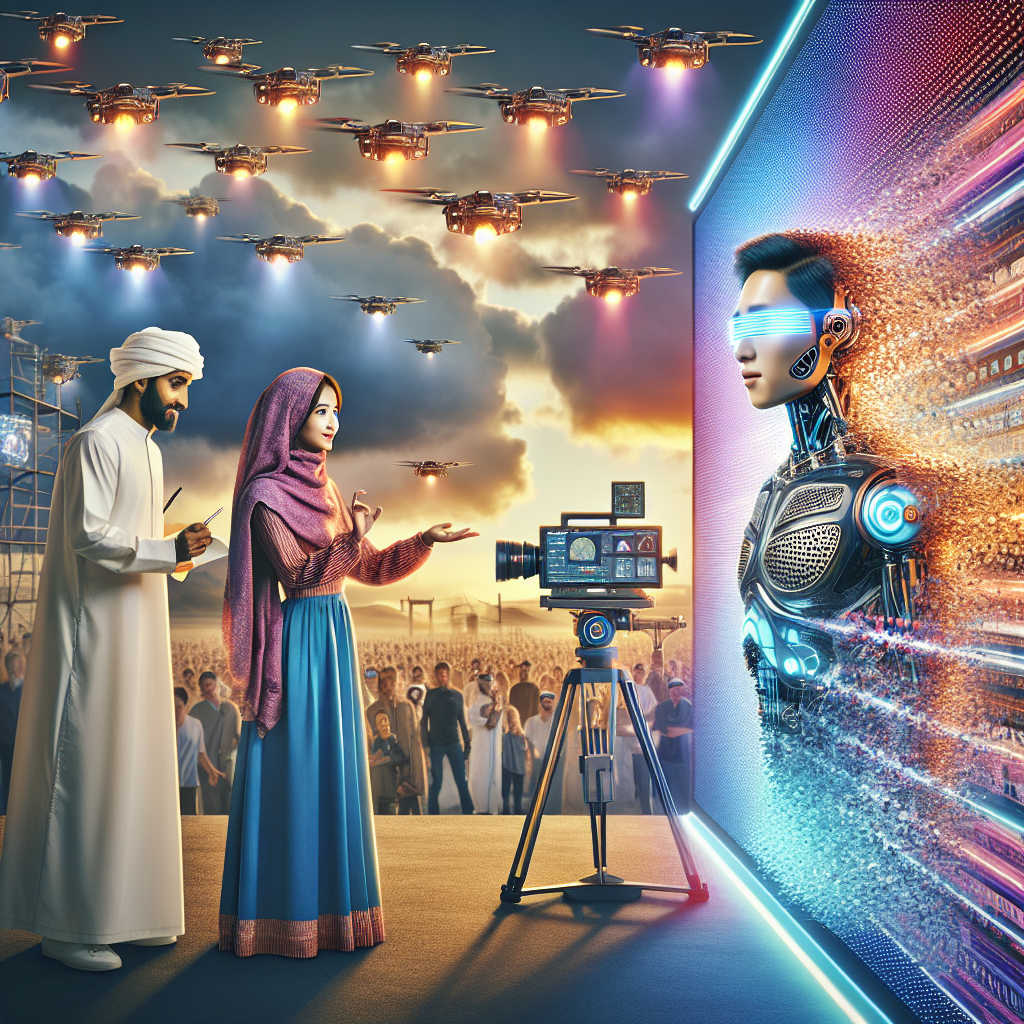
The landscape of visual effects (VFX) in filmmaking is undergoing a revolutionary transformation, thanks to the integration of Artificial Intelligence (AI). As filmmakers strive for more realistic and awe-inspiring visual narratives, AI has emerged as a game-changer, offering innovative solutions and enhancing creativity. This article delves into the future of visual effects in filmmaking, exploring how AI is set to redefine cinematic experiences.
Introduction: AI Meets VFX
Artificial Intelligence is swiftly revolutionizing various industries, and filmmaking is no exception. In the realm of visual effects, AI tools and technologies are breaking new ground, allowing filmmakers to push the boundaries of creativity and realism. **AI-powered VFX** enhances the storytelling process by enabling filmmakers to create **hyper-realistic environments and characters** that captivate audiences worldwide.
AI’s Role in Transforming Visual Effects
The integration of AI in VFX includes the use of machine learning algorithms, neural networks, and deep learning processes, which facilitate numerous enhancements:
- **Automation of Repetitive Tasks**: AI algorithms can handle labor-intensive tasks such as rotoscoping, match-moving, and color correction, allowing artists to focus on creative storytelling.
- **Enhanced Realism and Details**: AI can predict and simulate realistic physical behaviors, improving the visual fidelity of simulations such as smoke, fire, and water.
- **Procedural Content Generation**: AI-driven tools can generate complex environments and textures procedurally, significantly speeding up the production process.
Benefits of AI-Driven VFX
The adoption of AI in visual effects brings a plethora of benefits to the filmmaking process:
- **Cost Efficiency**: By automating laborious tasks, AI reduces the need for extensive manpower, thereby lowering production costs.
- **Time Savings**: Faster processing and rendering times result in quicker turnaround, enabling filmmakers to meet tight deadlines.
- **Increased Flexibility and Creativity**: Directors and VFX teams can experiment more, making changes as needed without significant delays or resource adjustments.
Challenges and Considerations
While AI presents numerous advantages, there are also challenges and considerations to address:
- **Data Dependency**: AI models require vast amounts of data for training, which can be a limiting factor for small-scale productions.
- **Skill Development**: The use of AI in VFX requires artists to learn and adapt to new technologies, demanding ongoing education and skill development.
- **Ethical Concerns**: The increasing realism of AI-generated visuals raises ethical questions regarding the potential for misinformation and the necessity of maintaining viewer trust.
The Future of VFX with AI
Looking ahead, the future of VFX with AI is promising and exciting. As technology continues to mature, it will open up new dimensions of creativity and exploration in filmmaking. Key trends to watch include:
- **Real-Time Rendering**: The demand for real-time VFX in gaming and virtual production will drive AI capabilities to deliver instant results.
- **User-Friendly Tools**: The democratization of AI technology will empower independent filmmakers, making sophisticated VFX tools accessible to all.
- **Collaborative AI Systems**: Filmmakers and AI will work hand-in-hand, creating a hybrid workflow that merges human creativity with machine precision.
In conclusion, AI is not just a tool but a powerful ally in the evolution of visual effects. As the boundary between imagination and reality continues to blur, AI promises to elevate the art of filmmaking to unprecedented heights, crafting a cinema of the future that is both breathtaking and mesmerizing.