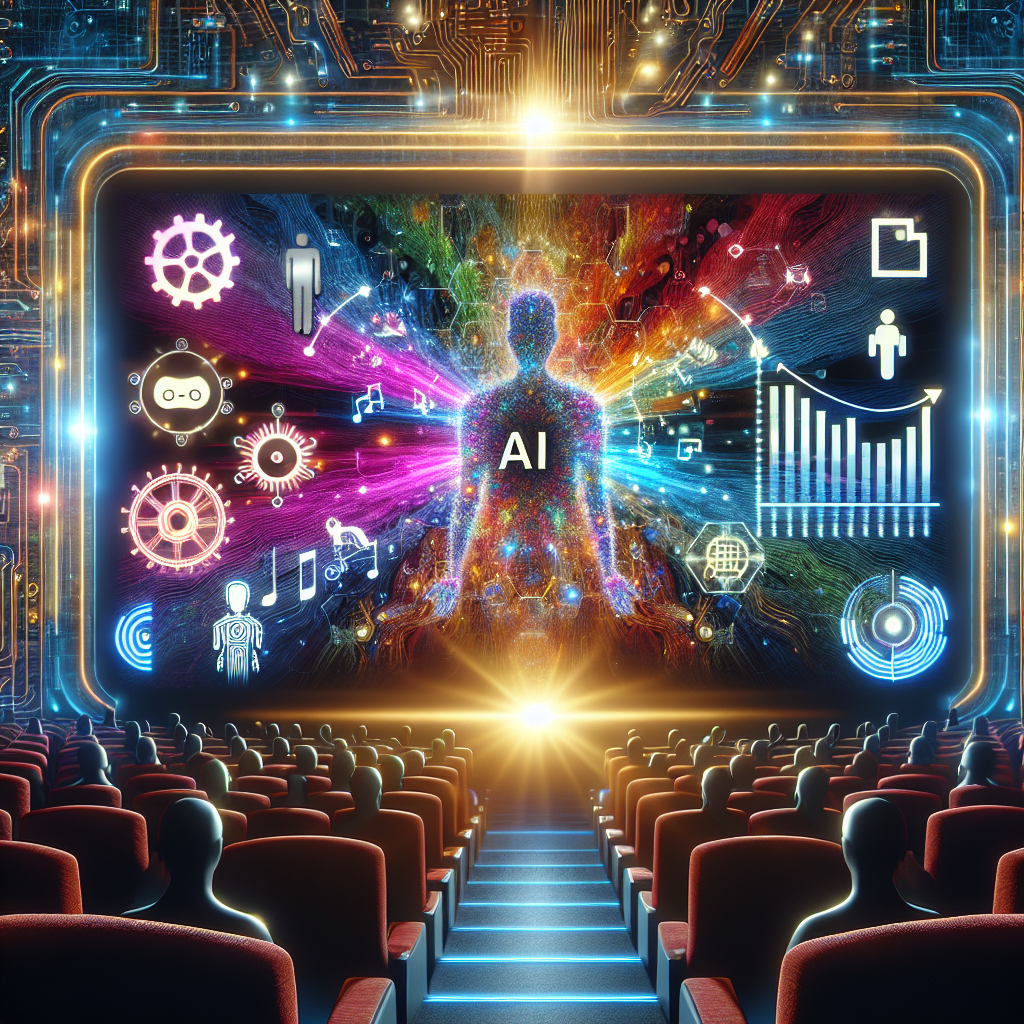
In the ever-evolving landscape of the movie industry, marketing plays a crucial role in determining the success of a film. With the advent of Artificial Intelligence (AI), movie marketing has undergone an unprecedented transformation. AI-driven automation is not only making marketing campaigns more efficient but also more personalized and engaging. This article explores how AI technologies are reshaping the future of movie marketing, making it more streamlined, targeted, and impactful.
Article Outline
- Introduction to AI in Movie Marketing
- Data Analytics & Audience Insights
- Personalized Marketing Campaigns
- Automation Tools & Technologies
- Social Media & Content Generation
- AI Chatbots for Enhanced Engagement
- Case Studies: Success Stories
- Challenges & Ethical Considerations
- Future Outlook
Introduction to AI in Movie Marketing
Artificial Intelligence is revolutionizing various industries, and the movie business is no exception. In the realm of movie marketing, AI provides sophisticated tools and methodologies for enhancing the effectiveness of promotional strategies. From harnessing vast amounts of data to crafting personalized experiences for different audience segments, AI-driven automation is setting new benchmarks in how movies are marketed.
Data Analytics & Audience Insights
One of the primary strengths of AI lies in its ability to analyze large datasets swiftly. By leveraging **machine learning algorithms** and **predictive analytics**, movie marketers can gain deep insights into audience behaviors and preferences.
- **Demographic Analysis:** AI tools can segment audiences based on age, location, gender, and more.
- **Behavioral Patterns:** Understanding viewing habits, social media interactions, and past movie preferences.
- **Sentiment Analysis:** Measuring how audiences feel about upcoming releases via social media monitoring.
Personalized Marketing Campaigns
Personalization is key in today’s marketing landscape. AI facilitates the creation of tailored marketing campaigns that resonate with individual audience members on a personal level.
- **Dynamic Content Creation:** Generating customized trailers, posters, and ad copies based on user preferences.
- **Targeted Advertising:** Deploying ads to the right audience at the right time, increasing conversion rates.
- **Recommendation Systems:** Suggesting movies to users based on their viewing history, similar to platforms like Netflix.
Automation Tools & Technologies
AI-driven automation tools are simplifying the complexities of movie marketing, allowing for more efficient and speedier execution of campaigns.
- **Marketing Automation Platforms:** Integrating various aspects of marketing, from email campaigns to social media posts, into a unified platform.
- **AI-Powered Analytics Tools:** Tools like Google Analytics and others that provide real-time insights into campaign performance and ROI.
- **Content Management Systems (CMS):** AI-enhanced CMS that recommend content strategies and optimize delivery schedules.
Social Media & Content Generation
Social media platforms are pivotal for movie marketing, and AI enhances how content is created and distributed on these platforms.
- **AI Content Generators:** Tools that create compelling social media posts, blogs, and multimedia content.
- **Influencer Marketing:** AI identifies influencers whose followers align with the movie’s target audience.
- **Engagement Tracking:** Monitoring and analyzing engagement metrics to refine social media strategies.
AI Chatbots for Enhanced Engagement
AI chatbots are becoming integral to boosting audience engagement. These virtual assistants offer personalized interactions, answering queries and providing movie recommendations in real-time.
- **24/7 Customer Support:** Always available to handle audience queries and provide assistance.
- **Interactive Experience:** Creating engaging and interactive conversations, making the audience feel heard and valued.
- **Seamless Integration:** Easily integrated into websites, apps, and social media platforms.
Case Studies: Success Stories
Several movies have seen remarkable success by incorporating AI-driven marketing strategies. Here are a few noteworthy examples:
- **20th Century Fox’s AI Trailer:** Used machine learning to analyze horror movie trailers and create an effective one for “Morgan.”
- **IBM Watson’s Sentiment Analysis:** Used for the promotion of “The Twilight Saga,” analyzing audience sentiment and dynamically adjusting marketing strategies.
- **Netflix’s Recommendation Engine:** Continually fine-tuned by AI, boosting viewership by suggesting relevant films and series to its users.
Challenges & Ethical Considerations
Despite its many advantages, AI-driven movie marketing also presents certain challenges and ethical concerns.
- **Data Privacy:** Ensuring customer data is protected and not misused.
- **Bias in Algorithms:** Addressing and mitigating biases within AI algorithms to ensure fair and accurate targeting.
- **Transparency:** Ensuring transparent methodologies so that users understand how their data is being used.
Future Outlook
The future of movie marketing looks promising with continued advancements in AI technologies. As machine learning models become more sophisticated, the field of AI-driven marketing will become even more precise and impactful.
- **Enhanced Personalization:** Future AI will offer even more nuanced personalization, delivering hyper-targeted content that further elevates audience engagement.
- **Real-Time Adaptation:** Marketing strategies that adapt in real-time based on ongoing data analysis and audience behavior.
- **Augmented Creativity:** AI will assist in creative content generation, offering new storytelling techniques and immersive experiences.