
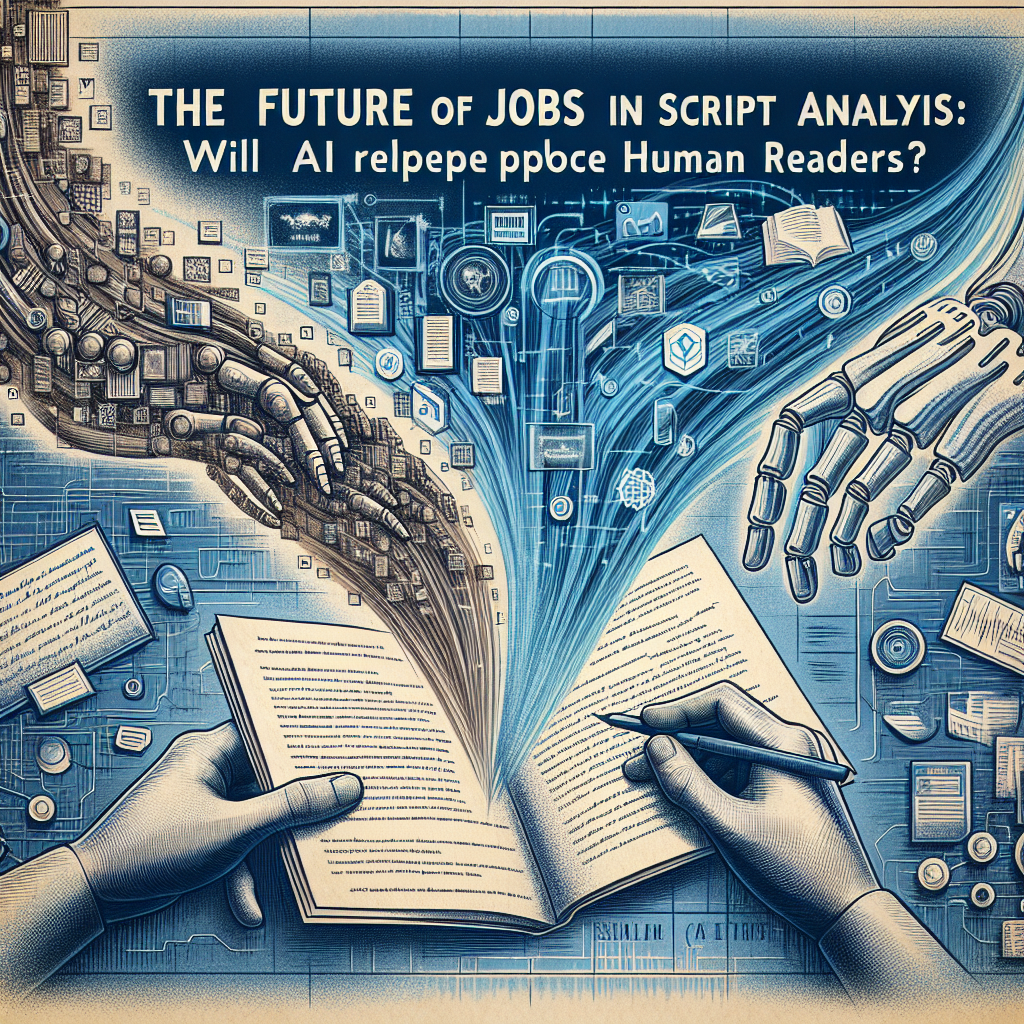
The rise of artificial intelligence (AI) is transforming numerous industries, with the film industry standing at the forefront of this technological revolution. One area seeing a significant impact is script analysis, traditionally the domain of skilled human readers. This blog post delves into the future of jobs in script analysis, examining whether AI will ultimately replace human readers and exploring the implications for filmmakers and the industry at large.
- The Future of Script Analysis
- The Role of Human Readers in Script Analysis
- The Emergence of AI in Script Analysis
- Potential Challenges of AI in Script Analysis
- Impact on the Film Industry
- Conclusion
The Future of Script Analysis
The **script analysis process** is critical in the development of a film, influencing everything from story development to final production decisions. Traditionally, this responsibility lies with human readers who assess the script’s narrative structure, character development, dialogue, and thematic elements. However, with the advent of AI technology, there is a paradigm shift towards integrating **machine learning** and **algorithms** to enhance accuracy and efficiency.
The Role of Human Readers in Script Analysis
Human readers bring a depth of understanding, intuition, and emotion to script analysis that is inherently human. They are adept at recognizing subtle nuances, cultural contexts, and emotional undercurrents—skills that, at present, machines struggle to replicate.
- Deep Understanding of Content: Human readers can offer insights into the emotional and psychological impacts of a script.
- Intuitive Judgment: They leverage cultural and societal knowledge to judge the script’s relatability and potential impact.
- Creative Input: Human readers suggest revisions that align with artistic vision and contemporary trends.
The Emergence of AI in Script Analysis
AI is increasingly being harnessed in script analysis, offering numerous advantages over traditional methods, chiefly in **speed** and **data processing capabilities**. AI tools can perform comprehensive analysis on large scripts in a fraction of the time it would take a human. They utilize advanced algorithms to scan scripts for plot inconsistencies, character development issues, and even potential box office performance.
- Data-Driven Insights: AI provides quantitative analysis based on historical data, forecasting commercial success.
- Efficiency: Automating routine tasks ensures faster turnaround times in script evaluations.
- Scalability: AI can handle large volumes of scripts, offering scalability without compromising quality.
Potential Challenges of AI in Script Analysis
While AI offers significant benefits, it is not without challenges. Current AI systems can overlook the subtleties and creativity that human readers provide and might fail to understand complex cultural references.
- Lack of Emotional Intelligence: AI lacks the emotional intelligence necessary to fully interpret human emotions expressed in scripts.
- Bias in Algorithms: There is a risk of perpetuating biases present in training data, leading to misjudgment in script evaluation.
- Cultural Sensitivity: AI systems might struggle with scripts that require deep cultural or societal understanding.
Impact on the Film Industry
The integration of AI in script analysis could reshape the film industry, leading to more data-driven approaches to filmmaking and influencing decisions from green-lighting projects to marketing strategies. However, the human touch remains vital, as it complements AI by adding context, emotional depth, and creativity to the analytical process.
Conclusion
AI will likely not replace human readers in script analysis entirely but will serve as a complementary tool, enhancing efficiency and accuracy. The collaboration between AI technology and human expertise promises a future where high-quality scripts are brought to life more effectively, benefiting filmmakers and audiences alike.