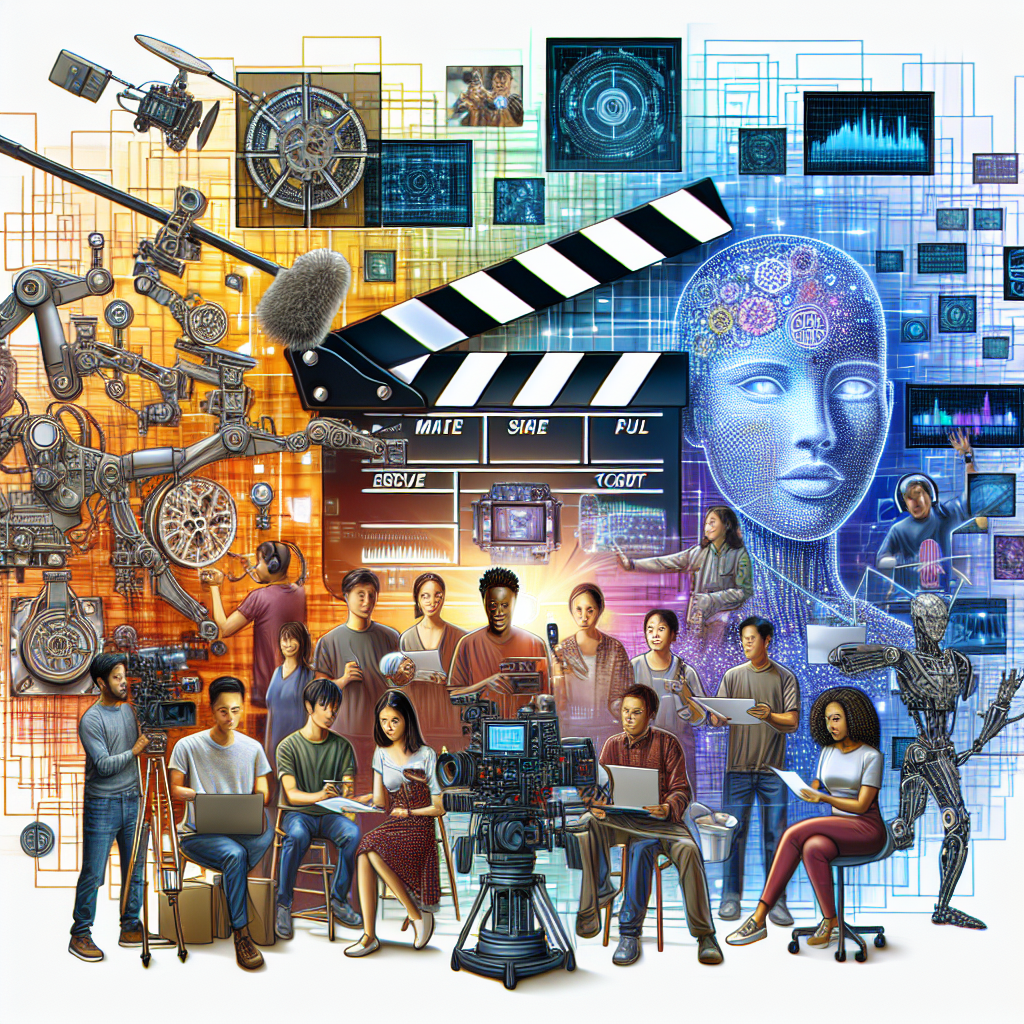
In recent years, the film industry has experienced seismic shifts primarily due to advancements in technology, especially the integration of Artificial Intelligence (AI). This emerging technology is reshaping almost every facet of filmmaking, from scriptwriting and production to distribution and marketing. As we progress deeper into an AI-dominated era, there is an increasing curiosity about what the future holds for jobs within the film industry. In this blog, we will explore various aspects of this transformation and discuss how AI is likely to create, alter, or even obsolete certain roles within the film sector.
Article Outline
- Impact of AI on Creative Roles
- Impact of AI on Technical Roles
- Impact of AI on Administrative and Managerial Roles
- New Opportunities Created by AI
- Skills Required to Adapt in an AI-Driven Film Industry
- Conclusion
Impact of AI on Creative Roles
AI is influential in redefining creative roles in the film industry. The traditional process of scriptwriting, for instance, is undergoing a transformation. **AI-driven tools** can now analyze vast amounts of data to predict successful plot structures, character development, and dialogues. While AI can aid creativity, it cannot replicate the human touch and intuition that many believe are the essence of true creativity. Therefore:
- **Scriptwriters** might use AI as a tool to generate ideas or improve existing scripts rather than seeing it as an outright replacement.
- **Directors and producers** could utilize AI for visualizing scenes using AI-generated storyboards or previs.
- **Editors** might leverage AI to automate routine editing tasks, allowing more time for creative decision-making.
Impact of AI on Technical Roles
The technical aspects of filmmaking are ripe for AI integration. **Cinematography**, **sound engineering**, and **special effects** have all seen significant AI-enhancements. AI can track visual elements in real-time, create seamless CG effects, enhance sound with precision, and even help in managing lighting setups. Some ways AI might affect these roles include:
- AIdriven **drones** for dynamic and precise camera movements
- Increased automation in **VFX production**, reducing time-consuming manual tasks
- Improved **sound synchronization** and mixing processes using AI algorithms
Impact of AI on Administrative and Managerial Roles
Administrative functions are also being optimized with AI. Tasks such as budgeting, scheduling, and logistics can be streamlined thanks to AI-powered tools, providing administrators with more accurate forecasting and decision-making capabilities:
- AI will likely lead to smarter **production scheduling and management**.
- **Analytics tools** will better predict and manage film marketing strategies, enhancing audience engagement and optimizing advertising budgets.
New Opportunities Created by AI
Despite fears of job obsolescence, AI is also generating new roles and opportunities. As AI continues to evolve, it opens the door for novel jobs like:
- **AI specialists for film** who can integrate AI technologies into various production aspects
- **Data analysts** focused on film audience trends and content performance
- **Ethical AI consultants** in charge of ensuring technology use respects privacy and creative integrity
Skills Required to Adapt in an AI-Driven Film Industry
To thrive in the AI-dominant landscape, film professionals will need to upskill or reskill in several key areas:
- **Technical proficiency**: Familiarity with AI tools and technologies used within specific roles.
- **Creative adaptability**: Embracing AI as a collaborator in the creative process, rather than a competitor.
- **Soft skills**: Problem-solving, strategic thinking, and creativity will always be in demand, ensuring the human aspect of storytelling prevails.
Conclusion
In conclusion, while AI is undeniably changing the landscape of film industry jobs, it is not solely a harbinger of obsolescence. Rather, it is a catalyst for evolution and innovation across the sector. The journey of cohabitation with AI promises to create a more efficient, creative, and richer film industry. Through upskilling and embracing new technologies, film professionals can ride the wave of AI advancements, ensuring a brighter future for the industry.