
“`html
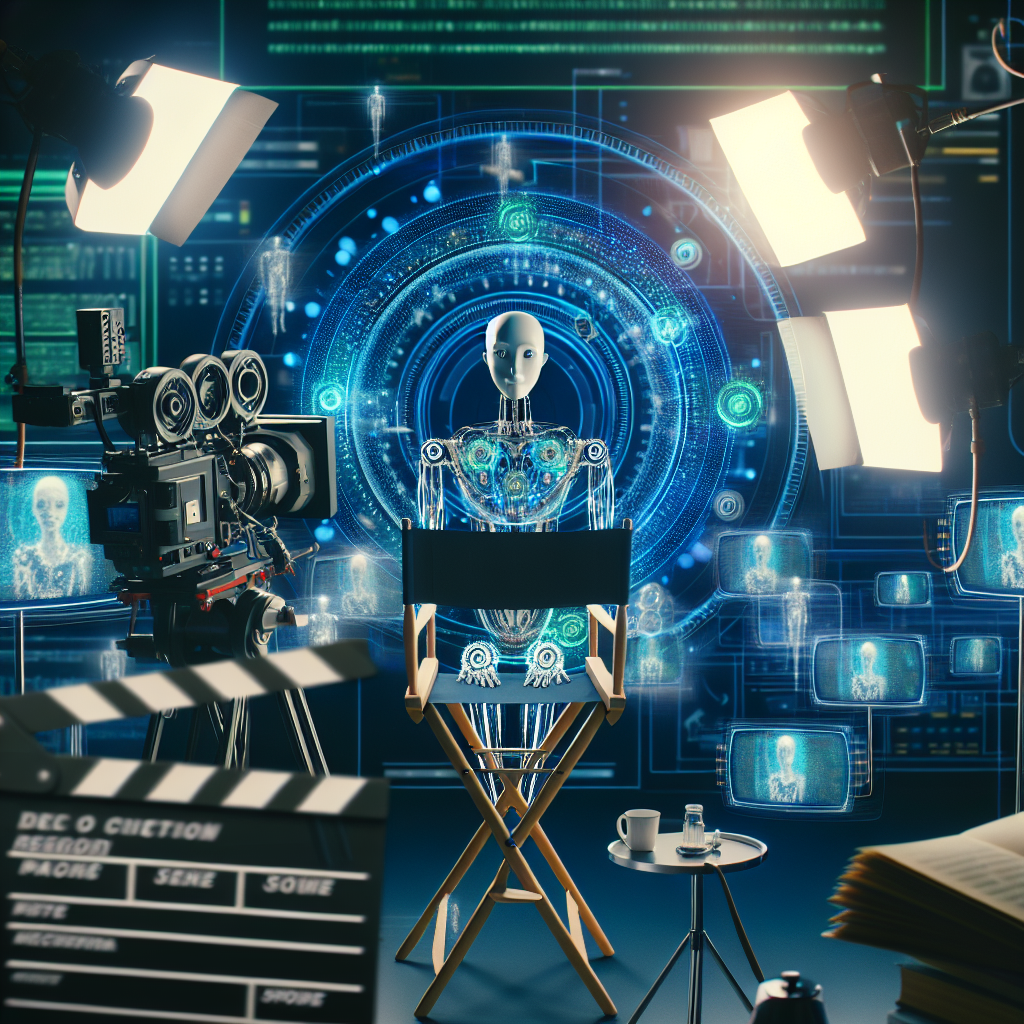
In today’s fast-paced digital age, the advent of artificial intelligence (AI) is reshaping numerous industries, and the world of filmmaking is no exception. With AI technologies becoming more advanced and pervasive, many wonder about the future role of film directors. Will AI diminish the creative influence of directors, or will it serve as an empowering tool that revolutionizes storytelling? This article delves into the potential future of film directors in an AI-driven world, examining the benefits and challenges associated with this technological evolution.
Current State of AI in Filmmaking
A decade ago, the notion of AI in filmmaking was limited to futuristic movies. Today, AI is actively being integrated into various facets of film production. **AI-driven technologies** are employed in:
- Script Analysis: Analyzing scripts for *viability*, *market trends*, and *potential audience appeal*.
- Visual Effects (VFX): Enhancing realistic effects using AI-driven algorithms.
- Editing: Providing editing suggestions to streamline the production process.
These advancements have opened new doors yet raise questions regarding the film director’s evolving role.
AI Tools and Platforms Impacting Film Direction
Several AI tools now assist directors in the filmmaking process:
- Deep Learning Algorithms: These are used in pre-production to predict audience reactions and improve script quality.
- Virtual Reality (VR) and Augmented Reality (AR): Allow directors to visualize scenes or settings before actual filming.
- AI-Powered Storytelling Platforms: Help in creating engaging narratives by analyzing successful story elements from blockbusters.
The integration of these tools enables directors to be more resourceful, innovative, and efficient in their work.
Creative Challenges and Opportunities
AI’s influence poses both creative challenges and opportunities for directors:
- Automation’s Intrusion: There are concerns over whether creativity can be quantifiably managed by AI.
- Enhanced Creativity: On the flip side, AI could extend creative boundaries by providing new *insights and inspiration*.
- Data-Driven Narratives: Stories grounded in data analysis can cater to larger, more diverse audiences.
The successful directors of the future will likely be those who can best harness AI’s potential while maintaining their unique creative vision.
Revolutionizing the Director’s Role
The AI-driven evolution may redefine the traditional role of directors. In a future dominated by AI:
- The role of directors may **shift towards becoming collaborative conductors** who blend human ingenuity with AI capabilities.
- Directors might focus more on the *strategic and narrative aspects* of filmmaking rather than the technical minutiae.
- Personal storytelling: New tools enable directors to personalize narratives, crafting more relatable and individualized audience experiences.
Thus, the director’s role could become more encompassing, strategic, and enhanced by technology.
What Does the Future Hold?
Considering current trends, what could the future scenario look like for film directors?
- Increased Efficiency: AI will continue to enhance workflows and decrease production time.
- Collaborative Filmmaking: Expect a more collaborative effort among human creators and AI tools.
- New Storytelling Formats: Immersive experiences will emerge, creating new opportunities for narrative exploration.
In the immediate future, embracing these changes and developing new skills will be essential for directors.
Ethical Considerations and Human Element
The rise of AI in filmmaking raises several ethical considerations:
- Authenticity: Dependence on AI might raise questions about the *authenticity* and traditional *artistic process* of filmmaking.
- Data Privacy: Use of audience data to tailor films poses significant privacy concerns.
- Job Displacement: Technological automation might threaten jobs within specific sectors of film production.
Directors, producers, and stakeholders must maintain the **balance between innovation and ethics** to ensure the human element remains central to filmmaking.
Conclusion
As AI continues to become an integral component of filmmaking, the role of film directors is set to evolve incredibly. **AI is not here to replace directors but to assist and empower them** to reimagine storytelling. Future directors will need to embrace AI as a collaborative ally—leveraging its strengths while staying true to their creative instincts and artistic vision. In this AI-driven world, directors who synergize technology with human creativity will redefine and elevate the future of film storytelling.
“`