
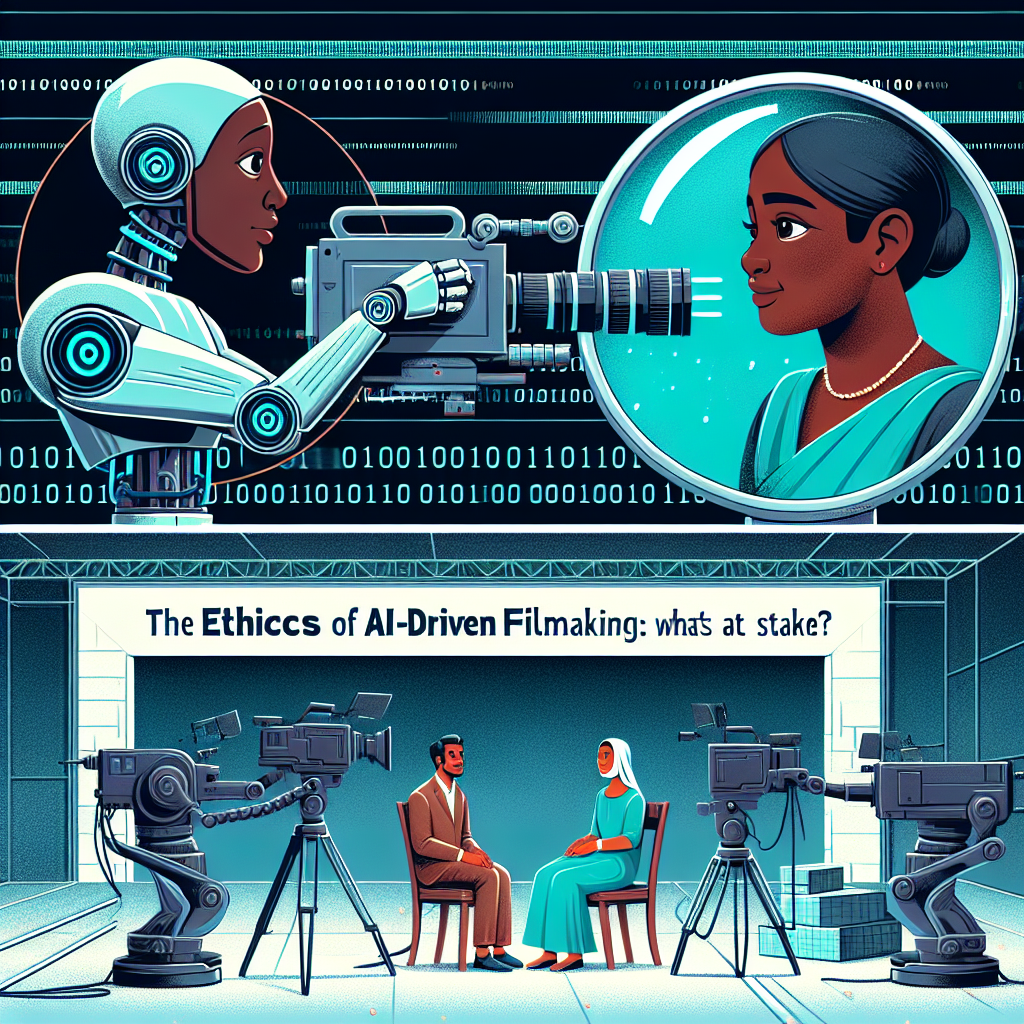
Artificial Intelligence (AI) is reshaping industries across the globe, and the world of filmmaking is no exception. With the potential to revolutionize how movies are made, edited, and even consumed, AI-driven filmmaking brings with it a host of ethical considerations. What’s at stake as we navigate this brave new world?
Article Outline
- Introduction to AI-Driven Filmmaking
- The Benefits of AI in Filmmaking
- Ethical Considerations in AI-Driven Filmmaking
- Impact on Employment & Industry Dynamics
- Privacy Concerns and Consent
- Bias and Representation
- Authorship and Credits
- Conclusion
Introduction to AI-Driven Filmmaking
AI-driven filmmaking leverages advanced algorithms to assist or even completely automate aspects of film production. From scriptwriting to editing trailers, AI enhances efficiencies and introduces innovative possibilities. However, as AI becomes more ingrained in the filmmaking process, ethical challenges inevitably arise.
The Benefits of AI in Filmmaking
Adopting AI in filmmaking brings numerous advantages:
- Efficiency: AI can significantly reduce the time and cost associated with various production stages, such as editing and special effects.
- Creativity: AI tools can suggest novel plot points or editing styles that filmmakers may not have considered.
- Personalization: AI algorithms can tailor content recommendations to individual viewers, enhancing their viewing experience.
- Data Analysis: AI can analyze vast amounts of audience data to predict trends and preferences, guiding marketing and distribution strategies.
Ethical Considerations in AI-Driven Filmmaking
AI’s integration into filmmaking poses several ethical dilemmas:
Impact on Employment & Industry Dynamics
As AI automates tasks traditionally performed by humans, concerns about job displacement and industry change arise. Key points include:
- Job Displacement: Roles such as editors or special effects artists may be at risk as AI takes over these tasks.
- Skill Evolution: As AI handles more technical aspects, industry professionals will need to adapt by developing new skills.
- Economic Impact: The cost-effectiveness of AI could reduce production budgets, possibly affecting wages and job availability.
Privacy Concerns and Consent
With AI’s ability to analyze vast amounts of data, privacy and consent issues come to the fore:
- Data Use: AI systems often require large datasets, which may include sensitive personal information.
- Consent: It’s crucial to ensure that individuals provide informed consent for their data to be used in AI applications.
- Security: Safeguarding data against breaches and misuse is imperative to maintain audience trust.
Bias and Representation
AI systems can perpetuate and even amplify biases present in their training data:
- Algorithmic Bias: AI can unintentionally reinforce stereotypes or exclude marginalized groups.
- Diverse Datasets: Ensuring diverse and representative datasets is essential for fair outcomes.
- Ethical AI Design: Incorporating ethical considerations in AI development can mitigate these issues.
Authorship and Credits
The role of AI in creative processes raises questions about authorship and intellectual property:
- Creative Ownership: When AI contributes to a film’s creation, determining who deserves credit can be complex.
- Intellectual Property: Legal frameworks may need to evolve to address the ownership of AI-generated content.
- Transparency: Transparent disclosure of AI’s role in production can recognize its contribution while maintaining human accountability.
Conclusion
The ethics of AI-driven filmmaking involve a delicate balance of innovation and responsibility. As technology advances, keeping ethical considerations at the forefront ensures that AI can enhance the filmmaking experience without compromising on key values such as fairness, privacy, and creative integrity.
In this ever-evolving landscape, filmmakers, technologists, and policymakers must collaborate to navigate the complexities of AI’s impact on the cinematic world. The future of filmmaking undoubtedly holds exciting possibilities, but it also demands careful reflection and responsible action to ensure it serves all stakeholders fairly and justly.