
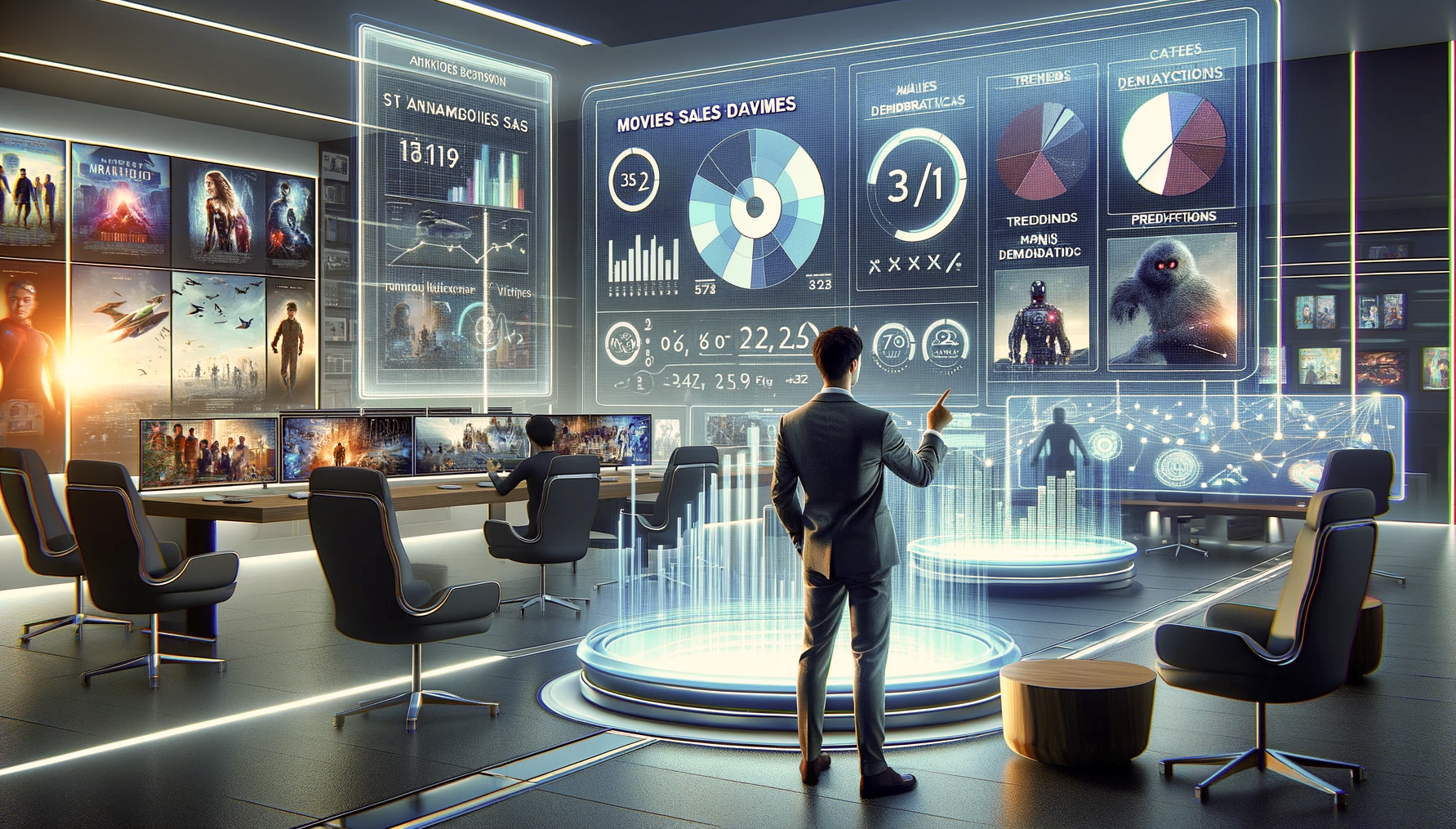
Artificial Intelligence (AI) has become a transformative force in various industries, including the entertainment sector, significantly impacting marketing and sales analysis of movies. AI’s integration into these areas can provide deep insights, streamline processes, and enhance decision-making. Here are some ways AI is used in the marketing and sales analysis of movies:
Audience Insights and Segmentation: AI can analyze vast amounts of data from social media, search engines, and other online platforms to understand audience preferences, demographics, and behavior. This information allows marketers to segment the audience more effectively and tailor promotional strategies to different groups, improving engagement and conversion rates.
Predictive Analytics: By leveraging historical data and current market trends, AI algorithms can predict a movie’s success, including box office performance, audience reception, and potential revenue streams. These predictions help studios make informed decisions about marketing budgets, release dates, and target markets.
Content Optimization: AI tools can analyze trailer views, social media reactions, and other engagement metrics to determine what content resonates most with audiences. This insight can guide the creation of more effective marketing materials, such as trailers, posters, and social media posts, ensuring they capture the audience’s interest and drive movie attendance.
Personalization and Targeted Advertising: AI enables the creation of personalized marketing campaigns that speak directly to individual preferences and behaviors. By analyzing past viewing habits and online interactions, AI can help studios deliver targeted ads across various digital platforms, increasing the relevance and effectiveness of promotional efforts.
Sentiment Analysis: Through natural language processing (NLP), AI can analyze social media posts, reviews, and comments to gauge public sentiment about a movie. This real-time feedback allows marketers to adjust campaigns, address potential concerns, and highlight positive aspects that resonate with audiences.
Chatbots and Customer Service: AI-powered chatbots can engage with potential viewers on websites, social media, and messaging platforms, providing information about release dates, show times, and plot details. These interactions can boost interest and ticket sales while gathering valuable data on audience inquiries and preferences.
Market Trend Analysis: AI can identify emerging trends in the film industry by analyzing data from various sources, including box office performances, streaming service viewership, and social media trends. This information helps studios and marketers stay ahead of the curve and align their strategies with evolving consumer interests.
Efficiency in Media Buying: AI algorithms can optimize the allocation of advertising budgets across channels, ensuring that marketing spend is directed towards the most effective mediums and times. This maximizes the return on investment for promotional activities.
In summary, AI in marketing and sales analysis of movies enables more data-driven, personalized, and efficient strategies. It helps studios and marketers understand and predict audience behaviors, optimize promotional content, and ultimately, improve the financial success and reach of their films.