
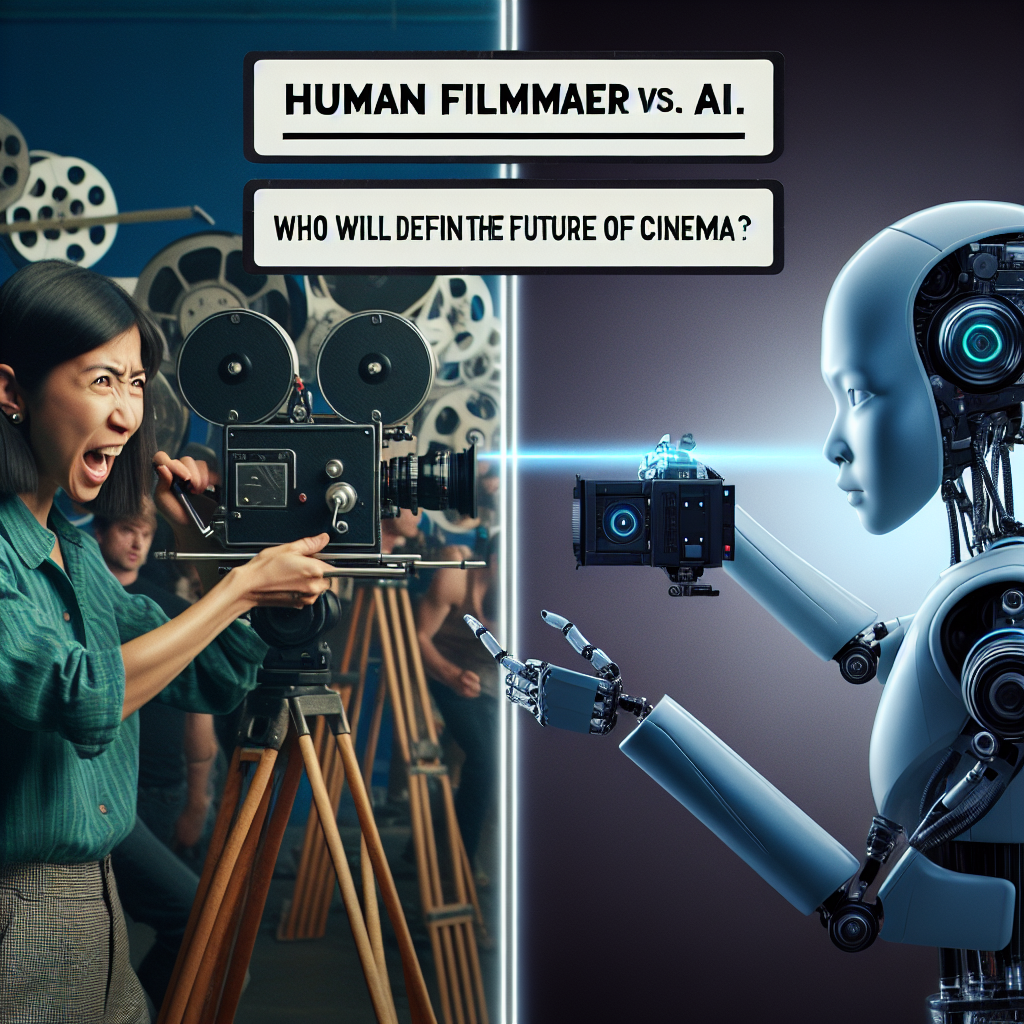
A century ago, the notion of artificially intelligent machines shaping the future of cinema would have seemed pure fantasy. Today, thanks to unprecedented advances in AI technology, we stand at a crossroads where filmmakers and AI could collaborate or compete to define the next era of filmmaking. This discussion delves into the evolving landscape of cinema, focusing on the key differences, potential collaborations, and the possible futures shaped by human filmmakers and AI.
Article Outline
- The Evolution of AI in Cinema
- Strengths of Human Filmmakers
- Strengths of AI in Filmmaking
- Case Studies and Examples
- Collaboration Between Humans and AI
- The Future of Cinema
The Evolution of AI in Cinema
Artificial Intelligence has slowly but surely made its way into the movie industry. **Initially, AI was employed for rudimentary tasks** like scriptwriting assistance and post-production editing. As technology advanced, AI’s role expanded to include **predictive analytics**, **audience preference mining**, and even **automatic CGI creation**.
- Early Usage: Assisting in scriptwriting and character development
- Mid Evolution: Enhancing post-production tasks such as editing and animation
- Current Trends: Employing AI for audience analytics and CGI
Strengths of Human Filmmakers
Human filmmakers bring a nuanced touch that’s hard to replicate. They possess **emotional intelligence, contextual understanding, and creative flair** that give life to stories.
- Emotional Depth: Ability to create deep, emotionally resonant narratives
- Cultural Sensitivity: Understanding of cultural nuances and contexts
- Artistic Vision: Unique, individualized approach to storytelling
Strengths of AI in Filmmaking
Conversely, AI offers **speed, efficiency, and data-driven insights** that have transformed various aspects of filmmaking.
- Efficiency: Rapid data processing and content generation
- Objectivity: Data-driven decision making minimizes biases
- Automation: Streamlining repetitive tasks such as editing and CGI rendering
Case Studies and Examples
Several notable instances highlight how AI has already begun to make an impact.
- Morgan (2016): AI was used to create a trailer for the movie, demonstrating its capability in understanding narrative structures.
- Sunspring (2016): A short film entirely written by an AI, showcasing mixed results but endless possibilities.
- Benjamin (2020): An AI-directed short film that stirred discussions about the potential and limitations of AI in creative roles.
Collaboration Between Humans and AI
**Collaborations between humans and AI offer the best of both worlds**. Combining the **creative genius of human filmmakers** with the **efficiency and analytical power of AI** can lead to groundbreaking advancements in cinema.
- Scriptwriting: AI provides data-backed suggestions while humans add emotional depth.
- Post-Production: AI handles repetitive tasks, freeing up human creatives for more complex work.
- Marketing: AI-driven analytics help target the right audience, while humans tailor the messaging.
The Future of Cinema
The future of cinema could unfold in numerous ways, with **potential paths ranging from pure human creation to fully AI-driven productions**. However, a collaborative approach seems the most promising, leveraging the strengths of both entities.
- Technological Integration: More sophisticated AI tools will seamlessly integrate into current filmmaking processes.
- Human-AI Hybrids: Collaborative efforts will result in richer, more diversified storytelling.
- Audience Experience: Personalization and interactivity will reach new heights, catering to individual viewer preferences on a granular level.
The frontier of cinema is an exciting, evolving space. Whether human filmmakers, AI, or a synthesis of both defines the future, one thing is certain: **Cinema will continue to evolve**, captivating audiences in new and unimaginable ways.