
“`html
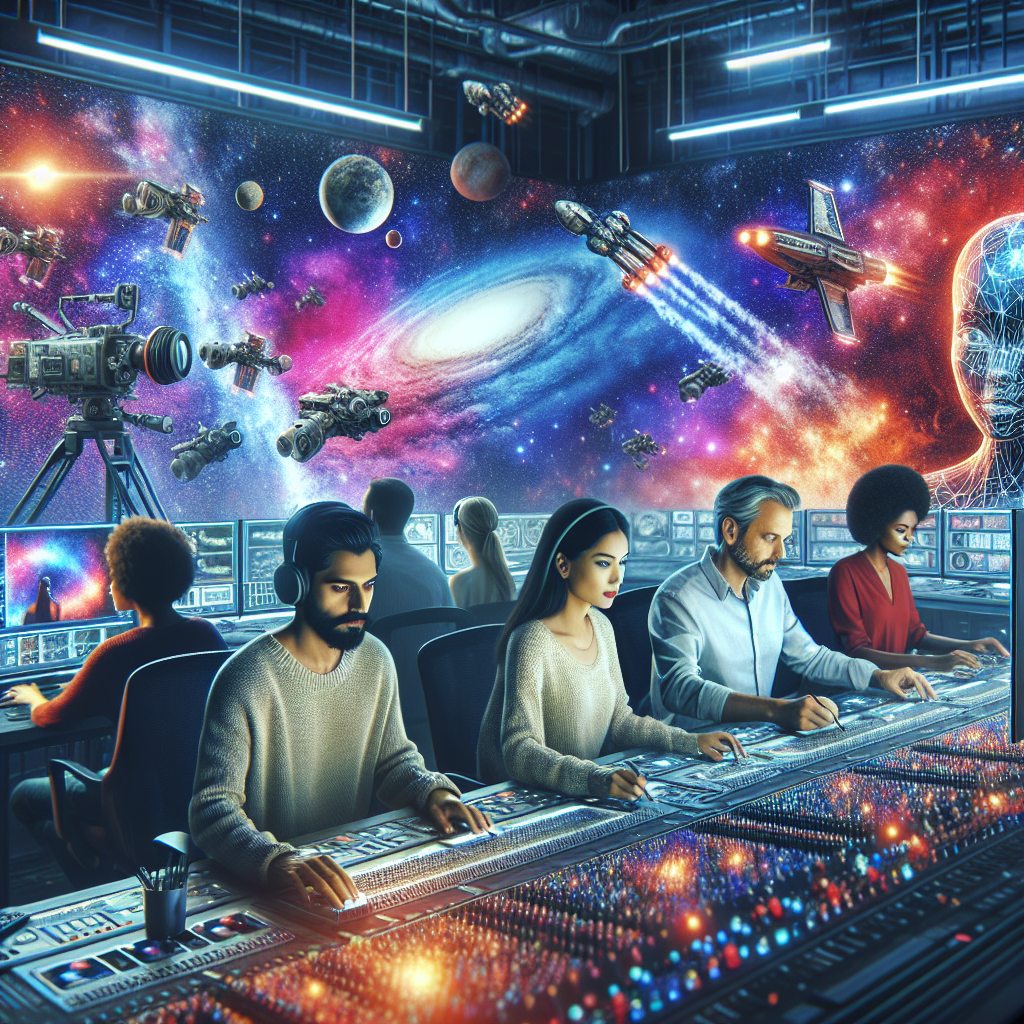
In recent years, the film industry has seen an ever-growing fascination with outer space, resulting in numerous films that take us on incredible journeys beyond our planet. A key element that drives the authenticity and appeal of these movies is the *stunning visual effects* that bring cosmic scenes to life. **Artificial Intelligence (AI)** tools have been at the forefront of this transformation, offering innovative ways to enhance visual effects for space films. In this article, we’ll delve into the various ways AI is utilized to revolutionize visual storytelling in the realm of space cinema.
Outline
- The Role of AI in Space Films
- Creating Realistic Cosmic Environments
- AI-Enhanced Animation and Character Design
- Improving Time and Cost Efficiency
- Future Trends in AI and Space Film Visual Effects
The Role of AI in Space Films
The integration of AI in movie production has brought about a paradigm shift in how visual effects are created and implemented, especially in space films. By leveraging **machine learning algorithms** and **neural networks**, filmmakers can generate high-quality visuals that offer a more immersive experience. AI enhances not only the *aesthetic appeal* but also the realism of space depictions, thereby capturing the audience’s imagination more effectively.
Creating Realistic Cosmic Environments
One major challenge in space films is the creation of believable cosmic landscapes. AI tools help overcome this by generating *highly detailed* and **realistic environments**. Here’s how they do it:
- **Procedural Generation**: AI algorithms can autonomously create intricate cosmic environments, including asteroids, planets, and galaxies, by utilizing patterns learned from real astronomical data.
- **Texture Synthesis**: These tools can generate *high-resolution* textures that mimic the complex surfaces found in space, enhancing the visual depth and realism of each scene.
- **Lighting Algorithms**: AI can simulate the unique lighting conditions of celestial bodies, allowing for dynamic shadow and light play that adds to the authenticity of space settings.
AI-Enhanced Animation and Character Design
Another significant use of AI in space films is to enhance animations and character designs. This ensures that alien life forms and spacecrafts possess lifelike qualities. Here are some methodologies applied:
- **Motion Capture and AI**: By refining motion capture data, AI provides smoother and more natural movement for characters, crucial for engaging storytelling.
- **Facial Animation**: AI can analyze human facial expressions to create realistic animations for alien life forms, thus improving the emotional connection with the audience.
- **Robotics and Creature Design**: Machine learning models can design unique and creative creatures, offering fresh and compelling elements that enrich the narrative.
Improving Time and Cost Efficiency
The use of AI is not only about improving quality but also optimizing production timelines and budgets:
- **Rotoscoping Automation**: AI tools can automate rotoscoping tasks, significantly reducing the time and labor costs involved in post-production editing processes.
- **Predictive Maintenance**: By predicting potential technical failures in visual effect equipment, AI helps preempt downtime, ensuring a smoother production workflow.
- **Resource Allocation**: With AI, production teams can better allocate resources, focusing their efforts on areas that enhance the movie’s visuals without the need for excessive expenditure.
Future Trends in AI and Space Film Visual Effects
As technology advances, the intersection of AI and film continues to present exciting possibilities for the future:
- **Real-time Rendering**: Future AI developments may enhance real-time rendering capabilities, allowing for more interactive post-production processes.
- **Deepfake Technologies**: While often associated with ethical concerns, deepfake technologies could revolutionize actor performances and dubbing in space films.
- **AI-Enabled Storytelling**: AI may even extend to scriptwriting, where predictive models assist in crafting compelling narratives grounded in science fiction realism.
In conclusion, the synergy between **AI technology** and the film industry heralds a new era of creativity and innovation in visual effects for space films. As AI tools become more sophisticated, they will continue to redefine the limits of cinema, offering audiences spectacular visual journeys through the cosmos.
“`