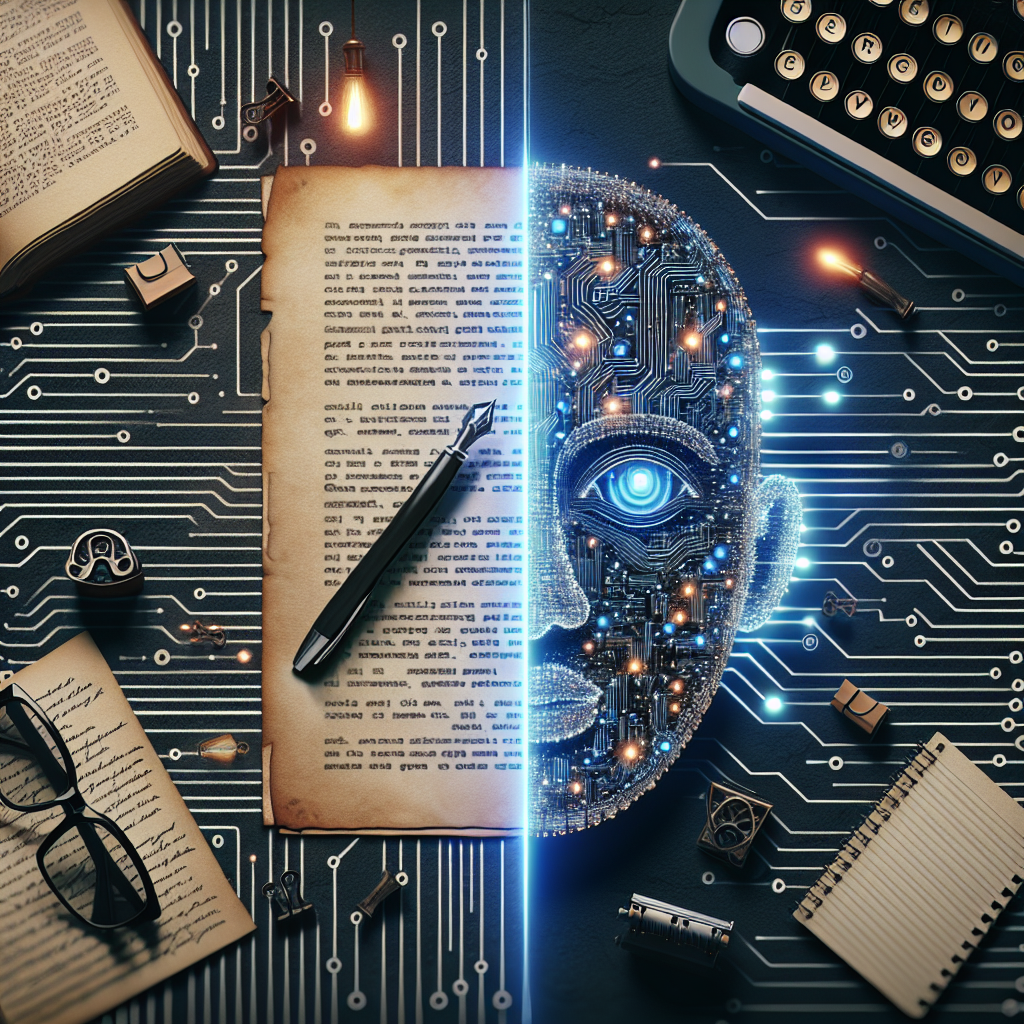
In recent years, Artificial Intelligence (AI) has begun to reshape various sectors, making them more efficient and innovative. One of the most exciting applications of AI is in the scriptwriting process for films. This blog post explores how AI tools are revolutionizing scriptwriting, enhancing creativity, and making the process more efficient.
Article Outline
- Introduction to AI in Scriptwriting
- AI Tools Revolutionizing Scriptwriting
- Benefits of Using AI in Scriptwriting
- Challenges and Limitations
- Future Trends
Introduction to AI in Scriptwriting
Traditionally, scriptwriting has been an intensely creative and human-centric endeavor. However, **AI technologies** are starting to support and even enhance the creativity involved in scriptwriting. These innovations have created new opportunities for filmmakers to develop fresh ideas more rapidly and streamline the writing process.
AI Tools Revolutionizing Scriptwriting
Several AI tools are now shaping the landscape of scriptwriting. These tools range from automated writing assistants to AI-driven predictive analytics. Below is a list of significant AI tools making waves in the film industry:
- **Scriptbook:** Provides AI-driven insights for script evaluation and predictive analytics.
- **Grammarly:** Enhances grammar, style, and coherence in scripts, making them more polished.
- **ChatGPT:** Assists in generating dialogue and plot suggestions, helping writers overcome creative blocks.
- **Celtx:** Offers integrated scriptwriting and pre-production solutions, with AI features for scene breakdown and scheduling.
Benefits of Using AI in Scriptwriting
The integration of AI tools in scriptwriting offers numerous advantages, including:
- Enhanced Creativity: AI can provide inspiration and generate new ideas, helping writers overcome creative blocks.
- Efficiency: Automation tools can handle routine tasks, allowing writers to focus on the creative aspects.
- Data-Driven Insights: AI can analyze audience preferences and market trends, helping writers tailor scripts to audience demands.
- Consistency and Quality: AI tools ensure consistency in style, structure, and grammar, improving the overall quality of scripts.
Challenges and Limitations
Despite its many benefits, the use of AI in scriptwriting is not without challenges. Some of the primary obstacles include:
- Lack of Deep Creativity: AI can assist with inspiration, but it may lack the deep creativity and emotional intelligence of human writers.
- Dependence on Data: AI tools rely heavily on existing data, which may limit truly original and innovative ideas.
- Costs: High-quality AI tools can be expensive, making them less accessible for independent filmmakers.
- Ethical Concerns: The use of AI can raise ethical questions about authorship and the potential replacement of human writers.
Future Trends
As AI technology continues to evolve, its role in scriptwriting is expected to expand further. Future trends may include:
- More Personalized Scripts: AI could generate highly personalized scripts tailored to niche audiences based on complex data analytics.
- Enhanced Collaboration: AI could facilitate more collaborative writing processes by integrating inputs from multiple writers seamlessly.
- Real-Time Feedback: Advanced AI systems could provide real-time feedback during the scriptwriting process, significantly speeding up revisions.
- Expanded Creative Horizons: AI might assist in exploring new genres and storytelling techniques that were previously underexplored.
In conclusion, AI is undoubtedly transforming the scriptwriting process for films, making it more efficient, data-driven, and innovative. While there are challenges and ethical considerations to address, the potential benefits of AI in scriptwriting are immense, opening up new possibilities for the future of filmmaking.
By strategically integrating AI into the scriptwriting process, filmmakers can leverage the power of technology to push the boundaries of storytelling and create more engaging, high-quality content for audiences worldwide.