“`html
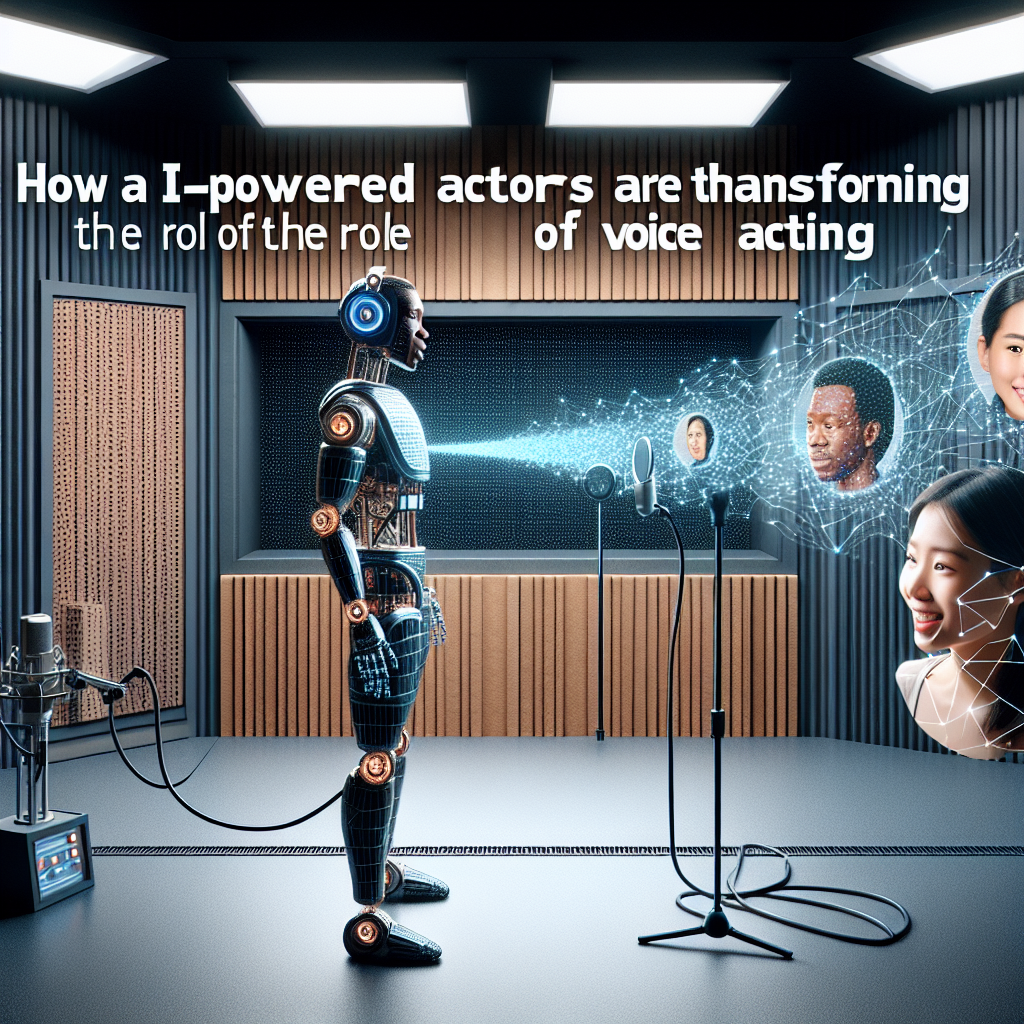
In recent years, the evolution of artificial intelligence has revolutionized a plethora of industries, and the world of voice acting is no exception. AI-powered actors are rapidly transforming the way voice work is approached, offering exciting possibilities and posing new challenges. This transformation is driven by advancements in technology that allow AI systems to replicate and even innovate upon human speech, leading not only to changes in production processes but also to broader implications across the entertainment industry.
Article Outline
- Understanding AI-Powered Actors
- Benefits of AI in Voice Acting
- Challenges Faced by Traditional Voice Actors
- Potential Future of AI in the Industry
- Ethical Considerations and the Human Element
Understanding AI-Powered Actors
AI-powered actors utilize sophisticated algorithms and neural networks to mimic the human voice. These systems are trained on extensive datasets, containing thousands of hours of recorded speech. Key technologies involved include:
- **Speech Synthesis**: Converts text into lifelike human speech, a crucial component in AI-driven voice acting.
- **Deep Learning**: Uses large datasets to train AI models, enabling them to produce various voice styles and inflections.
The result is an AI capable of creating convincing voice performances, able to adjust tone, pace, and emotion, much like a human actor.
Benefits of AI in Voice Acting
AI-powered voice actors bring several advantages to film and media production:
- **Cost Efficiency**: AI voice actors can significantly reduce the costs of production as they eliminate the need for recording studios and professional actors for minor roles.
- **Time Savings**: By generating voice content rapidly, AI systems streamline timelines for projects under tight deadlines.
- **Customization**: AI technologies allow for a high degree of customization. Filmmakers can tailor voices to suit specific characters, enhancing creative control.
- **Accessibility and Consistency**: AI ensures that voice output remains consistent across multiple projects, maintaining a coherent branding voice.
Challenges Faced by Traditional Voice Actors
While AI brings numerous benefits, traditional voice actors are facing a series of challenges:
- **Job Displacement**: With AI’s ability to handle simpler roles, there’s a growing concern about reduced job opportunities.
- **Adaptation to New Tools**: Voice actors need to adapt to working alongside AI in hybrid scenarios.
- **Equal Representation**: Ensuring traditional voice talent’s unique creative contributions are valued alongside AI counterparts.
Potential Future of AI in the Industry
The potential for AI in the film and media industry is vast and multifaceted:
- **Hybrid Models**: AI-human collaboration might lead to innovative storytelling methods, combining the strengths of both worlds.
- **Elevating Independent Projects**: By lowering costs and simplifying production, AI can boost independent filmmakers and content creators.
- **Globalization and Localization**: AI actors can easily adapt scripts for different languages and markets, enhancing international reach.
Ethical Considerations and the Human Element
As AI continues to permeate the industry, significant ethical considerations arise:
- **Intellectual Property Rights**: It’s crucial to address who owns the AI-generated voice content.
- **Authenticity and Emotional Depth**: AI actors may lack the nuanced emotional depth that human actors bring, raising questions about authenticity in performances.
- **Diversity and Representation**: Ensuring AI-generated voices do not perpetuate stereotypes and are inclusive of diverse languages and accents.
Balancing innovation with ethics is essential in shaping the future of AI-powered voice acting.
In conclusion, the rise of AI in voice acting represents a transformative shift in how we create and consume media. Although AI technologies bring undeniable benefits, it’s vital to address the challenges and safeguard the irreplaceable human elements of creativity and empathy.
“`