
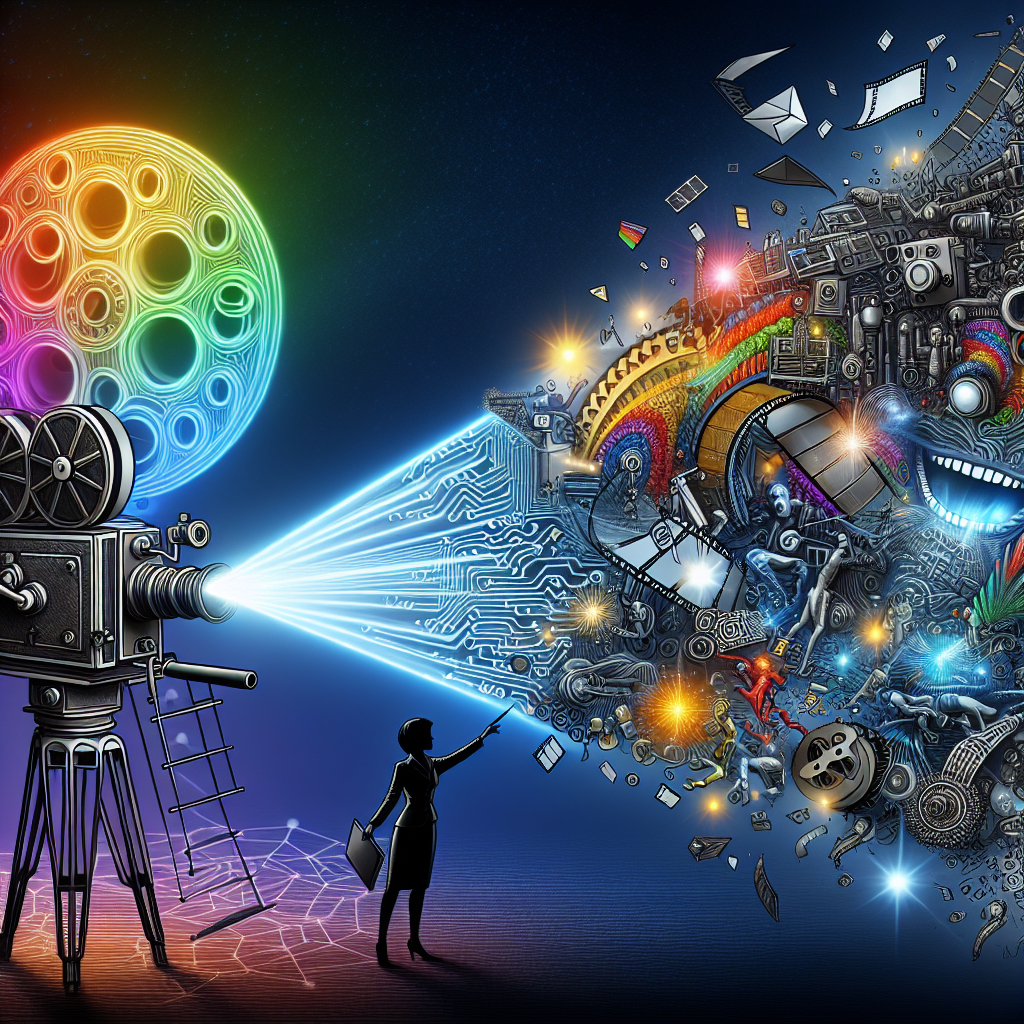
In the rapidly evolving world of filmmaking, **Artificial Intelligence (AI)** is emerging as a formidable force, reshaping the way realism is achieved on screen. As both the film industry and AI technology continue to progress, filmmakers are leveraging this advanced technology to create visually stunning, highly believable cinematic experiences. This article delves into the transformative impact of AI in filmmaking and explores how it is redefining realism for the films of the future.
- The Impact of AI on the Film Industry
- AI Techniques for Enhancing Realism
- Augmented and Virtual Reality in Filmmaking
- Case Studies: AI in Film Production
- Ethical and Artistic Implications of AI
- The Future of AI in Filmmaking
The Impact of AI on the Film Industry
AI’s influence on the **film industry** is profound, offering tools for everything from scriptwriting to post-production. This technology enhances productivity and efficiency by automating repetitive tasks, allowing creators to focus on artistry and innovation. With AI, complex **visual effects (VFX)** can be rendered more quickly, reducing costs and time. Additionally, AI-powered analytics assist studios in understanding audience preferences, crafting content that is more likely to succeed commercially.
AI Techniques for Enhancing Realism
To achieve greater realism, filmmakers are employing AI techniques that were once the stuff of science fiction:
- Deep Learning: AI can analyze and replicate human movements and expressions, leading to more realistic character animations.
- Generative Adversarial Networks (GANs): These models generate high-quality textures and environments, making digital settings look almost indistinguishable from real life.
- Neural Rendering: Using neural networks to create photorealistic images and videos, enhancing the visual fidelity of movies.
Augmented and Virtual Reality in Filmmaking
**Augmented Reality (AR)** and **Virtual Reality (VR)** represent new frontiers in filmmaking, enabled by AI:
- AI-driven AR allows the integration of digital elements into real-world environments, enriching storytelling.
- VR, supported by AI, offers immersive experiences, transporting audiences directly into the narrative, and redefining engagement.
Case Studies: AI in Film Production
Several films have successfully integrated AI to enhance realism and engagement:
- The Irishman (2019): AI was crucial in de-aging actors, allowing them to portray their characters across multiple decades.
- Blade Runner 2049 (2017): AI helped in creating realistic synthetic characters and vast dystopian landscapes.
Ethical and Artistic Implications of AI
While AI’s contributions are significant, they raise certain ethical and artistic questions:
- Authenticity Concerns: As AI-generated characters become more lifelike, distinguishing between real and synthetic becomes challenging.
- Intellectual Property: Determining ownership of AI-generated content poses legal dilemmas.
The Future of AI in Filmmaking
The future of AI in **filmmaking** is promising, with potential advancements poised to further enhance realism and creative possibilities:
- Real-time Rendering: AI advancements will enable filmmakers to render complex scenes in real time, speeding up production.
- Emotion Recognition: AI will improve storylines by analyzing audience emotional responses and tailoring content accordingly.
In conclusion, AI is not just a tool but a transformative force in the film industry, paving the way for a new era of cinema where realism and creativity harmonize to produce spectacular visual narratives.