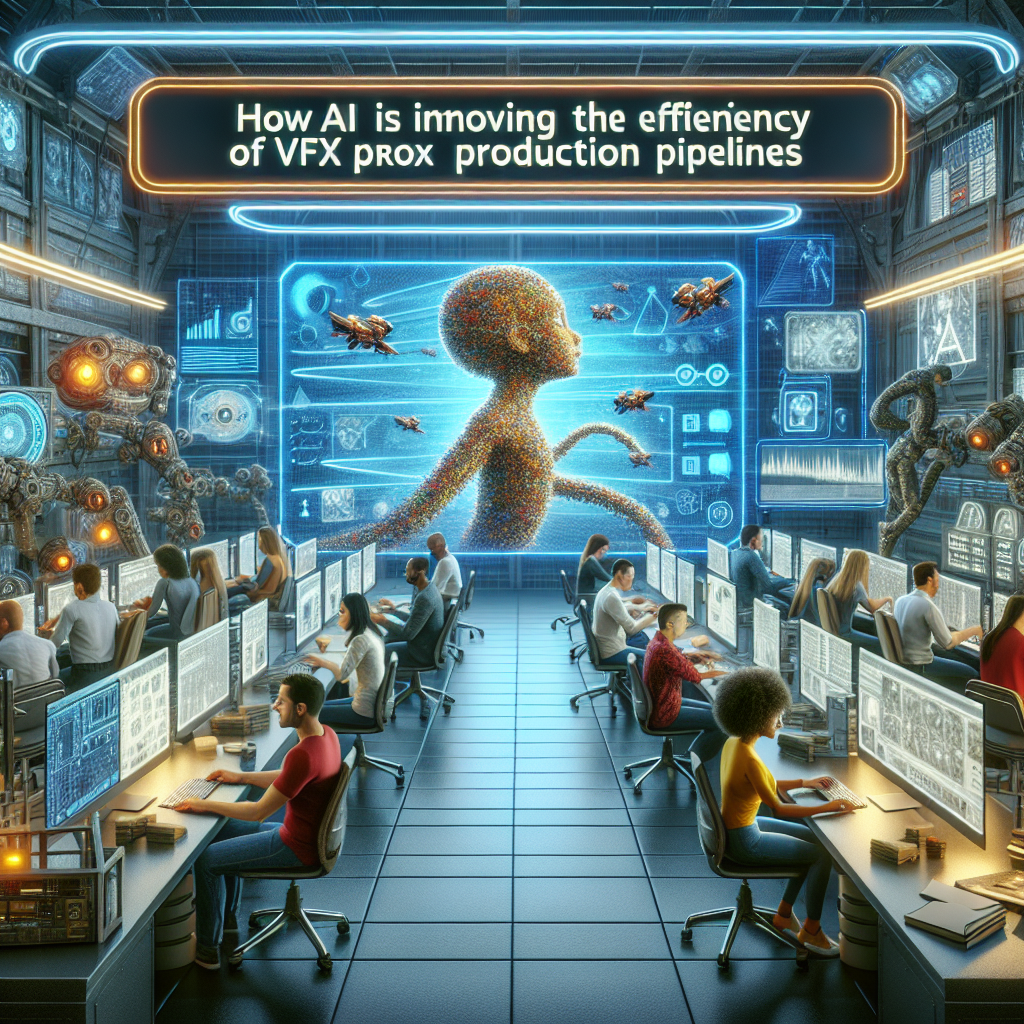
In today’s digital age, Artificial Intelligence (AI) is revolutionizing various industries, including the film industry. One notable area is the enhancement of Visual Effects (VFX) production pipelines. This cutting-edge technology is transforming how movies are made, boosting efficiency, and pushing the boundaries of creativity. This article dives into the myriad ways AI is streamlining VFX production, offering detailed insights into its impact on the industry.
Article Outline
- Introduction to VFX and AI
- Improving Efficiency in Pre-Visualization
- Enhancing Asset Generation
- Automating Repetitive Tasks
- Refining Post-Production
- Accelerating Rendering Processes
- Case Studies and Real-World Examples
- The Future of AI in VFX
Introduction to VFX and AI
Visual Effects (VFX) involve creating and manipulating imagery outside the context of live-action shoots. These effects are integral to modern filmmaking. Artificial Intelligence (AI) refers to the broader field of computer science aimed at creating smart machines capable of performing tasks that typically require human intelligence. When combined, AI and VFX bring a significant shift in how visual magic is crafted on screen. With AI, filmmakers can create more breathtaking scenes and intricate effects faster and more efficiently.
Improving Efficiency in Pre-Visualization
Pre-visualization (pre-vis) enables filmmakers to conceptualize scenes before they are shot. Here’s how AI is enhancing this step:
- Scene Generation: AI algorithms can rapidly generate scene layouts, offering directors multiple visual options.
- Camera Movement Simulation: AI helps simulate camera movements, saving time on manual pre-vis work.
- Layout and Blocking: AI tools assist in placing characters within a scene, ensuring optimal space utilization and visualization.
Enhancing Asset Generation
Creating digital assets (like characters, environments, and props) is time-consuming. AI dramatically speeds up the process through:
- Procedural Generation: AI generates assets automatically, providing a base that artists can refine.
- Texture Creation: AI tools can create realistic textures, skin details, and surfaces with high precision.
- Character Animation: AI-driven methods facilitate the process of animating characters, making movements more natural.
Automating Repetitive Tasks
In VFX production, certain tasks are repetitive and mundane. AI can automate these functions, freeing up artists to focus on creative aspects:
- Rotoscoping: AI algorithms can automatically trace objects and separate them from the background.
- Tracking: AI improves the accuracy and speed of motion tracking, reducing manual adjustments.
- Cleanup: AI tools clean up footage by removing unwanted artifacts and enhancing image quality.
Refining Post-Production
Post-production entails editing and refining film footage. AI’s influence in this phase can’t be overstated:
- Color Grading: AI-based color correction tools ensure consistent visual tones and enhance cinematic quality.
- Sound Design: AI enhances audio by automatically balancing levels, removing noise, and synchronizing with visuals.
- Compositing: AI simplifies the integration of CGI with live-action footage, ensuring seamless blending.
Accelerating Rendering Processes
Rendering animated and visual effects scenes can be computationally intensive and time-consuming. AI accelerates rendering by:
- Optimizing Render Settings: AI helps determine optimal render settings, reducing render time without sacrificing quality.
- Denoising: AI-based denoising algorithms clean up rendering noise, allowing for faster lower-quality interim renders.
- Predictive Rendering: AI predicts and pre-computes render-intensive sections to streamline the final render process.
Case Studies and Real-World Examples
Several films and production studios have successfully integrated AI into their VFX pipelines. Notable examples include:
- “The Lion King” (2019): AI was used extensively in creating realistic animal characters and environments.
- “Avengers: Endgame” (2019): AI facilitated massive battle scenes by automating crowd simulations and special effects.
- Netflix’s “Love, Death & Robots”: AI assisted in generating various animation styles and visual effects across episodes.
The Future of AI in VFX
The future of AI in VFX is both promising and exciting. As AI technology continues to evolve, its applications in VFX will expand further:
- Real-Time Rendering: AI-driven advancements may soon facilitate real-time rendering, enabling live previews of VFX shots.
- Enhanced CGI: AI can refine CGI to produce photorealistic results indistinguishable from real footage.
- Improved Collaboration: Cloud-based AI tools will enable real-time collaboration among global teams, improving project coordination and output.
In conclusion, AI is undeniably reshaping VFX production pipelines, enhancing efficiency, and unleashing new creative possibilities. As the technology matures, we can expect it to become an even more integral part of filmmaking, making the process faster, smoother, and more innovative.