“`html
In the expansive world of filmmaking, costume design has always played a pivotal role, especially in period films. Costume designers meticulously craft clothing that reflects the cultural and social attitudes of a specific era, contributing not just to the visual aesthetics but also to storytelling within the film. However, with the advent of Artificial Intelligence (AI), the role of costume designers is evolving, allowing for new techniques and efficiencies in this creative domain.
The Role of Costume Designers in Period Films
Costume designers hold a critical responsibility in ensuring historical accuracy in period films. They engage in extensive research to understand the fabric, style, and garment construction of the era portrayed. This role requires a combination of creative vision and technical expertise, as costumes not only add to visual authenticity but help narrate the characters’ stories. The costumes reflect societal norms and help audience members immerse themselves into the narrative world.
How AI is Impacting Costume Design
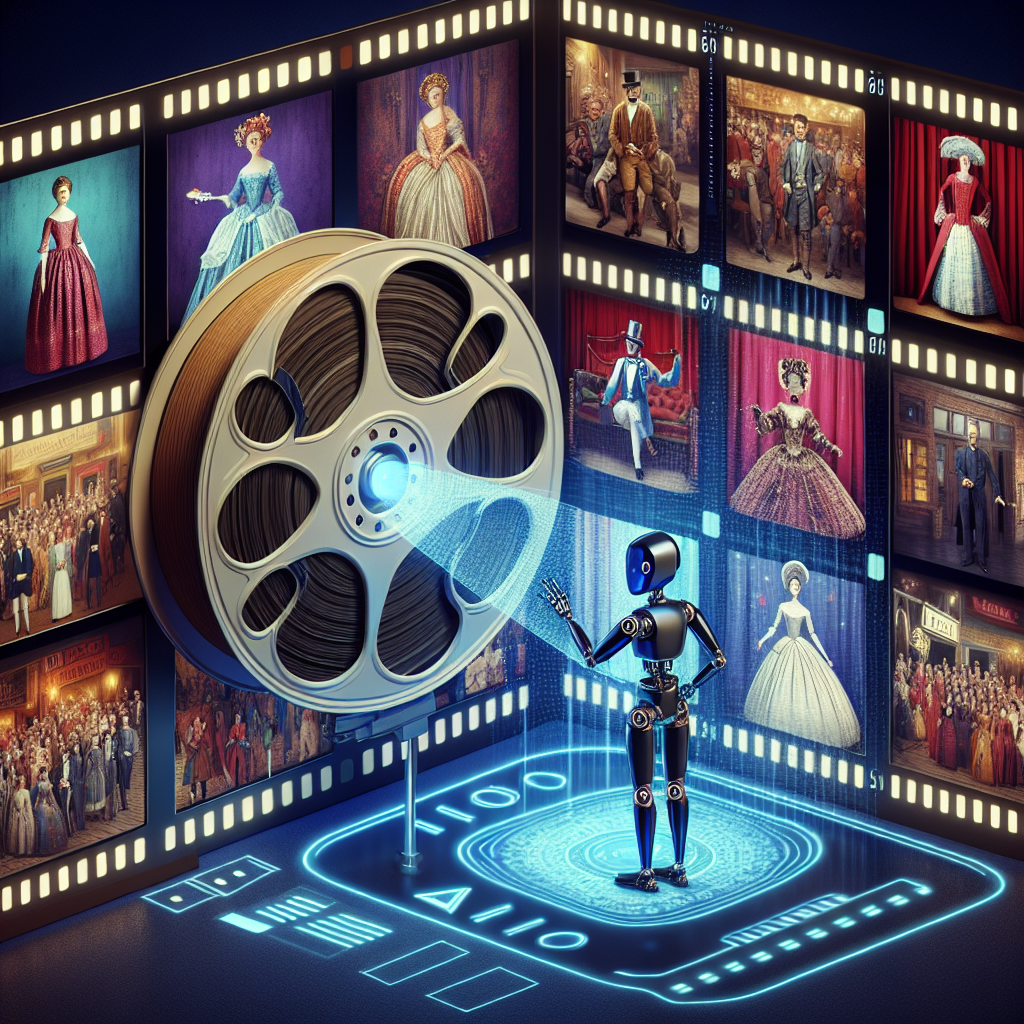
AI advancements are progressively transforming costume design, enhancing creative workflows, and optimizing the design process in period films. Here’s how AI influences this field:
- Data Analysis: AI algorithms swiftly analyze vast archives of historical data, making it easier for designers to access reference materials.
- Predictive Design: AI can predict trends and suggest designs based on historical data, allowing for dynamic and informed creative decision-making.
- Virtual Prototyping: AI-enhanced software enables designers to create and test virtual prototypes before physical production, reducing time and costs.
AI Tools Revolutionizing the Craft
The implementation of AI in costume design has led to the development of cutting-edge tools that redefine the workflows of costume designers:
- Clo 3D: A powerful tool that allows for the creation of highly detailed 3D garment simulations, assisting designers in visualizing and tweaking costumes efficiently.
- StyleGAN: This AI system generates plausible costume concepts and variations, serving as inspiration and a starting point for designers.
- Nostalgia Neural Network: An AI tool that can reconstruct historical clothing and weave authentic patterns by learning from its repository of vintage designs.
Benefits of AI Integration in Costume Design
The integration of AI in costume design offers a multitude of benefits that elevate the craft:
- Efficiency Enhancement: AI streamlines routine tasks, allowing designers to focus more on the creative aspects of costume design.
- Increased Accuracy: Automated data analysis improves historical accuracy in costume design, which is crucial for period films.
- Cost Reduction: The ability to test designs virtually allows for cost-effective adjustments, minimizing the need for physical prototypes.
- Diverse Design Options: AI tools provide a plethora of design inspirations, thereby expanding creative boundaries and possibilities.
Notable Film Case Studies
Several period films have successfully harnessed AI to reimagine costume design:
- Emma (2020): Designers utilized AI-generated simulations to achieve authentic Regency-era attire, combining historical accuracy with modern aesthetics.
- The Crown: This acclaimed series employed AI to streamline costume research, ensuring fidelity in its depiction of historical figures.
Future Prospects of AI in Costume Design
The future of costume design in period films is promising with AI’s continual advancement. As AI technology becomes more sophisticated, its role in automating design processes while enhancing creative potential will likely grow. The collaboration between human creativity and AI intelligence is poised to yield innovative prospects, ensuring the screen’s portrayal of historical accuracy and imaginative storytelling are both taken to unprecedented heights.
“`