
“`html
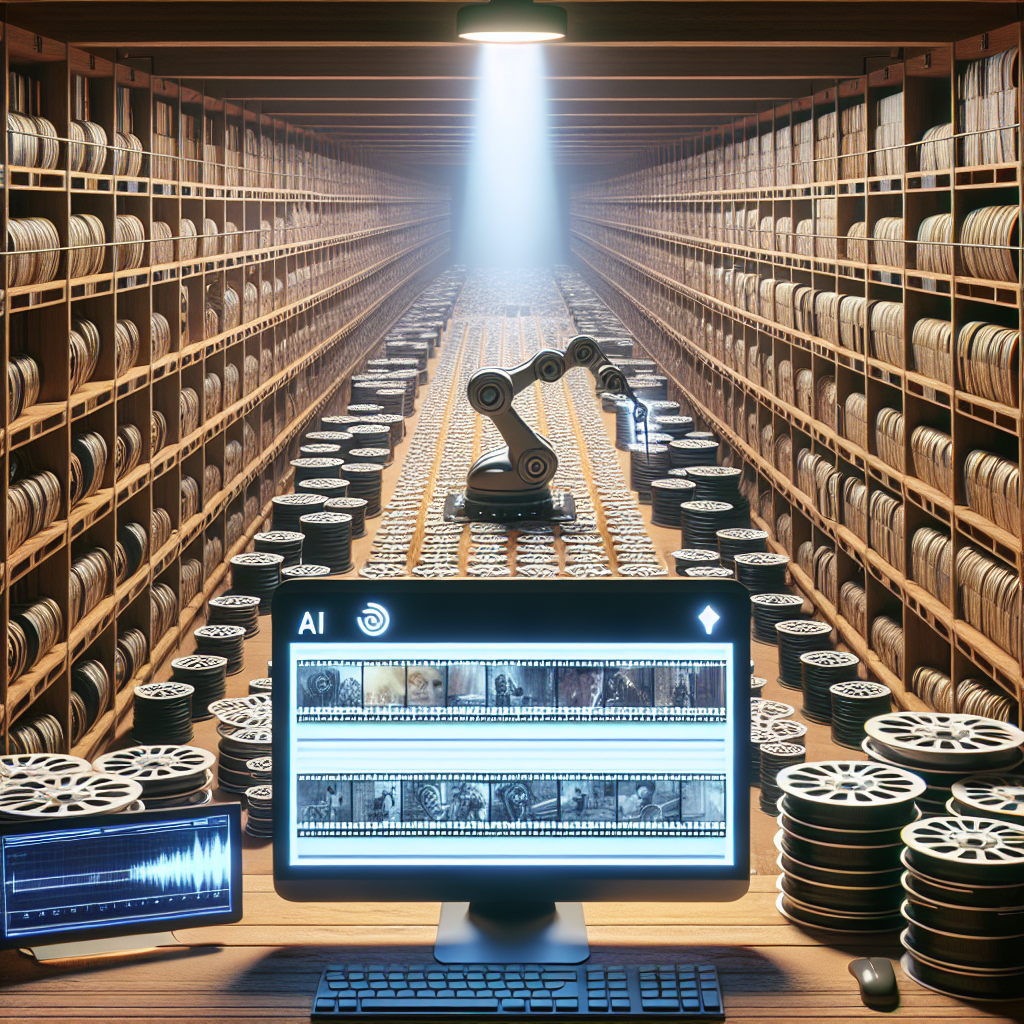
In recent years, the film industry has witnessed a technological revolution, especially in terms of preserving and restoring classic and deteriorating films. **Artificial Intelligence (AI)** is at the forefront of this transformation, offering new methods for film archiving and restoration that are more efficient and reliable than traditional techniques. This article delves into how AI is reshaping film archiving and restoration processes, ensuring the longevity and accessibility of cinematic treasures for future generations.
Understanding AI in Film Restoration
AI’s role in film restoration revolves around the application of **machine learning algorithms** and **computer vision** to restore aging footage. These technologies can automatically remove scratches, dust, and other artifacts from films while improving image resolution and color accuracy.
- AI analyzes vast amounts of visual data to learn the nuances of what constitutes a “clean” frame.
- Deep learning models are trained on thousands of restored and original frames to predict and correct imperfections.
- **Key Benefits:** Speed, accuracy, and the ability to tackle more extensive restoration projects than human manual efforts.
Advantages of AI in Film Archiving
The conventional methods of film archiving are labor-intensive and time-consuming. AI brings several advantages to the table:
- **Efficiency:** AI can process and archive films much faster, enabling organizations to digitize large collections in shorter time frames.
- **Quality:** Ensures higher consistency and quality control in the restored archival content.
- **Cost-effectiveness:** Reduces the need for manual intervention, thereby cutting down operational costs.
- **Accessibility:** Enhanced metadata management through AI makes film archives more searchable and accessible to scholars and the general public alike.
Notable Technologies and Tools
Several cutting-edge AI-powered tools are being utilized in film archiving and restoration, potentially reshaping how historical films are preserved:
- **DeOldify:** An open-source project that leverages neural networks to colorize black-and-white films.
- **Topaz Labs Video Enhance AI:** Uses AI to upscale video quality, making old footage playable on modern high-definition devices.
- **Pixar’s RenderMan:** A tool used implicitly with AI to clean, restore, and enhance the vast archival resources of Pixar’s array of films.
Case Studies and Success Stories
Film restoration powered by AI has showcased its capabilities through various high-profile projects:
- The restoration of **Charlie Chaplin films**, where AI managed to seamlessly remove noise and convert the films into vibrant colors.
- Warner Brothers utilized AI to clean and enhance several old **MGM musicals** for HD viewing on streaming platforms.
Challenges and Limitations
While AI has introduced significant benefits, it is not without its challenges:
- Restoration requires manual oversight to ensure that AI-generated content remains true to the original artistic intent.
- Potential **intellectual property issues** arise concerning the original creators’ rights, particularly when altering content.
- AI itself needs substantial computational resources and expert supervision to manage projects on a massive scale.
Future Outlook
The journey of AI in film archiving and restoration is only beginning. The future points toward more innovative solutions:
- Continued advancement in AI will refine how films are preserved, potentially making rare content available to global audiences.
- Collaboration between tech companies and film studios will be crucial in developing standardized, AI-driven restoration protocols.
- Ongoing research and development into **neural networks** could lead to real-time restoration capabilities, preserving more films more efficiently.
AI is undoubtedly becoming a critical player in the world of film archiving and restoration. By transforming traditional methods, it enhances the longevity, quality, and accessibility of films worldwide. As technological advancements continue, AI will further cement its role as the guardian of cinematic history, ensuring that timeless classics can be enjoyed by both present and future audiences.
“`