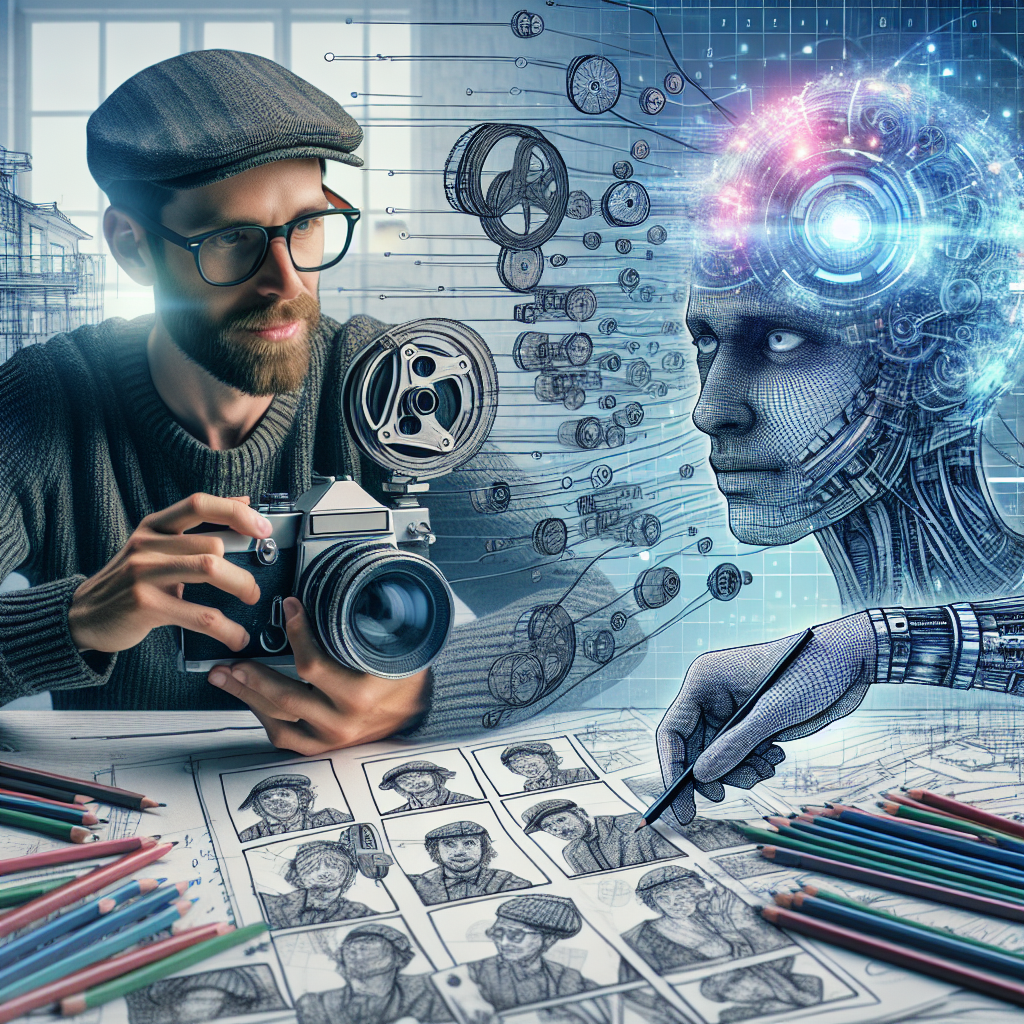
In the rapidly evolving landscape of the film industry, technological advancements are playing a pivotal role in reshaping traditional processes. **Artificial Intelligence (AI)** stands out as one of the most transformative tools available to filmmakers today. Among many uses, AI is enhancing the art of storyboarding, a crucial pre-production step in filmmaking. As digital creativity takes flight, let’s explore how AI is revolutionizing storyboarding and what this means for the art of filmmaking.
- Introduction to Storyboarding in Filmmaking
- The Role of AI in Storyboarding
- Benefits of AI-Enhanced Storyboarding
- Popular AI Tools for Storyboarding
- Real-Life Applications and Case Studies
- Future of Storyboarding with AI
Introduction to Storyboarding in Filmmaking
Storyboarding is an essential part of the **filmmaking process**, where ideas first take visual form. Typically, storyboards are a series of sketches or images that outline the sequence of the narrative, providing filmmakers with a visual script to work from. This critical step enables film directors, cinematographers, and creatives to plan the shots, camera angles, and transitions before actual production begins. The traditional process, however, can be time-consuming and labor-intensive, requiring skilled artists to bring these concepts to life.
The Role of AI in Storyboarding
AI has emerged as a powerful catalyst in **automating and enhancing** the storyboarding process. By employing machine learning algorithms, AI tools can quickly generate initial drafts of storyboards, helping filmmakers get a head start on visualizing their projects. Key aspects include:
- **Automated Sketch Generation:** AI can analyze script inputs to produce initial storyboard sketches, offering a faster alternative to manual drawing.
- **Image Recognition and Enhancement:** Trained algorithms improve storyboard visuals by adjusting details, lighting, and styles automatically.
- **Scene Interpretation:** By understanding context and emotions, AI enhances scene representations, ensuring alignment with the intended narrative.
Benefits of AI-Enhanced Storyboarding
The use of AI in storyboarding **offers several advantages** for filmmakers:
- Efficiency and Speed: AI tools reduce the time required to produce storyboards, allowing quick iterations and modifications.
- Cost-Effectiveness: Reducing reliance on extensive human resources leads to cost savings in pre-production phases.
- Creativity Enhancement: Filmmakers can explore numerous creative possibilities by generating diverse storyboard variations quickly.
- Improved Collaboration: Digital storyboards facilitated by AI can be easily shared and modified, promoting collaborative input and review.
Popular AI Tools for Storyboarding
Several AI-driven tools are making waves in the storyboarding landscape:
- Storyboard That: Features intuitive AI-driven features for creating detailed storyboards with ease.
- ShotPro: Leverages AI to assist filmmakers in creating 3D storyboards, aiding with accurate visual representations.
- Mashle: Uses AI to transform textual scripts into comprehensive visual storyboards automatically.
Real-Life Applications and Case Studies
AI-enhanced storyboarding is not just theoretical; it’s actively employed in the industry:
- Indie Filmmakers: Independent content creators significantly benefit from AI, as it offers professional-quality outputs that were previously inaccessible due to budget constraints.
- Animation Studios: Large studios like Pixar and DreamWorks are experimenting with AI to streamline their pre-production processes.
Future of Storyboarding with AI
The future of AI-enhanced storyboarding in filmmaking looks **promising and innovative** as technology advances:
- **More Creative Control:** AI will assist directors by visualizing unrealized creative ideas, pushing the boundaries of traditional storytelling.
- **Integration with Other Technologies:** Increased synergy between AI and technologies like Virtual Reality (VR) and Augmented Reality (AR) will offer immersive storyboard experiences.
- **Enhanced Accessibility:** As AI democratizes the storyboard process, aspiring filmmakers can access sophisticated tools, fostering talents globally.
- **Real-Time Adaptation:** Real-time AI adjustments during filming could refine scenes instantaneously, enhancing decision-making on set.
In conclusion, as the film industry continues to evolve, **AI’s role in storyboarding** will become increasingly prominent. By providing enhanced efficiency, creativity, and collaboration, AI is set to transform how filmmakers visualize and execute their artistic visions, opening new avenues for storytelling innovation.