
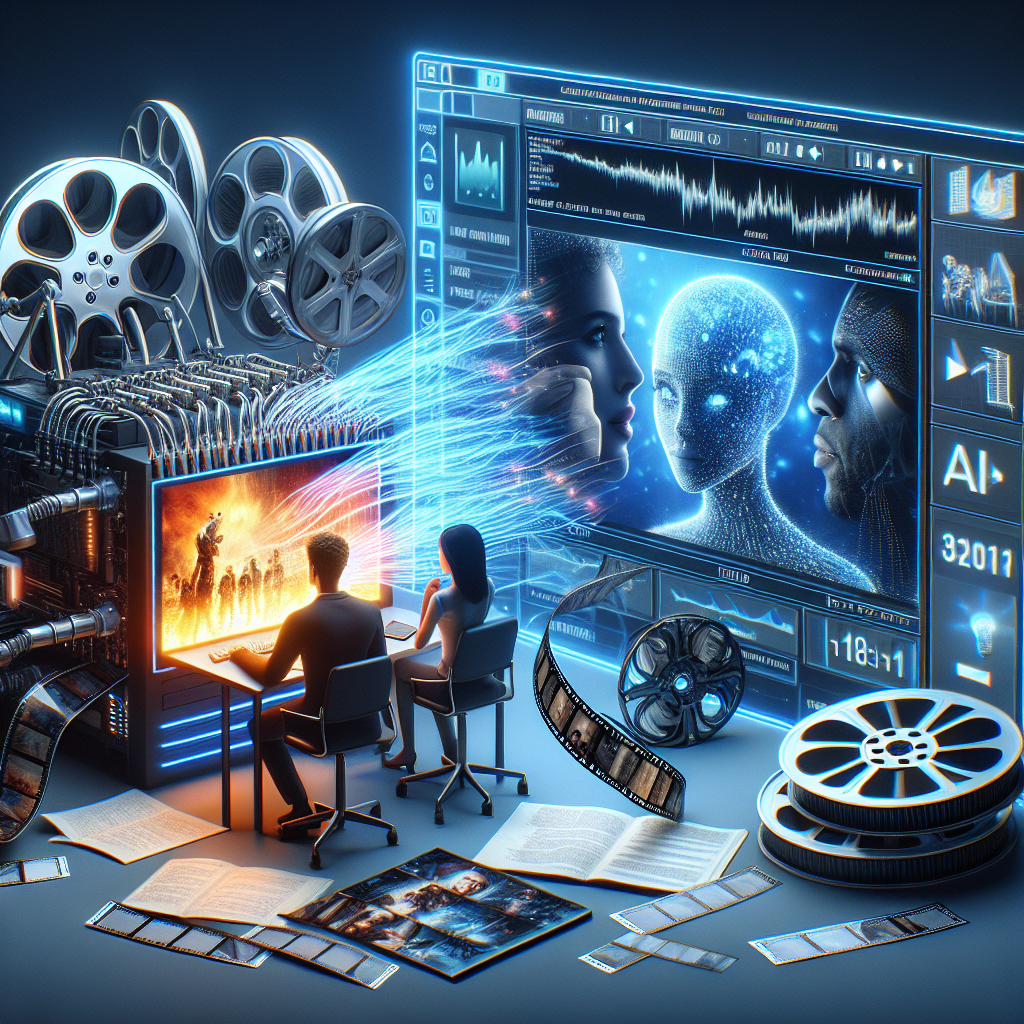
The integration of Artificial Intelligence (AI) into the film industry has opened up new frontiers in both predicting and generating successful movie plotlines. This article explores how AI is transforming storytelling by leveraging data, predictive analytics, and advanced algorithms to craft narratives that resonate with audiences.
Article Outline
- Introduction
- AI and Trends Analysis
- Data-Driven Plot Creation
- Personalized Content Suggestion
- Case Studies
- Future Prospects
- Conclusion
Introduction
In an era dominated by rapid technological advancements, Artificial Intelligence (AI) is becoming a pivotal tool in the movie industry. AI’s capabilities extend beyond special effects and into the realm of content creation. From understanding audience preferences to generating entirely new plotlines, AI is reshaping how stories are told on the big screen.
AI and Trends Analysis
AI excels at analyzing vast amounts of data to identify trends and patterns. This ability is especially useful in the film industry, where understanding audience preferences can be the difference between a box-office hit and a flop.
- Market Analysis: AI algorithms can scour through mountains of data, including social media trends, box office statistics, and audience reviews, to pinpoint what viewers are most interested in.
- Content Adaptation: Using this data, AI can help filmmakers adapt existing stories or create new ones that align with current trends.
Data-Driven Plot Creation
AI’s role in generating movie plotlines goes beyond analyzing trends. It involves creating stories from scratch based on data insights.
- Script Generation: AI tools such as OpenAI’s GPT-3 can generate scripts by analyzing existing movie dialogues and narrative structures.
- Plot Development: These algorithms can also suggest plot twists, character developments, and settings that are statistically likely to engage audiences.
Personalized Content Suggestion
One of AI’s most significant contributions is in personalized content creation, where it tailors movies to individual preferences.
- Audience Segmentation: By analyzing viewing habits, AI can segment audiences into different categories based on preferences.
- Customized Plotlines: Using these segments, AI can suggest movie plotlines that are more likely to appeal to specific audience groups, thereby increasing viewer satisfaction and engagement.
Case Studies
Several studios have already begun to harness the power of AI to create and predict successful movie plotlines.
- Warner Bros.: The studio collaborated with Cinelytic to use AI-driven project management tools that help in greenlighting decisions.
- 20th Century Fox: Employed AI to analyze movie trailers and predict their success.
Future Prospects
The future of AI in film is bright, with numerous advancements on the horizon.
- Real-Time Storytelling: AI could enable real-time plot adjustments based on live audience feedback during screenings.
- Intelligent Character Development: AI might help create more nuanced and complex characters by analyzing vast data on human behavior and psychology.
Conclusion
From analyzing trends to generating innovative storylines, AI is revolutionizing the film industry. As technology continues to advance, the potential for AI to craft more engaging, tailored, and successful movies will only grow, making it an invaluable tool for filmmakers aiming to captivate their audience.