“`html
body { font-family: Arial, sans-serif; line-height: 1.6; }
.highlight { font-weight: bold; }
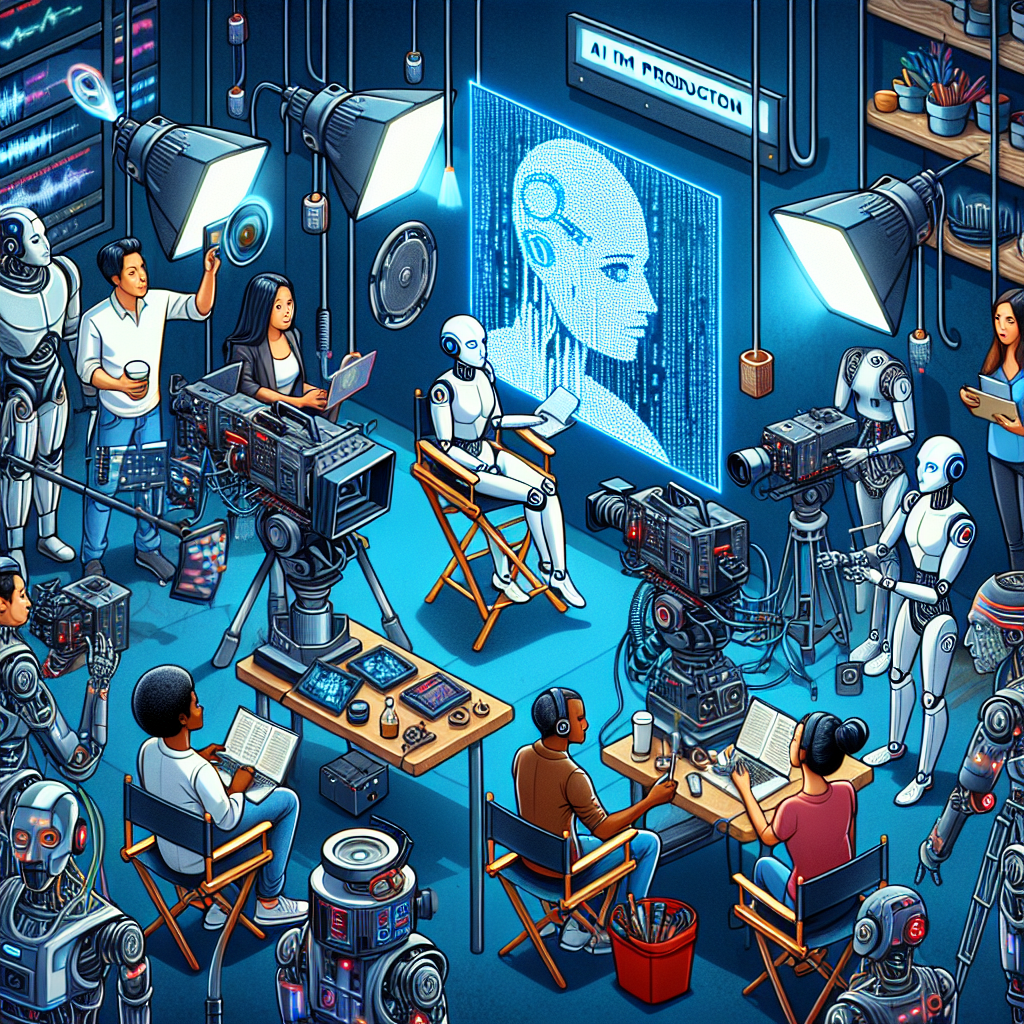
Artificial Intelligence (AI) is rapidly altering the landscape of numerous industries, and the film production sector is no exception. As AI automation becomes more sophisticated, it holds the potential to radically reshape roles and workflows within film production. From scriptwriting to post-production, AI promises efficiency, cost-effectiveness, and novel opportunities that could redefine how films are made, distributed, and consumed. However, such advancements also raise questions about the future of employment within this creative industry.
Current State of AI in Film Production
Presently, AI is actively being integrated into various facets of film production. From special effects and animation to editing and predictive analytics, AI is making its presence felt.
- Script Analysis: Tools analyzing scripts to predict success and audience engagement.
- Editing Software: Automated editing tools can piece together raw footage swiftly without human intervention.
- Digital Effects: AI is enhancing VFX, leading to more seamless and realistic visual storytelling.
Potential Impact on Film Production Jobs
The advent of AI automation in film production might seem like a threat to traditional job roles, but it’s more complex. AI is positioned to both create and replace certain jobs.
- Roles like video editing and visual effects could see efficiency improvements, requiring fewer human hours.
- New jobs focusing on AI management and maintenance are likely to emerge.
- The creative sector might see an elevation in roles that require advanced creative decision-making, uniquely human skills.
Benefits of AI Automation in Film Production
While the integration of AI in film production seems daunting, it also brings several benefits:
- Cost Efficiency: Reduction in time and resources usually spent on redundant processes.
- Increased Productivity: Rapid processing of tasks such as editing and scriptwriting.
- Creative Enhancement: AI tools offer a new layer of creative possibilities, enabling filmmakers to explore unique storytelling techniques.
Challenges and Concerns
Despite numerous advantages, integrating AI into film production presents challenges and sparks concern among professionals:
- Job Displacement: Concerns about losing traditional roles to AI-driven solutions.
- Quality Control: Ensuring AI-generated content matches the quality of human-crafted stories.
- Ethical Considerations: Issues surrounding authorship and creative ownership of AI-generated content.
Envisioning the Future
As AI technology continues to evolve, its role in film production will likely expand. The industry might witness a future where AI is not just a tool but an active collaborator in the filmmaking process.
The key is to balance technology with human input to nurture creative storytelling that captivates audiences while optimizing production processes.
Conclusion
AI automation has the potential to reshape the film production landscape dramatically. By embracing these technological advances, the industry can continue to innovate and create compelling stories that merge the best of human creativity with the power of artificial intelligence. As the sector evolves, it will be crucial to address challenges, harness the benefits, and smoothly integrate AI into the intricate art of filmmaking.
“`