“`html
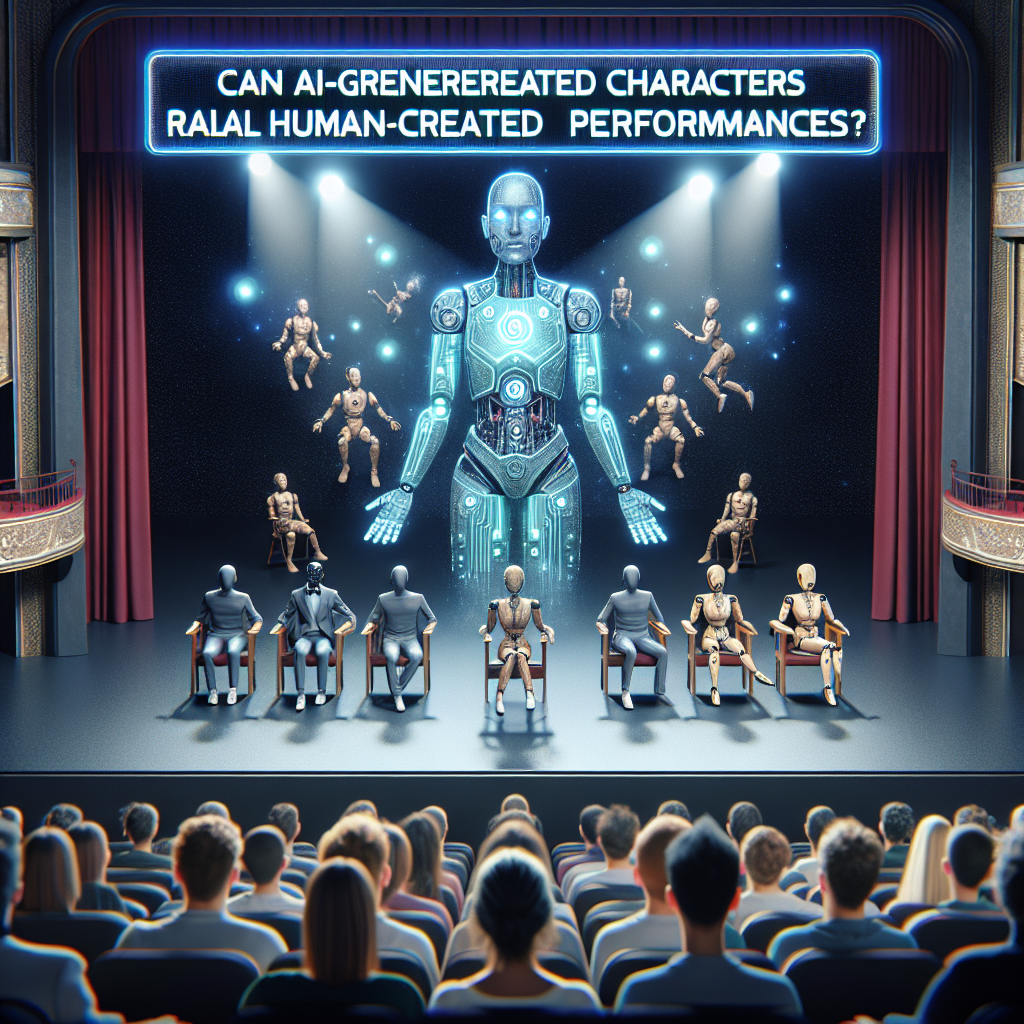
In the rapidly evolving world of digital cinema, a burgeoning question emerges: Can AI-generated characters rival human-created performances? As artificial intelligence continues to advance, its impact on various industries becomes more pronounced, and the realm of filmmaking is no exception. From CGI to deep learning-driven algorithms, AI is carving its niche in character creation, pushing the boundaries of what’s possible in storytelling. This article delves deep into the intersection of AI and film, exploring whether AI-generated characters can achieve the emotional depth and authenticity that human actors bring to the screen.
Article Outline
- The Rise of AI in Filmmaking
- AI Characters vs. Human Actors: A Comparison
- Technological Advancements Fueling AI Characters
- Strengths and Limitations of AI Characters
- Ethical Implications and Industry Perspective
- Future Possibilities: The Road Ahead
- Conclusion: Can AI Truly Rival Human Creativity?
The Rise of AI in Filmmaking
Artificial intelligence has become a transformative force in the film industry. Through innovations such as motion capture technology, sophisticated animation tools, and neural networks, filmmakers are crafting characters that can emulate human actions and expressions with striking accuracy. AI tools enable creators to automate laborious tasks, streamline production processes, and even co-write scripts with machine learning models. This surge in AI usage raises the question of how these technologies can complement or even replace traditional filmmaking methods.
AI Characters vs. Human Actors: A Comparison
The debate over AI-generated characters versus human actors is multifaceted:
- Emotional Depth: While AI can mimic expressions, human actors bring an innate depth and emotional intuition to their roles.
- Consistency and Versatility: AI characters can deliver consistent performances without fatigue, but human actors offer versatility that evolves with experience.
- Cost-Effectiveness: AI can reduce costs related to casting and logistics, yet the initial investment in technology can be hefty.
- Creative Unpredictability: The spontaneous creativity a human actor can bring to a scene is currently unmatched by AI.
Technological Advancements Fueling AI Characters
The evolution of AI characters is supported by several technological advancements:
- Deep Learning: AI models learn from vast datasets to understand human-like behavior and speech.
- Generative Adversarial Networks (GANs): These are utilized to create realistic textures, facial expressions, and more.
- Natural Language Processing (NLP): Enhances dialogue delivery and character interactions.
- Real-time Rendering: Allows characters to interact with environments in a believable manner.
Strengths and Limitations of AI Characters
While AI-generated characters present numerous opportunities, they also come with limitations:
- Strengths:
- Scalability and rapid reproduction of character models.
- Ability to model non-human or fantastical characters with ease.
- Limitations:
- Difficulty in achieving true emotional resonance with audiences.
- High dependency on quality and diversity of training data.
Ethical Implications and Industry Perspective
The integration of AI raises significant ethical concerns within the film industry:
- Job Displacement: The potential for AI to replace human roles poses a threat to employment in creative sectors.
- Authenticity and Attribution: Stakeholders must consider how to credit AI-generated contributions appropriately.
- Consent and Rights: The use of AI to replicate deceased actors begs questions about consent and rights posthumously.
Future Possibilities: The Road Ahead
The future of AI in filmmaking is brimming with potential. As the technology develops, it could:
- Foster new collaborative opportunities between AI and human creatives.
- Introduce hybrid productions where AI and humans co-star seamlessly.
- Advance personalization in storytelling, crafting narratives that adapt to individual audience preferences.
Conclusion: Can AI Truly Rival Human Creativity?
While AI-generated characters offer innovative possibilities for filmmakers, they currently exist as complements, rather than replacements, for human performers. Human creativity, emotional intelligence, and unpredictability remain essential components of compelling storytelling. As we look towards the future, a synergistic approach blending AI advancements with human ingenuity may redefine the landscape of the film industry, pushing the boundaries of imagination and technology.
“`