
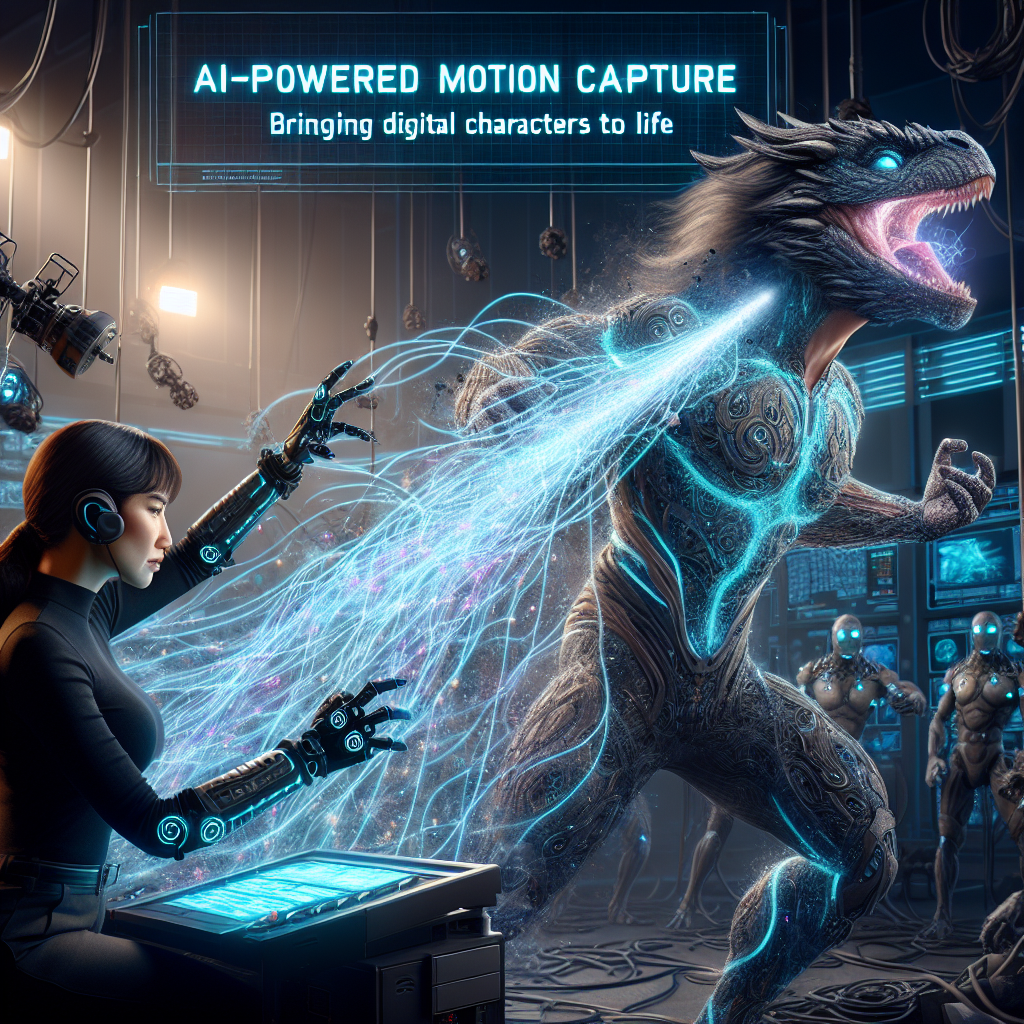
“`html
In today’s rapidly evolving film industry, the integration of **AI-powered motion capture technology** is transforming the way digital characters are brought to life on-screen. This cutting-edge technology merges the precision of **artificial intelligence** with the intricacies of **motion capture** to create more realistic, compelling, and seamless digital representations. As filmmakers strive to push boundaries and enhance visual storytelling, AI-powered motion capture stands at the forefront, offering unprecedented possibilities and raising the bar for **cinematic experiences**.
What is Motion Capture?
Motion capture, often abbreviated as **mocap**, is a process that records the movement of objects or people. In the context of film, it primarily involves capturing the movements of actors to animate **digital character models** in 3D computer graphics. Traditionally, this involves actors wearing specially designed suits equipped with markers that a camera system tracks.
Evolution to AI-Powered Motion Capture
While traditional motion capture relies heavily on manual adjustments and interpolations, the incorporation of **artificial intelligence** offers a groundbreaking shift. AI algorithms can now analyze and predict movements with greater accuracy and detail, thus **reducing the need for manual correction**. This evolution allows for the seamless transition of actor performances into digital avatars, keeping the subtleties and nuances intact.
Benefits of AI in Motion Capture
- Enhanced Accuracy and Realism: AI improves the granularity of captured motions, preserving the authenticity of emotions and actions with minimal loss.
- Efficiency Gains: **Reduced Need for Post-Production Editing** leads to faster film production timelines.
- Cost-Effectiveness: Decreased dependence on expensive equipment and manual labor translates to cost savings.
- Accessibility for Creators: Independent filmmakers and small studios can leverage AI-powered tools at a lower entry cost.
Notable Applications in Film
AI-powered motion capture has redefined character creation in prominent films and franchises. Consider the following noteworthy applications:
- Realistic Creature Movements: Films like “The Jungle Book” (2016) utilized AI to perfect lifelike animal characters.
- Fantasy Worlds and Characters: Mega-franchises like “The Lord of the Rings” leveraged this technology for creating mythic beings.
- Virtual Productions: Productions such as “The Mandalorian” employed AI-driven mocap for seamless blending of physical and digital environments.
Future Trends in AI-Powered Motion Capture
As the film industry continues to embrace AI technologies, several emerging trends are expected to further revolutionize motion capture:
- Increased Customization: Personalized animation tools allowing filmmakers to tweak digital performances effortlessly.
- Real-time Character Rendering: Instantly see the results of motion capture during production, streamlining the creative process.
- Integration with Virtual Reality: Enhancing VR experiences with realistic human and creature interactions.
Conclusion
The advent of **AI-powered motion capture** has ushered in a new era for digital character creation, offering filmmakers a powerful tool to bring their visions to life with **unprecedented realism and efficiency**. As technology advances, the line between real and virtual worlds continues to blur, opening a vast frontier for artistic expression in filmmaking. Embracing these innovations ensures that filmmakers not only achieve their narrative goals but also captivate audiences like never before.
“`