
“`html
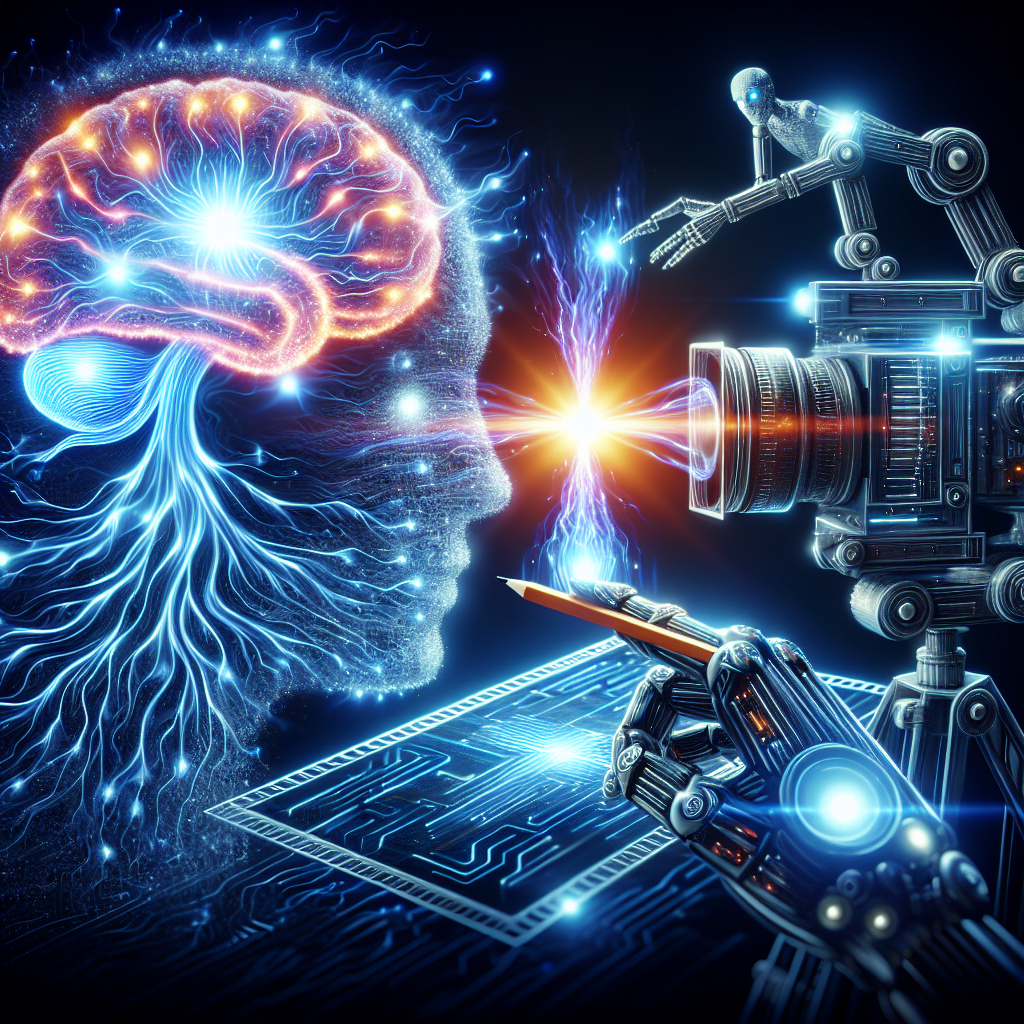
In the realm of filmmaking, visual effects (VFX) have transformed storytelling, creating worlds that are as captivating as they are believable. With the rapid advancement of technology, Artificial Intelligence (AI) has emerged as a game-changer in the VFX domain, particularly in enhancing 3D modeling. This blog post dives into how AI is revolutionizing the process, making it faster, more efficient, and increasingly sophisticated, offering filmmakers new horizons of creativity.
Introduction to AI in VFX
As entertainment technology evolves, AI has become an integral component of visual effects, offering a toolbox for artists that automates complex tasks and enhances the intricacies of 3D modeling. **Artificial Intelligence in VFX** involves the application of algorithms and computational models to streamline workflows, enabling more time for creative exploration and innovation. This integration is not just about improving efficiency but also about pushing the boundaries of what is visually possible on screen.
Enhancing Speed and Efficiency
One of the most significant contributions of AI to VFX is its ability to accelerate the modeling process. AI algorithms can quickly generate realistic models with minimal human intervention. Here’s how:
- **Automating repetitive tasks**: Tasks like rigging, rendering, and texture mapping can be automated, reducing the workload on VFX artists.
- **Smart asset generation**: AI tools can generate a wide range of assets ranging from props to backgrounds, populated with appropriate features based on defined parameters.
- **Real-time updates**: Allows artists to make and see changes instantaneously, facilitating a more flexible and creative workflow.
Improving Lifelike Textures and Details
Creating realistic textures and fine details has always been a challenge in 3D modeling, but AI is making leaps and bounds in this area:
- **Deep learning algorithms**: These can be trained to recognize and replicate textures from real-world samples, ensuring they appear life-like in various lighting conditions.
- **Generative models**: Models such as GANs (Generative Adversarial Networks) have the potential to produce hyper-realistic textures and fine details automatically.
Aiding Real-Time Rendering
Real-time rendering is crucial for interactive storytelling and virtual production environments:
- **AI-enhanced engines**: AI is integrated into rendering engines to reduce load times and optimize resource allocation.
- **Adaptive sampling**: Predictive algorithms can determine where to focus rendering power, ensuring quality is maintained while resources are used efficiently.
Streamlining Character Animations
Animating characters to move naturally is a tedious task that’s crucial for maintaining viewer immersion:
- **Motion capture refinement**: AI systems can refine motion capture data, filling in gaps where data might be incomplete and smoothing out movements.
- **Procedural generation**: AI can create natural-looking animations based on limited input, greatly reducing the need for frame-by-frame work.
Future of AI in VFX
The future looks promising for AI’s role in VFX, promising even more exciting developments:
- **Quantum computing** might revolutionize how data-heavy VFX processes are handled, allowing for even more complex simulations in real-time.
- **Enhanced interactivity**: With advancements in machine learning and AI, the interactivity and user input in VFX environments may lead to hyper-personalized content experiences.
- **Broader accessibility**: AI democratizes creation, lowering barriers to entry for smaller studios and independent creators to produce high-quality visual content.
In conclusion, AI is not just a tool but a transformative force in the visual effects industry. **By improving efficiency**, **enhancing detail**, and **streamlining complex processes**, AI allows artists to push the boundaries of creativity and realism in film. As AI continues to evolve, it promises to bring about even more groundbreaking advancements in the world of film technology, making the impossible ever more achievable on screen.
“`