
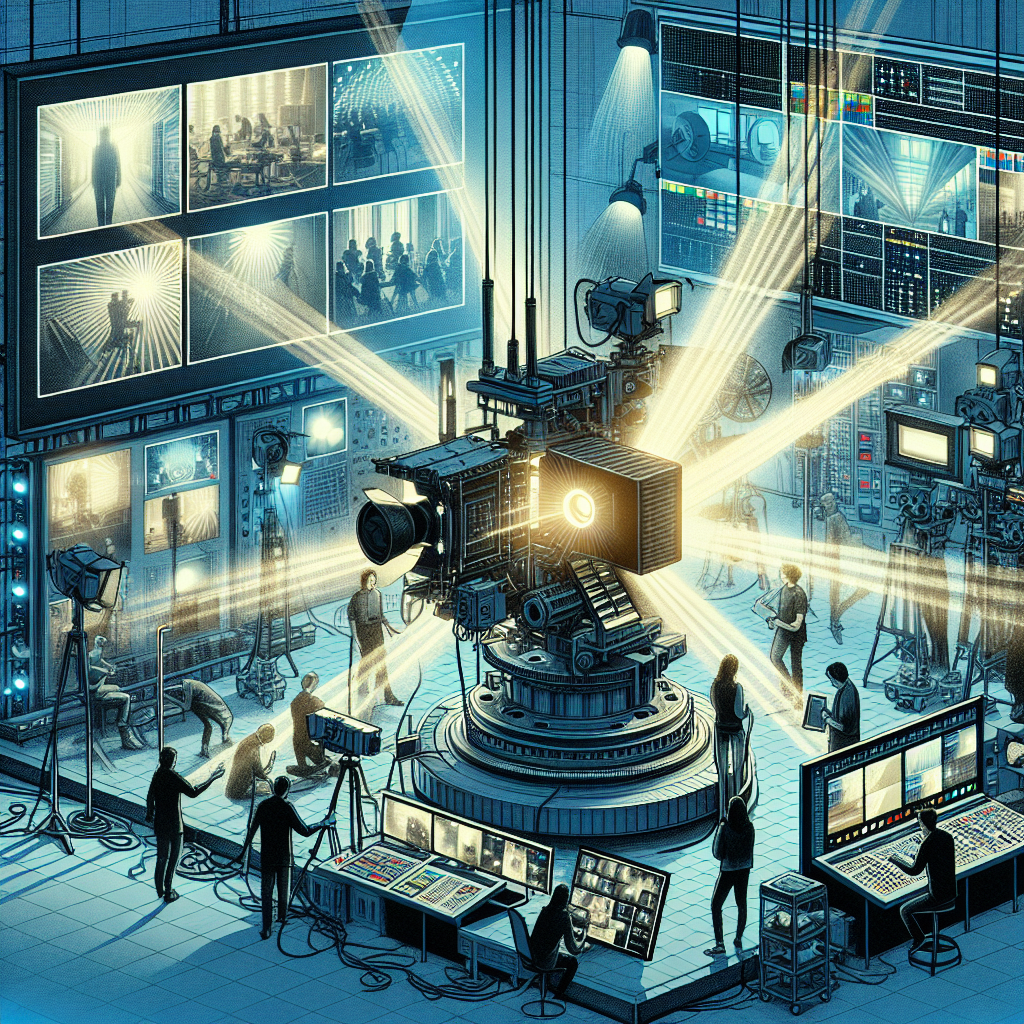
In the ever-evolving realm of film and television, Visual Effects (VFX) play a pivotal role in creating stunning and immersive experiences for audiences. With the advent of Artificial Intelligence (AI), the VFX industry has witnessed transformative changes, particularly in how lighting and shadow effects are crafted and enhanced. In this article, we delve into how AI is revolutionizing VFX, optimizing lighting, and enhancing shadow effects in films.
Article Outline
- Introduction to AI in VFX
- How AI Enhances Lighting Effects
- AI Techniques for Improving Shadow Effects
- Case Studies: AI in Action
- The Future of AI in VFX
- Conclusion
Introduction to AI in VFX
Artificial Intelligence has become an integral part of many industries, and the film industry is no exception. In VFX, AI algorithms and machine learning techniques are being utilized to automate and refine various aspects of the production process. This has resulted in more efficient workflows and higher-quality output. One of the most significant improvements brought by AI in VFX is in the domains of lighting and shadow effects.
How AI Enhances Lighting Effects
Lighting is a critical element in film production as it sets the mood, tone, and atmosphere. AI is leveraged to enhance lighting effects in several ways:
- **Automated Lighting Design:** AI can analyze a scene and automatically suggest optimal lighting configurations. This reduces the time and effort required to manually set up lighting.
- **Dynamic Lighting Adjustment:** AI algorithms can adapt lighting in real-time, ensuring that the lighting remains consistent even as scenes and camera angles change.
- **Realistic Light Simulation:** AI can simulate how light interacts with different surfaces and materials, creating more realistic and natural-looking scenes.
AI Techniques for Improving Shadow Effects
Shadows add depth and realism to scenes, but creating realistic shadows can be challenging. AI simplifies and enhances shadow effects through the following methods:
- **Shadow Mapping:** AI utilizes advanced shadow mapping techniques to generate accurate and detailed shadows, even in complex scenes.
- **Dynamic Shadow Adjustment:** AI algorithms can dynamically adjust shadows based on the position and intensity of light sources, ensuring natural shadow behavior.
- **Soft Shadows:** AI helps in creating soft shadow edges, which mimic how shadows appear in real life, enhancing the overall realism of the scene.
Case Studies: AI in Action
Several films and TV shows have demonstrated how AI can enhance lighting and shadow effects. Here are a few notable examples:
- **The Mandalorian:** The Disney+ series utilized AI-driven VFX to create realistic lighting and shadow effects on virtual sets.
- **Blade Runner 2049:** AI was used to simulate complex lighting interactions, contributing to the film’s visually stunning aesthetic.
- **Avengers: Endgame:** AI algorithms were employed to enhance the shadows and lighting in action-packed sequences, adding depth and realism.
The Future of AI in VFX
The potential of AI in VFX is immense and continues to grow. Future advancements may include:
- **Real-Time Rendering:** AI could enable real-time rendering of high-quality lighting and shadows, drastically reducing production timelines.
- **Personalized Effects:** AI could tailor lighting and shadow effects to suit different viewing environments, enhancing the viewing experience.
- **Integrated Workflows:** AI could integrate seamlessly into VFX software, providing artists with powerful tools to create stunning visuals effortlessly.
Conclusion
In conclusion, Artificial Intelligence is revolutionizing the way lighting and shadow effects are produced in films. By automating complex tasks and providing realistic simulations, AI enhances the quality and efficiency of VFX production. As AI technology continues to advance, we can expect even more groundbreaking innovations that will push the boundaries of visual storytelling in the film industry.