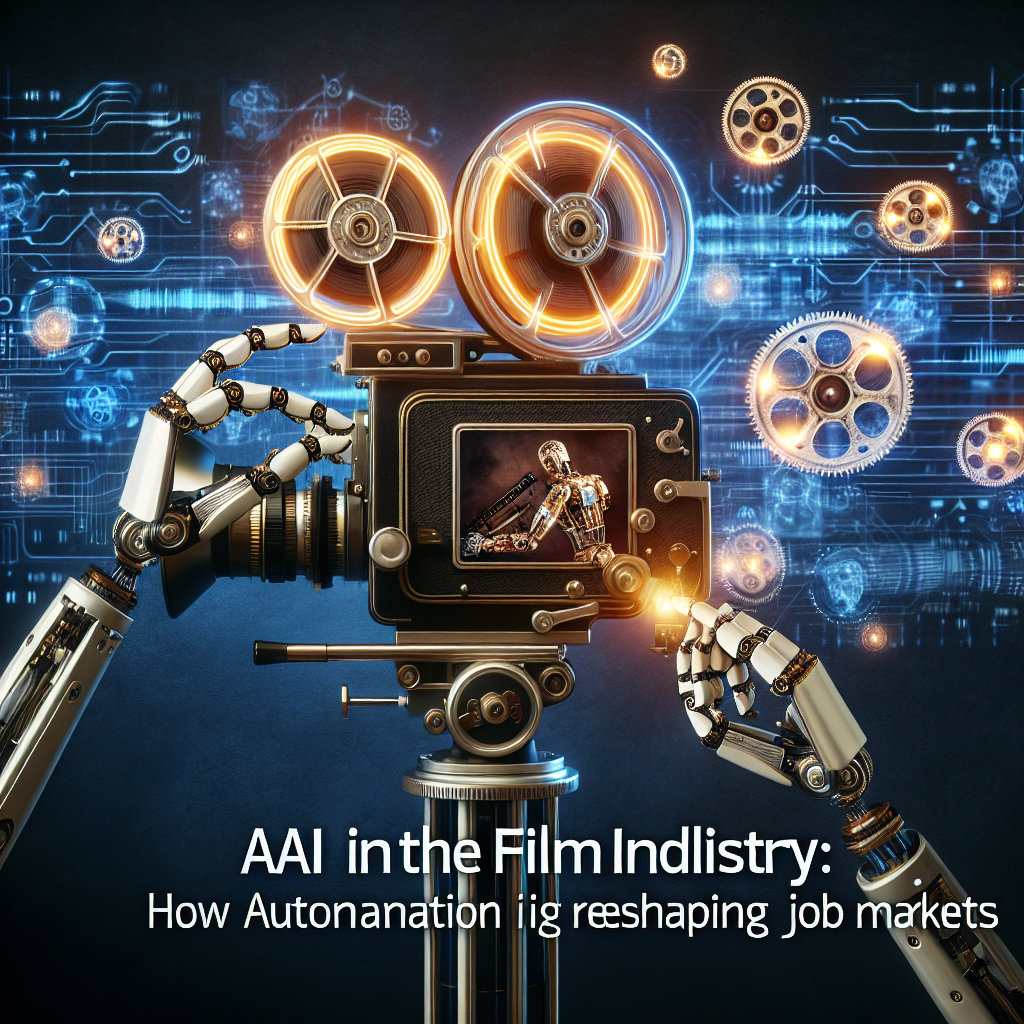
In the age of rapid technological advancements, **Artificial Intelligence (AI)** is carving its niche in various industries, and the film industry is no exception. As AI continues to evolve, it **reshapes job markets** through significant innovations, challenging traditional processes while also creating new opportunities. This article delves into the transformative role of AI in the film industry, examining how automation is influencing job roles and the market as a whole.
- Impact on Film Production
- AI-Powered VFX and Animation
- Automated Script Generation
- Changes in Job Markets
- Creating New Job Opportunities
- Challenges and Ethical Considerations
- Future Outlook
Impact on Film Production
AI technology is enhancing **efficiency in film production** by automating repetitive tasks. For instance:
- Scheduling: AI tools can manage complex production schedules, optimizing time for cast and crew.
- Budgeting: Predictive analytics help in estimating costs, reducing financial risks.
- Post-production: Automation in editing and scene segmentation accelerates post-production processes.
These innovations help filmmakers focus more on creativity, while machines handle logistics.
AI-Powered VFX and Animation
The Visual Effects (VFX) and animation fields are witnessing groundbreaking changes due to AI:
- AI algorithms can now generate **realistic visual effects** with less manual intervention, saving time and resources.
- Animation processes are becoming faster with AI tools that can predict movements and fill frames automatically.
This allows artists to explore new creative avenues, beyond the traditional constraints.
Automated Script Generation
Scriptwriting, traditionally a creative endeavor, is now seeing AI’s intervention:
- AI models can generate script drafts using vast datasets, assisting writers in overcoming **writer’s block**.
- These scripts can also analyze patterns from successful films to suggest compelling storylines.
However, the human touch remains irreplaceable in crafting narratives that resonate emotionally with audiences.
Changes in Job Markets
Despite concerns over automation displacing jobs, AI is mainly restructuring the job landscape:
- Certain roles, such as **manual editing** and **routine scheduling**, may diminish.
- New roles focusing on AI oversight and management are emerging.
Adaptation and upskilling are vital for professionals navigating this evolving market.
Creating New Job Opportunities
AI’s integration into the film industry is also spawning new career paths:
- Increased demand for AI specialists and data analysts to work alongside filmmakers.
- New niches such as **AI-driven content creation** and personalized viewer experiences.
This requires **continuous learning** and adaptation to thrive in a tech-driven environment.
Challenges and Ethical Considerations
While AI’s benefits are remarkable, it’s essential to tackle associated challenges:
- Creative Integrity: Ensuring AI-generated content values original creativity and authentic storytelling.
- Data Privacy: Addressing concerns over personal data used in **audience analytics**.
- Job Displacement: Balancing automation with human employment needs.
Ethical frameworks are crucial in navigating these challenges responsibly.
Future Outlook
The future of AI in the film industry looks promising yet complex:
- Ongoing innovations will continue shaping how films are produced, distributed, and experienced.
- There’s potential for more sophisticated AI tools that could revolutionize storytelling itself.
Embracing this **technological evolution** will be essential for stakeholders in the industry to remain competitive and relevant.
In conclusion, AI and automation in the film industry are not about replacing humans but redefining roles to foster a more efficient, creative, and inclusive film ecosystem. As these technologies advance, the industry must prioritize ethical considerations and continuous professional development to ensure a harmonious transition into this new era.