
“`html
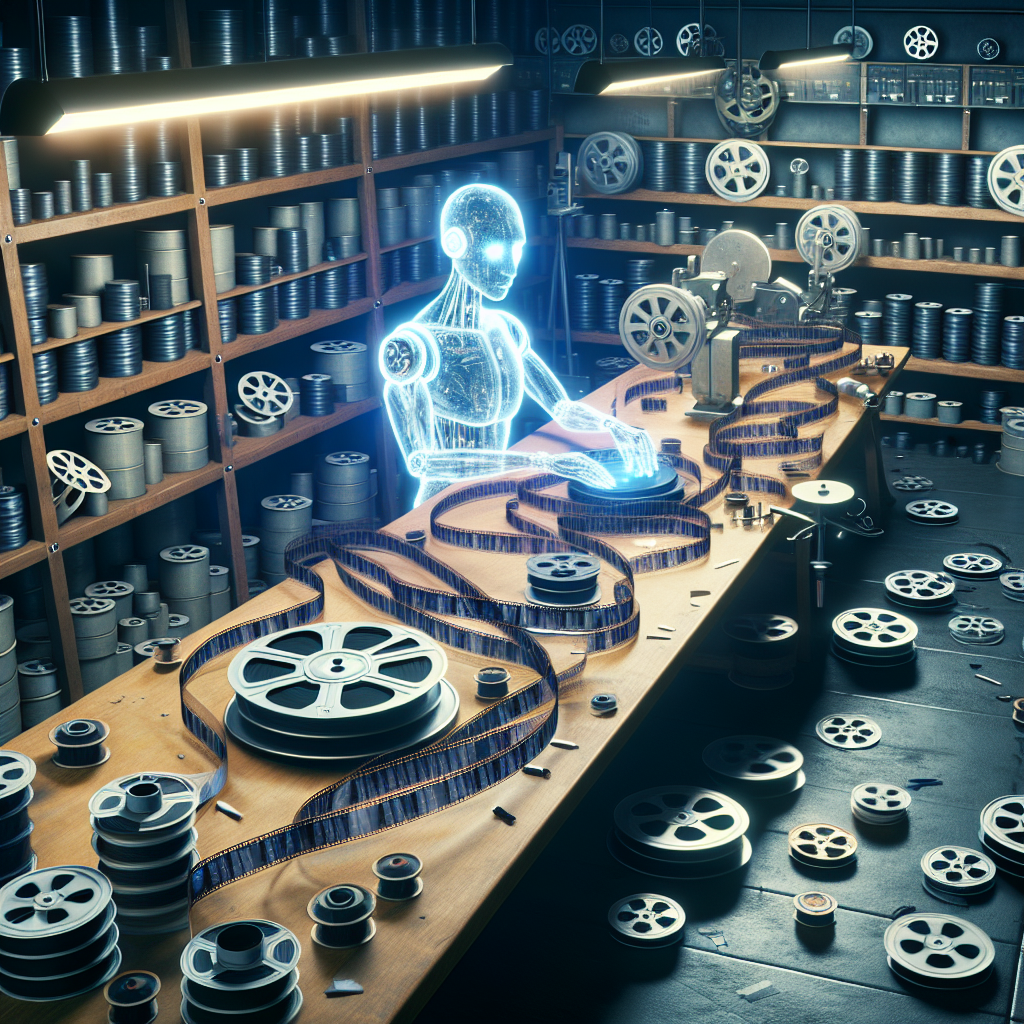
In the ever-evolving realm of cinema, technology continues to reshape the landscape, introducing new possibilities and efficiencies. One significant advancement propelling the film industry forward is the integration of **Artificial Intelligence (AI)** in film editing. While creativity will always be at the heart of filmmaking, AI is rapidly becoming an invaluable tool in the cutting room, accelerating the editing process while maintaining a high quality of output.
Article Outline
- Understanding AI in Film Editing
- Advantages of AI in the Editing Suite
- How AI is Transforming Post-Production
- Notable AI Tools in the Industry
- Challenges and Future Prospects
- Conclusion
Understanding AI in Film Editing
AI technology harnesses the power of **machine learning algorithms** and data processing to efficiently analyze video footage. Instead of spending countless hours sifting through clips, editors can now rely on AI to automate repetitive tasks and offer creative suggestions. This technology can detect patterns, recognize faces, tag scenes, and even suggest edits based on learned trends, thereby streamlining workflows and enhancing productivity.
Advantages of AI in the Editing Suite
- Time Efficiency: AI dramatically reduces the time spent in the editing room by automating tedious tasks like sorting and cataloging footage.
- Cost Reduction: By streamlining the editing process, AI cuts down on labor costs, making film editing more budget-friendly.
- Enhanced Creativity: Editors, relieved from monotonous tasks, can focus more on the creative aspects of editing.
- Consistency and Precision: AI ensures edits are consistent, reducing the risk of human error and maintaining a high level of quality throughout the project.
How AI is Transforming Post-Production
Post-production, often described as the backbone of filmmaking, is undergoing a transformation thanks to AI. Sophisticated algorithms can now craft rough cuts, apply basic transitions, and even suggest music tracks that align with on-screen emotions. AI’s ability to **analyze thousands of films** and detect patterns means it can apply learned techniques to new projects, ensuring a polished final product with minimal effort.
Notable AI Tools in the Industry
- Adobe Sensei: This powerful tool leverages AI to assist in tasks such as color correction, audio enhancement, and even scene detection.
- Blackmagic Davinci Resolve: Known for its AI-driven editing features that enhance workflows, offering tools like facial recognition for quick access to specific clips.
- RunwayML: Provides easy-to-use AI tools for filmmakers, allowing them to apply complex visual effects with minimal expertise.
Challenges and Future Prospects
Despite its remarkable advantages, the integration of AI in film editing is not without challenges. Concerns about **creativity loss** and the fear of AI replacing human editors loom large. However, the consensus is that AI serves as a tool to enhance human creativity rather than replace it. As technology continues to evolve, the role of AI in editing is likely to expand, offering more refined tools that ensure the artistic integrity of filmmaking is preserved while improving efficiency.
Conclusion
AI is undeniably revolutionizing the film editing process, introducing unprecedented efficiencies while raising the bar for what is creatively possible. As filmmakers become more comfortable with AI technologies, we can expect even more innovative and high-quality films. The key to success will be balancing technological advancements with the storytellers’ vision, ensuring that the **art of filmmaking remains alive and thriving**.
“`