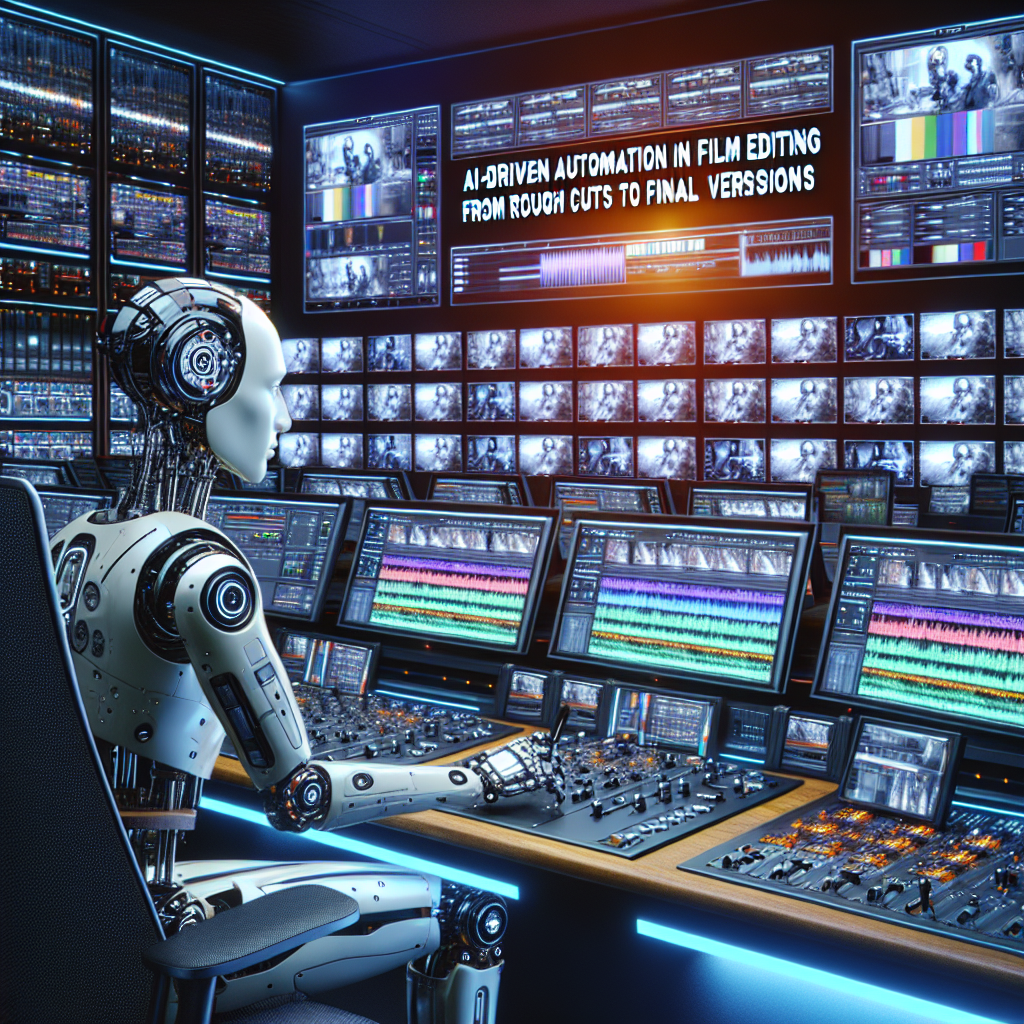
In recent years, the film industry has witnessed a significant transformation, largely driven by advancements in technology. **Artificial Intelligence (AI)**, a frontier technology, is leaving its indelible mark on various aspects of filmmaking. One of the most compelling impacts of AI is observed in film editing, where automation is reshaping the process from rough cuts to final versions. This article delves into the ways AI-driven automation is revolutionizing film editing, its benefits, challenges, and the future landscape of this fascinating intersection of film and technology.
Introduction
Film editing is a crucial yet complex aspect of filmmaking. It involves selecting, arranging, and assembling raw footage to create a coherent and compelling narrative. Traditionally, this process can be time-consuming and labor-intensive. Enter AI-driven automation, which has emerged as a game-changer by enhancing efficiency and creativity in film editing. With the power of AI, filmmakers can now automate routine tasks, allowing editors to focus on more creative endeavors.
The Role of AI in Film Editing
AI technologies, such as machine learning and computer vision, are at the heart of automation in film editing. These technologies enable editors to:
- **Automate Rough Cuts**: AI can generate rough cuts by analyzing footage based on predefined parameters, such as emotion, pacing, and continuity.
- **Scene Detection**: AI algorithms can automatically recognize scene boundaries, helping editors navigate through long sequences with ease.
- **Content Analysis**: AI can assess the emotional tone, facial expressions, and even sentiment of the footage to make content-specific editing decisions.
- **Metadata Tagging**: AI systems can tag and categorize video segments, making it easier to organize and locate footage.
Benefits of AI-Driven Automation
The integration of AI in film editing offers numerous advantages:
- **Time Efficiency**: By automating repetitive tasks, AI significantly reduces the time spent on the editing process.
- **Cost Reduction**: Automation leads to less resource expenditure, which can be financially beneficial for production houses.
- **Enhanced Creativity**: With mundane tasks out of the way, editors have more time to focus on creative aspects, improving the overall quality of the film.
- **Consistency**: AI can ensure that the editing style remains consistent throughout, maintaining the film’s intended tone and mood.
Challenges and Considerations
Despite the benefits, there are certain challenges associated with AI-driven film editing:
- **Lack of Human Touch**: While AI excels at technical tasks, it sometimes lacks the intuition and emotion-driven choices a human editor can bring.
- **Initial Setup**: Implementing AI tools can require significant upfront costs and time for training the system.
- **Data Privacy**: The use of AI involves handling and analyzing vast amounts of data, which can raise privacy and security concerns.
Future of AI in Film Editing
As AI technology advances, its role in film editing is expected to expand. Here are some anticipated trends:
- **Real-time Editing**: Future AI systems may allow for real-time editing, enabling filmmakers to make on-the-fly adjustments during shooting.
- **Enhanced Personalization**: AI could create tailored experiences by delivering different edits based on viewer preferences.
- **Smarter Tools**: Further improvements in AI will lead to tools that can understand nuanced elements like subtext and narrative pacing.
Conclusion
AI-driven automation is redefining film editing, ushering in a new era where efficiency meets creativity. While challenges remain, the ongoing evolution of AI technology promises to enhance the filmmaking process, providing editors with powerful tools to bring their visions to life. As the industry continues to explore and integrate these cutting-edge technologies, the potential for AI in film editing is genuinely exciting, poised to push the boundaries of cinematic storytelling.