“`html
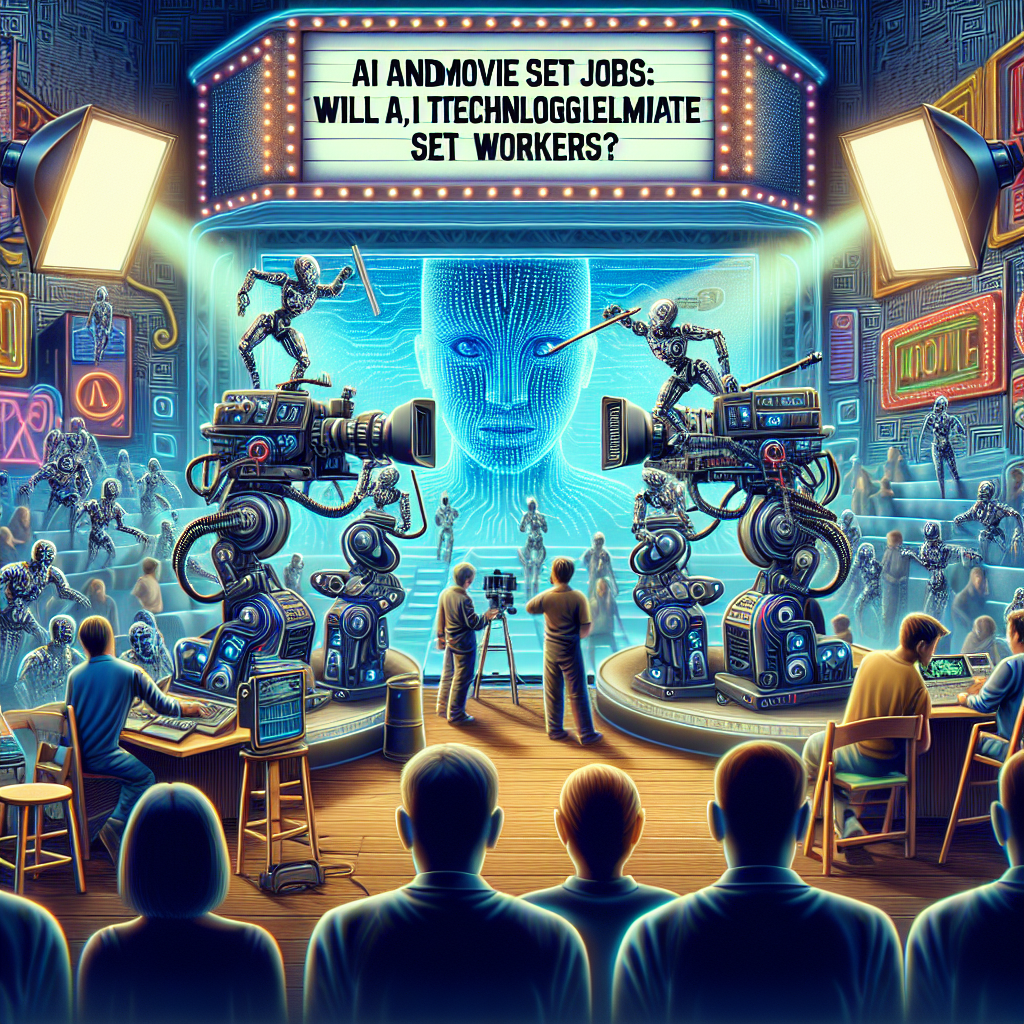
In recent years, the film industry has witnessed transformative changes, with AI technologies reshaping various aspects of movie production. While these advancements promise efficiency and cost-effectiveness, they raise concerns about the impact on traditional roles, especially on movie sets. This article explores the question: **Will AI technologies eliminate set workers?**
Introduction
The advent of Artificial Intelligence (AI) in the film industry is no longer a futuristic vision but a present reality. With the increasing need for **cost-effective and efficient film production methods**, AI has found a significant place in various production processes. While this technological shift promises to revolutionize the industry, there is mounting concern over how it affects traditional set roles. Are these technological advancements a **threat to set workers**, or do they offer an opportunity for new job roles and skills development?
The Rise of AI in Movie Production
Artificial Intelligence has gradually integrated into film production, offering a range of functions such as **virtual set design, automated editing, and intelligent script analysis**. The role of AI in creating visual effects and animations has also increased substantially. As filmmakers strive to innovate and present dynamic visual experiences, AI provides them with **powerful tools** that can replace time-consuming manual tasks.
Roles and Responsibilities on a Movie Set
Traditional movie set roles include:
- **Directors and Producers**: Oversee and manage the production process.
- **Set Designers**: Create the physical and visual layout of the set.
- **Cinematographers**: Capture the visual essence of the film.
- **Sound and Lighting Technicians**: Ensure audio and visual elements are perfect.
- **Production Assistants and Runners**: Handle logistical tasks to support the production team.
These roles depend on human creativity, judgment, and intricate manual skills, which are currently being tested in the age of AI.
AI Technologies Impacting Movie Set Workers
A number of AI technologies directly influence movie set roles:
- **Automated Cameras**: Using AI-driven robotics to control camera angles and movements.
- **Virtual Reality (VR) and Augmented Reality (AR)**: Tools for set design and pre-visualization, potentially **reducing the need for physical set construction**.
- **AI-driven Lighting Systems**: Automatically adjust based on the scene’s requirements without needing manual input from technicians.
- **Digital Assistants**: AI-powered tools capable of managing schedules, coordinating logistics, and even assisting in scriptwriting.
Potential Benefits of AI Integration
The integration of AI offers several potential benefits:
- **Increased Efficiency**: AI can **revolutionize time-consuming tasks**, allowing more time for creative work.
- **Cost Saving**: Automating manual processes can significantly lower production costs.
- **Enhanced Creativity**: AI can assist in brainstorming sessions and break creative blockages by providing **fresh ideas** based on data analysis.
These benefits could lead to **higher-quality productions** and provide filmmakers with new creative opportunities.
Challenges and Concerns
Despite its benefits, AI introduces several challenges:
- **Job Displacement**: With AI taking over repetitive tasks, many fear that traditional set jobs may become obsolete.
- **Technical Dependence**: Overreliance on machines could diminish the human touch necessary for creative storytelling.
- **Skill Gap**: Workers may need to develop new skills to adapt to new technologies.
Future of Movie Set Workers
The future of set workers will likely involve a shift towards **hybrid roles** where technology and human expertise coalesce. Film industry professionals may need to embrace AI as a tool rather than a replacement to stay relevant. **Upskilling and reskilling** initiatives will be vital in ensuring that workers transition into new roles that AI cannot easily replicate, such as creative decision-making and **emotional intelligence**.
Conclusion
AI is undeniably changing the landscape of movie set operations, offering efficiencies and innovating the way films are made. However, rather than eliminating set workers, AI technologies have the potential to create new opportunities for those who are willing to adapt and learn. The future will likely see a **symbiotic relationship** between AI and human creativity, ultimately benefiting the film industry as a whole.
“`