
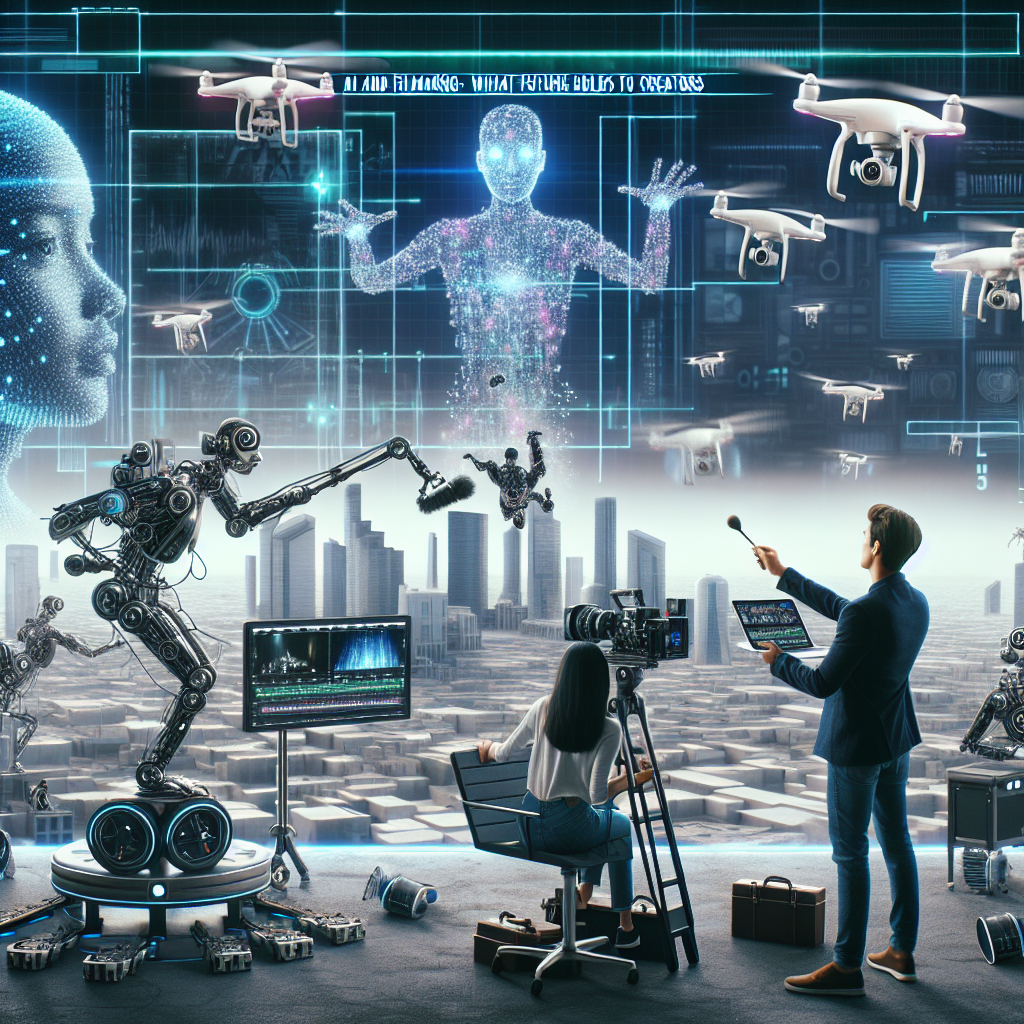
The intersection of AI and filmmaking is transforming the landscape of the film industry. This article delves into what the future holds for creators as Artificial Intelligence becomes more integrated into the filmmaking process.
Article Outline:
- Introduction
- AI in Scriptwriting
- AI in Pre-production
- AI in Production
- AI in Post-production
- Challenges and Ethical Considerations
- Conclusion
Introduction
Artificial Intelligence (AI) is revolutionizing every industry, and filmmaking is no exception. From scriptwriting to post-production, AI is being utilized to enhance creativity, streamline processes, and cut costs. This article explores the various aspects of how AI is changing the way films are made and what filmmakers can expect in the future.
AI in Scriptwriting
The script is the foundation of any film. AI tools like ScriptBook and AI Dungeon are now being used to help writers generate, structure, and even evaluate scripts.
- Script Analysis: AI can analyze scripts to predict their success based on various parameters such as genre, storyline, and character development.
- Content Generation: Tools like GPT-3 can generate dialogues, plot twists, and even full scripts, providing writers with a creative springboard.
- SEO Optimization: AI can help tailor scripts to be more discoverable, enhancing their chances of being picked up by producers or platforms. Keywords: Scriptwriting AI, AI script analysis, AI-generated scripts.
AI in Pre-production
Pre-production involves meticulous planning, location scouting, and casting, all of which can be streamlined through AI.
- Location Scouting: AI can analyze geographical data and film requirements to suggest optimal filming locations.
- Casting Optimization: AI can analyze actors’ performance metrics to recommend the best fit for a given role.
- Budgeting and Scheduling: AI tools like StudioBinder can help filmmakers create detailed budgets and shooting schedules, minimizing human error.
AI in Production
AI is playing a significant role in enhancing production quality and efficiency.
- Smart Cameras: AI-powered cameras can automatically adjust settings like focus, exposure, and framing, enabling even novice filmmakers to achieve professional-quality shots.
- Real-time Analytics: AI tools can provide real-time feedback on various shooting parameters, helping directors make informed decisions swiftly.
- Drone Filming: AI-enabled drones can automatically follow subjects and capture stunning aerial shots, eliminating the need for manual control.
AI in Post-production
Post-production is where AI truly shines, offering tools that can dramatically accelerate the editing process.
- Editing: AI-based editors can perform tasks like scene selection, cutting, and even color grading with remarkable efficiency.
- Visual Effects (VFX): AI can be used to render complex visual effects faster and more accurately than traditional methods.
- Sound Design: AI tools can generate, mix, and enhance soundtracks to create a more immersive viewing experience.
- SEO Optimization: Inserting relevant keywords like AI editing, AI VFX, and AI sound design to improve search engine rankings.
Challenges and Ethical Considerations
Despite its numerous advantages, the integration of AI in filmmaking does come with its own set of challenges and ethical concerns.
- Job Displacement: The automation of tasks traditionally performed by humans raises concerns about job security.
- Creative Integrity: While AI can enhance creativity, there’s a risk that over-reliance on technology could stifle genuine human creativity.
- Bias and Fairness: AI algorithms are only as good as the data they’re trained on, which can introduce biases that affect casting, storytelling, and other critical decision-making processes.
Conclusion
AI is undeniably a powerful tool that is shaping the future of filmmaking. While it offers significant benefits, it also presents challenges that need careful consideration. As AI technology continues to evolve, it will be exciting to see how it transforms the industry, offering new tools and opportunities for filmmakers around the world. Keeping an eye on ethical considerations and ensuring a balanced approach will be key to leveraging AI’s full potential in filmmaking.